Saturday, January 13, 2007


Pasta Presto:

The best recipes are simple and uncomplicated with just a few, fresh ingredients. Despite an adventurous soul, and a tendency towards culinary experimentation, it’s always reassuring to return to old favorites. This is one of the first pasta dishes I ever made, in the Roman-style, and I first discovered a version of this recipe in a whimsically-illustrated book that was a gift from my parents. Just to prove to myself that I’ve “come a long way, baby” I made the pasta from scratch, but the sauce remains an effortless classic, that assembles in minutes, and is easy enough to make a weekend dinner a truly special occasion:


Tagliatelle alla Romana

10 to 12 ounces of Tagliatelle or Fettuccine Pasta
One half pint heavy cream
½ cup unsalted butter at room temperature
6 to 8 tablespoons grated Parmigiano Reggiano cheese
9 ounces frozen peas, (microwave for 5 minutes to heat through)
6 ounces thinly sliced prosciutto cut into strips
Kosher salt and fresh ground pepper

Cook the pasta in salted, boiling water. Meanwhile, heat the cream in a small saucepan. When cooked, drain the pasta. Return to the pot and melt the butter and cheese with the hot pasta. Add the hot cream, prosciutto and peas. Season with salt and pepper, toss and serve.

Makes 4 Servings


This dish is fresh, creamy and bursting with bright colors. Don’t forget to uncork the Chianti!

© 2007 T.W. Barritt All Rights Reserved

Tuesday, January 09, 2007

It’s Not Easy Being Green:

The bottle of emerald liquid sits on the table at the front of the room. On its label, a single eye stares back at the audience. It’s giving me the once over, daring me to take just a little taste.

I’m attending the monthly program of the Culinary Historians of New York to hear the dark and sordid history of Absinthe, a liqueur credited with everything from instigating murder to causing fatal brain degradation. The crowd is standing room only. Everybody loves a good villain.

I wasn’t familiar with this jaded cocktail, but the very name “Absinthe” was enough to send a young colleague fleeing from the room screaming something about hallucinations.

It looks a bit unearthly. Like something the Wizard of Oz or Puff the Magic Dragon might serve as a cordial. Make that something Kermit the Frog might drink on a bender. The contents are far from magical according to lore. In fact, the stuff was banned in most countries at the turn of the last century.

What is this controversial brew? Absinthe is actually distilled from herbs in the thyme family (hence the green color) and was first used as a medicinal drink. In plain terms, it was a vermicide, and was great for ridding the digestive system of parasites. French soldiers used it during the Algerian campaigns to purify water and later drank it as an aperitif. The key ingredient is wormwood, a bitter compound that can be toxic in large doses. Sounds like fun, huh? Well, the café culture in France loved it. They would drink it with sugar cubes and ignite tablespoons dipped in Absinthe.

Yet, despite being banned, Absinthe seems to be enjoying a renaissance. Just last week, Harold McGee explored the drink in the New York Times and our speaker, Professor David Weir of Cooper Union, seems intent on rescuing Absinthe’s tattered reputation. He is wearing a Kelly green handkerchief in his breast pocket. He reads a quote from a late 19th century author who describes Absinthe as “a nectar like the last kiss on the lips of a discarded mistress.”

The story of Absinthe is really about a clash of cultures. It was a working class drink. Weir shows us slides of famous Impressionist art depicting the iconoclastic members of the French café culture, each enjoying a bright green glass of Absinthe. As the years progress, and the reported effects of Absinthe spread, the pictures get uglier. The upper class blamed it for all kinds of distasteful, common behaviors. It was said that it only took six glasses before you would start hallucinating.

I’m about to get my first taste.

Glasses are passed through the audience containing one part Absinthe and five parts water. When combined with water, it takes on a milky, chartreuse color, and looks a bit like fresh squeezed lemon juice. I smell the astringent aroma of caraway and herbs. I take a sip and detect anise and licorice. There is a bitter, chemical aftertaste on the tongue and a strong aroma of insecticide or cleaning solution. This stuff is potent, with a capital P. Forget about hallucinating. Six glasses would probably kill me.

Professor Weir says the appeal of Absinthe was in its forbidden qualities. After two sips, I decide I’ll stick with approved beverages like Green Apple Martinis or Green Tea.

Besides, my taste buds are in shock, and I need to save them for next month’s program – an historic overview of love and chocolate.

© 2007 T.W. Barritt All Rights Reserved

Monday, January 08, 2007

An American in Paris in Las Vegas

I’m on an unusual weekend work assignment, and find myself in Las Vegas, Nevada of all places. Not at the top of my list for cities to visit, and even worse, I’m alone. Where is my colleague, Splint McCollough when I need him? Vegas is his kind of town – tawdry and as glittery as a disco ball, with a slot machine for every out-of-town tourist.

Alas, Splint is at home. I send him an email upon arrival: The Christmas lights are still up here, and David Hasselhoff is starring in “The Producers.”

Splint responds within the hour: Wow. You mean he’s not doing “Joseph and the Amazing Technicolor Dream Coat” anymore?

So, when work is concluded I am forced to strike out on my own in this dazzling city of decadence.

I step out of the hotel and onto the Las Vegas Strip. It is a chilly night. To the left, I see the Empire State Building. To the right, I see the Eiffel Tower. I set off in the direction of Paris.

The contentious voice inside my head immediately starts an argument. “But, you’ve already been to the REAL Paris.”

“Sure, but it’s either French food Vegas style, or the all-you-can-eat Comfort Food Buffet at the Aladdin Casino,” my rational side argues back.

As I head down the strip, I encounter a life-size version of the Arch de Triumph, and a gargantuan hot air balloon, done in neon lights, with the word Paris emblazoned in script letters across its mid-section. I have arrived in the City of Lights, and I’ve only had to walk a quarter mile. Above me, the Eiffel Tower looms. It is a luminescent gold against the desert night sky. I decide to dine at Mon Ami Gambi, a Parisian-style bistro that sits in the shadow of the faux Eiffel Tower. I take a seat in the outdoor café that parallels the Las Vegas Strip. Torch heaters radiate warmth to fend off the cold desert air. In fact, they are downright toasty, and I fear my hair has been singed as I am led to my table.

Mon Ami Gambi is billed as a French Steak House, so I make a swift decision after quickly reviewing the bill of fare and order Steak Roquefort from the “Steak Frites” section of the menu. After all, “When in Rome…” Or is it, “When in Paris?” Or should that be, “When in Las Vegas?” I fear that I am suffering from a case of mistaken location. I decide to roll with it. Las Vegas is the land of dreams and illusions. Okay, maybe it’s not really Paris. But I could do a lot worse on a Sunday night on the road.

The dinner effectively fuels my Parisian hallucination. I start with a ruby-red glass of Louis Jadot Beaujolais 2004. A waiter brings a hot, crisp baguette to the table tucked in a narrow white paper bag. The Salad Maison is fresh greens dressed in tart vinaigrette and topped with a long narrow crouton spread with creamy goat cheese. The Steak Roquefort is classically prepared. The steak is carved thin, infused with smoky charcoal and topped with a slab of blue-green tangy cheese that melts over the hot meat like butter. The mountain of frites are wiry, crisp and paper thin, almost like wontons. Quite frankly, the meal is exquisite in its simplicity and intense flavors. As I bask in the golden glow of the Eiffel Tower, I’m starting to believe that I’m on a Parisian holiday. All that’s missing is Gene Kelly and Leslie Caron dancing in the street.

To my right on the Las Vegas Strip, the tourists stream past, some in scarves and parkas, and some in shorts and tee-shirts. The torch heaters are so hot, that I fear I am getting sunburn. I’m almost certain that I’m getting feverish.

As I devour the steak, the fountains across the street at the Bellagio erupt into a twenty-story high dance, and the voice of Gene Kelly croons “Singing in the Rain” as the fountains spurt in unison.

“Wrong movie, Gene!” my contentious inner voice complains, but it is still kind of charming, nonetheless.

In the end, it’s all pretty absurd, but it has a certain appeal. It takes a city with an outrageous imagination to imitate the great cuisine and wonders of the world. Think Epcot Center with neon and showgirls and you’re well on your way to imagining the experience.

As I leave the restaurant through the casino exit, there is a woman about to win big on the “Wheel of Fortune” special edition. Tres bien!

© 2007 T.W. Barritt All Rights Reserved

Friday, January 05, 2007

Twelfth Night Cake


Not much is made of Twelfth Night in the United States, although there is the occasional Three Kings Celebration to signal the start of the Epiphany season. While the celebration of Christmas once lasted for 12 days, now it seems to start in early October. Too often, the Christmas holidays can whimper to a close in January, and I like the idea of one final, festive night to enjoy the music, the candles and the confections of the most special season of the year.

January 6th or Twelfth Night is the Feast of the Epiphany, celebrating the arrival of the three Kings from the Far East to worship the Christ Child in Bethlehem. They brought with them gifts of gold, frankincense and myrrh. The Twelve Days of Christmas were typically a time of great merriment. Families were gathered together and balls and celebrations were held to mark important occasions. George Washington married Martha Custis on Twelfth Night. Shakespeare wrote a theatrical comedy called “Twelfth Night” to be performed for Queen Elizabeth I at the close of the Christmas holidays.

Just as important, there were sweets prepared to serve on this final night of feasting. The custom of Twelfth Night was practiced for years in England, where Victorian homemakers baked fancy, rich “Twelfth Night Cakes” flavored with candied fruits, citrus zest and liquor. Buried in this “Cake of Kings” was a bean, a tradition that dates back to Roman times. The guest who found the bean in his or her serving of cake would be named the king or queen of the revelry.

Some years ago, I purchased a lovely terra cotta Twelfth Night Cake mold. In honor of the 12 Days of Christmas just past, I give you this simple version of a Twelfth Night Cake that sparkles with colorful candied fruit and is heady with the flavor of orange and Grand Marnier.

If truth be told, the intricate crown design in the cake mold doesn’t really show in the final cake, so I decorated mine with powdered sugar stars to remember the “Star of Wonder” that shown brightly on this singular night.

A Festive Twelfth Night Cake

¼ cup golden raisins
¼ cup chopped candied fruit
4 tablespoons Grand Marnier
3 cups flour
1 tablespoon baking powder
½ teaspoon salt
½ cup sugar
Zest of one orange
1 egg
1 ¼ cups milk

¼ cup orange juice
2 tablespoons butter melted and cooled
½ cup chopped almonds
1 large dried bean


Glaze:

2 tablespoons butter, melted
½ cup powdered sugar
2 tablespoons Grand Marnier


Preheat the oven to 350 degrees Fahrenheit. Mix the raisins, candied fruit and Grand Marnier together in a bowl and let soak. Sift flour, baking powder and salt. Mix the sugar with the orange zest and add the dry ingredients. Beat the egg with the milk, juice and butter. Stir the almonds and the fruits and liquor into the liquid and add the dry ingredients. Combine with several strokes until barely blended, but don’t over mix. Pour half of batter into a greased round, flat cake pan that is approximately 11 inches wide (a large shallow, ceramic quiche pan is a good option). Place the dried bean on top and cover with the rest of the batter. Bake for 30 minutes. Cool briefly in the pan and then turn out. Mix together the glaze ingredients and pour over the cake while it is still warm. Decorate with powdered sugar.
Technorati Tags: ,

© 2007 T.W. Barritt All Rights Reserved

Saturday, December 30, 2006

A Tale of Two Puddings - The Lighting of the American Plum Pudding


Exactly 28 days after its creation, my American Plum Pudding is ready for its fifteen minutes of fame.

In the morning, I busy myself preparing the house for the ten guests who will arrive at 3:00 for the ceremonial lighting and tasting. I have one final piece of preparation. A Christmas Pudding is traditionally served with Hard Sauce. But, I’ve neglected to answer a key question -- What in the world is Hard Sauce?

I go to my most reliable source – Lynne Olver’s “Food Timeline” – where the answers are waiting. Olver cites one resource that says the origin of plum puddings can be traced back to the 15th century. She references another that says the Victorians popularized the cold, hard sauces of unsalted butter, sugar and alcohol. The warm, fruity pudding melts the hard sauce, and the burning brandy is a symbol of the rebirth of the sun. I find one other piece of folklore. A sprig of holly with a red berry was placed on both sides of the pudding in ancient times to ward off witches. Since I grew up on a steady diet of “Bewitched” and I am generally tolerant of witches, I forgo the holly.

So, Hard Sauce is basically a cross between butter cream icing and a compound butter, with a hefty shot of brandy thrown in to liven up the festivities. It can’t be bad. I find the best butter possible – Plugra European Style Butter, which has a higher butterfat content, and I select a Brandy Butter recipe flavored with orange zest, orange juice and brandy. The fluffy mound of Hard Sauce looks like a snowball sprinkled with Grand Marnier.
The pudding, which has been reposing in my refrigerator since December 3rd, is now put back into the steamer for a quick warm-up bath.

My guests are unusually prompt and by 3:00 p.m. they are crowding into my kitchen. I pass flutes of champagne as I make the final preparations for the lighting ceremony. The steaming, coffee-colored dome of pudding is placed at the center of the table, and I warm a sauce pan of brandy on the stove.

We dial up Jill in Ottawa so she can join in the festivities, albeit virtually. After all, it is she, and her family’s antique Grimwade Quick Cooker that were the inspiration for our cross-country culinary collaboration. We do quick introductions, and I suspect that Jill wishes she had a score card to keep track of the folks standing shoulder-to-shoulder in my kitchen.
Cousin Frank prepares for the photo op, and Cousin Megan takes charge of the video camera. I drizzle the warm brandy over the pudding and into the center and light a long wooden match. I sense my guests taking a slight step back. I touch the match to the pudding and it is immediately wrapped in a very subtle cobalt-blue flame. In the background I hear murmurs of, “It’s gonna explode,” “I hope the fire doesn’t crack the plate,” and “Is that a paper plate?”

There is a tantalizing sizzle, and the fragrant aroma of warm fruit, cloves and brandy, with a glistening pool of amber liquid that gathers at the base of the pudding.

I cut the pudding into slices and each guest takes a spoonful of Hard Sauce. The response is enthusiastic and soon there is only less than a quarter of the pudding left on the serving platter. My brother Ken is particularly enamored of the hard sauce. There are luscious flavors of molasses, nutty brandy, citrus and cloves and chunky pieces of sweet fruit drenched in the buttery Hard Sauce. It has been worth the wait.

But more important, this plum pudding, so long in preparation, has the rich taste of centuries of historic holiday traditions, family gathered close and family far away, and new-found friendships.
In the evening, after all has been cleaned up and the guests have returned home, I write Jill one more time and provide a report on the day. I close with the question:

What should we make next?


Technorati Tags:

© 2006 T.W. Barritt All Rights Reserved

Friday, December 29, 2006


Tis The Season To Bake Biscotti:

Veronica started it. There she stood in her virtual Test Kitchen, conjuring up an army of rich chocolate biscotti and musing over the number of eggs her squadron might contain.

After salivating over her results, I started thinking, and dug out the recipe for Mrs. Maio’s Christmas Biscotti. My former neighbor’s golden anisette biscotti – containing, count ‘em, six eggs – traveled far and wide this holiday season to great acclaim.

Now I’ve got biscotti on the brain, and I crave yet another batch. It didn’t help that Veronica gave a glowing endorsement to “Baking: From My Home to Yours” by Dorie Greenspan. I need nothing more than a lukewarm recommendation to add another cookbook to my collection. It probably took me ten seconds to order “Baking” after reading Veronica’s blog.

So, while other folks are writing up resolutions, I’m left in the waning days of 2006 exploring my inner biscotti “twice baked” soul.

I have to be different, so I turn to page 141 in “Baking” and select Lenox Almond Biscotti. I’ve always been a fan of Dorie Greenspan, and the book is gorgeous and this recipe a winner. She was given it by Tony Fortuna, the owner of the restaurant Lenox in New York City.

A couple of interesting ingredient options make Lenox Almond Biscotti a standout. There’s a half-a-cup of cornmeal included that gives the biscotti a sunny-yellow color and a nice crunch along with a cake-like flavor. The soft, chunky dough is easy to handle and shape into logs, and the almond extract and slice almonds deliver bursts of exotic flavor through the sweetness of the corn meal.

I’m feeling creative, so I follow Dorie’s “Playing Around” guidelines on page 143 and toss in a handful of dried cherries and finely minced candied ginger. The result is a beautiful and thoroughly distinctive dessert cookie that is spicy and sweet and might not make it to the holiday party this weekend!
Technorati Tags:

© 2006 T.W. Barritt All Rights Reserved

Thursday, December 28, 2006

A Tale of Two Puddings - The Lighting of the Canadian Plum Pudding

When last we left the “Tale of Two Puddings,” both the Canadian and American versions of the classic Christmas plum pudding were “aging” in the refrigerator awaiting their Yule tide debut.

On December 18th, Jill provides a status report from Canada:

“Well, a week from today will be the true test. I checked my pudding one day last week and it still seemed to be intact - and still looked and smelled good. Hope all is well with you in the frenzy leading up to Christmas.”

I’ve been afraid to check my pudding, to be perfectly honest. I’m a little nervous that if I open it, I’ll unleash Marley’s Ghost. So, for over three weeks, the foil wrapped pudding has been taking up an incredible amount of space in the refrigerator, as I try to squeeze in condiments, cheese spread and egg cartons around it. I hear an announcer disparaging plum pudding on the radio, and I stick my fingers in my ears.

The days leading up to the holiday pass quickly. There are cocktails with colleagues in Manhattan and Christmas Caroling parties closer to home where most of the singers end up wearing felt reindeer antlers. Jill checks in on Christmas Eve as holiday preparations accelerate towards the Canadian lighting of the plum pudding:

“Merry Christmas! I'm finally taking a break (and sipping a kir royale) before moving to the next stage of dinner preparations. Have baked and decorated gingerbread cookies and made blueberry white chocolate clafoutis for tonight's dessert. Now the salmon, rice and salad remain. I did manage to squeeze in some skating with my niece and nephew this afternoon. In Kingston, where my parents live (and where I am now) there is an outdoor rink behind the historic city hall, so it’s a really nice spot to skate. Artificial ice, of course, given that it's unseasonably warm here too. Not a speck of snow. Tomorrow we'll have the turkey and the plum pudding (!) And then another big feast on Tuesday when my sister and her husband and kids arrive. I'm off until Jan 3rd, so I'll have some time back in Ottawa to relax after a few days with 9 adults, 4 kids, 2 dogs and a cat. It gets a little chaotic! Hope Santa is good to you tomorrow! I'll send the pudding photos as soon as I can, possibly tomorrow evening, but Tuesday morning is more likely as we usually get caught up in a cut-throat board game on Christmas night.”

Several days pass with no word, and I’m beginning to wonder if the Canadian Plum Pudding suffered a setback. But, in fact, the delay is only the result of a large Canadian family still digesting their Christmas dinner. Jill sends a full report on Thursday night:

“The pudding was a success. It actually tasted quite good, and about half was eaten on Christmas night, by seven of us. Quite a bit of hard sauce was consumed as well. I think my father has polished off most of the rest of the pudding since then. It had a very nice texture - - not as heavy as some that I've tasted, which I expected given that the recipe had a bit of baking powder in it. The reviews were good - hopefully everyone was not just being polite! All in all, a successful project... and I'm beginning to think about next year's version. Have to run, since my niece is harassing me to let her back on the computer. I'm heading back to Ottawa tomorrow, so will have a few days to relax - and try out my new copper pot for beating egg whites - before going back to work. Hope you had a good Christmas. Look forward to hearing your pudding results. I think the big day is Saturday?”

Jill is correct. I’ve decided to squeeze every moment of entertaining out of the holiday, and ten guests will descend on my house this coming Saturday for the ceremonial lighting and tasting of the American Plum Pudding. My cousins have been instructed to bring a fire extinguisher. As they say on television – Don’t touch that dial!
Technorati Tags:

© 2006 T.W. Barritt All Rights Reserved

Friday, December 22, 2006

Aunt Greta's Christmas Stollen


Holiday food traditions are a miraculous mix of time, place, ideology and ingredients. Often times, a single person can be the catalyst for a family culinary tradition. They bring it to the table as a delectable gift, wrapped with their own cherished memories and life experiences. Through this act, they offer us a bit of themselves, and enrich our holiday celebrations.

In our family, there is the story of Margareta West, better known as Aunt Greta. Born in Kleinheubach, Germany in the year 1919, Greta began working as a domestic when she was 17 years old in the town of Offenbach. Greta worked for Frau Knudle for 23 years where she learned to cook and bake. At the age of 40, Greta was sponsored by her friend Sophie and came to the United States in 1959. In New York City, she worked for a doctor who resided on West End Avenue, and eventually met others who had immigrated from her hometown in Germany. She was introduced to my mother’s Uncle Karl by mutual friends and married him in 1961.

Throughout my lifetime, our family has enjoyed Aunt Greta’s homemade stollen at Christmas. Stollen is rich fruit bread made with yeast that originated in Central Germany in the town of Dresden. The characteristic oblong shape, with a ridge down the center is said to represent the Christ Child in swaddling clothes, and it is sometimes called the “Christstollen.” Greta’s stollen was enriched with butter and eggs, adorned with brilliant red, green and gold candied fruit, flavored with almonds and citrus zest and generously dusted with powdered sugar.

These days, Greta’s hair is snowy white and she moves a bit more slowly. She has essentially retired from baking. Her words are sprinkled with German phrases like “Ach du Lieber.” She is wry, usually opinionated and direct, and always incredibly generous.

I was of the impression that Greta’s recipe was an old European family heirloom, perhaps committed to memory. As I became more interested in food, I asked her to teach me how to make it and spent a Saturday at her home in Laurelton, New York learning her techniques. There, she produced a tattered, yellow clipping from a defunct Long Island newspaper, dated December 13, 1968, some nine years after she’d arrived in the United States.

At first, I was taken aback. Did this mean there was none of the history I’d typically associated with Greta’s stollen? But, when I read the recipe clipping, my perspective began to change. It showed an enticing picture of a plump stollen decorated with whole candied-cherries and flanked by two cups of black coffee. The article described the importance of home baked goods to the German “kaffeeklatsch” tradition. The phrase translates as “coffee chat” and refers to conversation or gossip enjoyed by German hausfraus who gather for a cup of coffee and a sweet treat.

I think the newspaper clipping was a tangible reminder for Greta of community and family traditions from her original home, and as she adapted the recipe and made it here, it was her way of sharing a festive custom from her homeland with her new family. I am now the keeper of that original newspaper feature that Greta clipped so many years ago when it likely inspired a fond holiday memory in her own mind that she generously passed on to us each year. Here’s the recipe:

Aunt Greta’s “Old Time Stollen"

¾ cup milk
1 pkg. active dry yeast
¼ cup warm water (105 to 115 degrees)
3 ½ cups enriched flour (divided)
¼ teaspoon salt
½ cup butter
6 tablespoons sugar
½ teaspoon grated lemon and orange peel
2 egg yolks
1 cup mixed, diced candied fruits
¾ cup golden raisins
¼ cup whole glace cherries
¼ cup slivered or sliced blanched almonds


Scald milk; cool to lukewarm. Dissolve yeast in warm water. Add to lukewarm milk. Sift 1 ½ cups flour with salt; stir in to yeast mixture and cover. Let rise in warm place until doubled. Cream butter until light and fluffy. Add sugar gradually, while creaming. Add lemon and orange peel. Add egg yolks one at a time, beating well after each addition. Gently combine egg mixture with raised dough. Add fruits and almonds. Roll out on a lightly floured board or canvas into circle, about 10 inches in diameter. Fold over once into traditional pocketbook shape. Place on greased baking sheet. Cover and let rise until doubled. Bake at 350 degrees until golden brown 35-40 minutes. Brush with melted butter. Cool on rack. Before serving, sprinkle with powdered sugar.

On Christmas morning, we will be enjoying Aunt Greta’s stollen and coffee, now prepared by me, chatting about the diversity of our family and our yuletide traditions and wishing Greta a hearty Merry Christmas, or Frohe Weihnachten!

Technorati Tags:


© 2006 T.W. Barritt All Rights Reserved

Tuesday, December 19, 2006

Mrs. Maio's Christmas Biscotti


As Christmas nears, I find am remembering Mrs. Maio once again. Our neighbor across the street during my childhood was born in Italy in 1908 in the town of Messina in Sicily and eventually immigrated to the United States, where she and her husband settled on Long Island. My parents met the Maios in 1957 when they moved into the house across the street and became lifelong friends.

Rose Maio was a small, sturdy woman with a round face and steely gray hair. She grew pears, peaches and all types of vegetables in her yard. As I played outside, I remember seeing her work for hours cultivating her expansive garden, a kerchief covering her head to protect her from the sun.

Each Christmas Mrs. Maio brought a plate to our front door, wrapped in aluminum foil and piled high with homemade golden biscotti scented with anisette. Mrs. Maio’s biscotti were one of the signature flavors of our holiday. The long, slender cookies were a delicacy, unusual in appearance, and very different from the typical chocolate and peppermint flavors of the Christmas season.

Harold McGee says in “On Food and Cooking” that biscotti is an Italian hard cookie that is leavened with baking powder. The term biscuit is derived from the French term for “twice cooked.” Biscotti are indeed, biscuits that are baked twice to develop a toasty crisp crust. Anisette liquor is a sweet, licorice-flavored drink made from the seeds of a plant in the parsley family. The anise seed is native to the Middle East and has been used as a flavoring and for medicinal purposes for centuries. Ancient Romans hung anise plants near their beds to ward off bad dreams.

Mrs. Maio’s been gone now for several years. A while back, I acquired the recipe for Anisette Biscotti from Mrs. Maio’s daughter, and began to make biscotti during the holiday in remembrance of our neighbor’s annual Christmas gesture. Here’s the recipe:

Rose Maio’s Anisette Biscotti

6 eggs
¼ lb butter
1 ½ C sugar
1 tsp vanilla extract
2 tsp anisette extract (or extract of anise)
2 ½ C flour
1 ½ tbsp baking powder

Preheat oven to 350 degrees for 30 minutes.


Set eggs out about 15 minutes. Cream butter and sugar together then add eggs one at a time, mixing after each. Add extracts followed by flour and baking powder.

On greased and floured cookie sheet (12x18) spread batter as a log the length of pan. Bake 30 minutes or till golden brown. Cut biscotti down center and cut slices from each half (use sharp knife). Remove half of slices to counter. Turn remainder of slices in pan on their side, bake another 10 minutes. Repeat with remaining slices. Enjoy!


This recipe makes a smooth golden batter that is much lighter than the typical, chunky biscotti dough. It is closer to a cake batter and resembles a large vanilla wafer when it is baking in the oven. The end result is a moist, tender lemon-yellow cookie with a slight crunch, flavored with peppery licorice and ready for imminent dunking in a hot cup of espresso. The recipe makes about 30 cookies.

If you make this biscotti recipe, give some to friends or neighbors during the holidays, just as Mrs. Maio always did. I took some to Nelson and Doug’s “Blue Christmas Party” in Soho and gave some to my parents and the team at work to spread a little of Mrs. Maio’s Christmas spirit.
Technorati Tags:


© 2006 T.W. Barritt All Rights Reserved

Sunday, December 17, 2006


The Great Pretender – Corn Bread Tamale Pie:

It is holiday baking day and the kitchen is in an uproar. The live Handel broadcast on the radio does little to mask the chaos. Sheet pans and mixing bowls are scattered about, and the sink is full. Hallelujah!

I’ve been surrounded by food all day, but I’m already thinking about Sunday Supper. I’ve made my selection on page 102 of the Joy of Cooking, and it’s a little touch of Mexico right here in suburban Long Island – Corn Bread Tamale Pie.

While I might try to convince myself that supper will be like a sojourn South of the Border, there’s actually nothing authentic about Corn Bread Tamale Pie. The Oxford Encyclopedia of Food and Drink in America says it is part of the group of American foods that were “invented outside the ethnic communities they refer to.”

The Food Timeline quotes the Encyclopedia of American Food and Drink as saying that Captain John Smith made reference to a tamale-style dish in 1612 and that the term Tamale Pie first appeared in 1911. Perhaps this recipe is a distant cousin of the “hot tamale” which the Oxford Encyclopedia describes as a popular southern street snack of the late 19th and early 20th century, made with larded cornmeal. Mexican American women were said to make hot tamales in large quantities months before festivals such as Christmas. Heck, it’s the holiday season. That’s all the connection I need!

Certainly casseroles of this type continue to arouse appetites and inspire great interest. The December 2006 issue of Saveur has a lip-smacking feature on the history of casseroles which features a recipe for Tamale Pie (aptly described as an “American classic”) along with such chic suburban suppers as Tuna-Noodle Casserole and Chicken Divan. Joy of Cooking does its share of gushing on all aspects of savory pies, and extols the virtues of topping a mixture of meat and vegetables with a variety of crusts, including homemade biscuit dough.

Scanning the recipe, I can see its attributes immediately. The preparation takes no time, and many of the ingredients are at hand in the pantry. Browning ground beef and onion is the first step, so this is a job for the venerable Sunbeam Electric Frying Pan. No suburban cook should be without one. I brown the beef and onions and toss in black beans, corn, tomato sauce, chili powder and cumin. There’s very little fat, and the dish is packed with fiber. The topper is a thick paste of cornmeal, egg and milk. I stare into the oven and watch as the molten bean sauce creates fissures and eruptions across the rugged topography of the cornbread topping.

Finally, the moment of truth, and I dip a large spoon into the golden crust. The ragu of black beans and corn looks a ladle-full of colorful confetti and the cumin and chili powder does the rumba with the sunny yellow goodness of the cornbread. Who needs authentic Southwestern cuisine? I can get that any night in New York City. I may still have a long way to go before I get to Mexico, but Corn Bread Tamale pie spices up Sunday night supper with the flair of a fiesta! Maracas for everyone!

© 2006 T.W. Barritt All Rights Reserved

Monday, December 11, 2006

The Culinary Celebrity of the 19th Century


The small, battered, cornflower blue book sits atop a dusty pile in an antique store in Central Pennsylvania. It is the day after Thanksgiving and we are foraging for a “find” amidst vintage postcards, Depression glass, and a frightening tableau of stuffed squirrels dressed as baseball players.

Suddenly, there it is in my hand: Mrs. Rorer’s – My Best 250 Recipes.

I flip through the brittle, yellowed pages. The publisher is Arnold and Company of Philadelphia and the copyright date is 1907. This cookbook is ninety-nine years old.

But who is Mrs. Rorer? Copyright 1907 by Sarah Tyson Rorer. The name has a ring of authority and expertise, but I don’t recognize it. Anyone with their name on a cookbook must have some notoriety. Martha Stewart and Betty Crocker come to mind. And, anyone with 250 “best recipes” must have had some reputation to speak of. There are passing references to her lectures and articles. Yet, the name is a mystery to me.

The dealer sells me the book for a fair price and I spend some time exploring the recipes. There is everything a home cook could ask for: My Best Twenty Soups, My Best Twenty Ways of Cooking Meat, and even My Best Twenty Left-Overs. The advice is practical and to the point: “As a rule left-overs are extravagances; they show thoughtless buying; but to utilize them is the stronghold of every housewife.”

The pages of the cookbook are worn and stained, and the binding is slightly cracked. Inside the back cover, a list of ingredients is scribbled in pencil: bay leaves, cream, “cutsup,” walnut, mace, bread, apples and “magic yeast.” In another spot, a hand-written menu is scribbled: pork chops, sweet potatoes, cabbage fried, sliced tomatoes. What recipe or family dinner might these notes have represented?

Back home, I start my investigation in earnest, and very quickly uncover the history of Mrs. Sarah Rorer. Some refer to her as the first American dietitian. She was, in fact a culinary sensation of the late 19th century. If the Food Network had been around, Sarah Rorer would have been a celebrity chef with a prime time slot.

The story unfolds for me in the Oxford Encyclopedia of Food and Drink in America. The parallels between Sarah Rorer, Julia Child and Martha Stewart are fascinating. Rorer was a bored suburban housewife who started attending lectures at the Woman’s Medical College in Pennsylvania in the late 1800s. Later she took up cooking classes and eventually became an instructor and regular lecturer. She studied nutrition texts and built her expertise and reputation as a teacher and in 1883 opened the Philadelphia Cooking School. Her husband was a bit of a slacker as a provider, but eventually came to work for her at the school, making Mrs. Rorer the breadwinner in the family.

Rorer’s lectures attracted audiences of thousands and in 1886 she published her recipes and advice in Mrs. Rorer’s Philadelphia Cook Book. She authored an advice column called Table Talk in a culinary magazine, and eventually became the “domestic science editor” for The Ladies Home Journal. She held live cooking demonstrations at food expositions and eventually authored more than fifty books, booklets and promotional pamphlets.

Maybe modern day foodies have forgotten her, but Sarah Rorer and her little book of Best 250 Recipes is a slice of culinary history that now has a place of honor on my cookbook shelf. She turned culinary expertise into a vocation and amassed a huge following. As a woman in the 19th century, she was a food pioneer, and uniquely American as well for the ingenuity she showed in reaching a mass audience. I suspect that most food bloggers have a little bit of Sarah Rorer's spirit in their genetic makeup.

Perhaps this weekend, I might just try Mrs. Rorer's Best Left-Overs recipe for Prune Souffle.

© 2006 T.W. Barritt All Rights Reserved

Sunday, December 03, 2006

A Tale of Two Puddings - Stir-Up Sunday


Twas the night before Stir-up Sunday, and all through the house, T.W. Barritt was learning how ill prepared he was to organize a successful plum pudding project …

I get home from New Orleans on Saturday night, anxious to get going on the plum pudding. I chop the raisins and start them simmering with the currants in two cups of water. It looks like an awful lot of fruit. The recipe calls for a large, 3-quart container. I eye the pudding mould. Then I decide to measure it. My fancy Christmas tin only holds 1 and ½ quarts. I start to scour the house for alternatives and find a second container to hold the overflow.

Meanwhile, the fruit continues to simmer. The technique seems to plump the raisins and currants, while concentrating their flavor. This produces dark, aromatic syrup that coats the raisins and currants.

Stir-up Sunday dawns, and Jill finds that the Canadian weather is adding to the seasonal mood. She writes:

It's snowing a bit here this morning, so it seems like a particularly good day for this project. Just heading out for my morning run, so I can get that out of the way before the stirring starts. I've invited a few friends for lunch to help stir the batter....but that means I have to feed them as well. Time to get moving. More later on the results.

I measure out all of the ingredients and the final step is to prepare the suet. Mom has done her part while I was gone, and the suet is waiting for me in the refrigerator. I learn from her later that the butcher didn’t even charge her. He simply wrapped up the suet and wished her “Merry Christmas!”

Last night, I cleaned and froze the suet. That makes it easy to mince the fat into tiny pieces and dredge them in flour. The suet is suspended through the mixture and as it steams, the fat melts and gives the pudding its cake-like texture.

Stir-up Sunday is all about making wishes, according to Jill. As the master of the house, I grant myself three wishes – one for the world, one for my family, and one for me. I stir the brown sugar and spices into the flour and suet and for the world, I wish for recovery for the city of New Orleans. I stir in the eggs, brandy and sherry and wish for good health and happiness for my family. I stir in the raisins, currants, dates and citron and wish for myself a challenging new recipe to learn in 2007.

The fruits are jewel-like and remind me of gold, frankincense and myrrh as I fold them into the batter. The creamy, coffee-colored batter is thick with fruit and smells like cinnamon, cloves, fruitcake, George Bailey, Clarence the Angel and Christmas at Fezziwig’s.

I fill the moulds, place my puddings in their steamers, send off an update to Jill, and start to make a few ornaments for the tree. I’ve got at least four or five hours ahead of me, tending the puddings. By early afternoon there’s still no word from Ottawa, probably because Jill is busy feeding lunch to an army of holiday helpers. Then an update arrives:

Mine's steaming as well. Smells great, and the batter tasted good! I had some tiny assistants to help stir and make wishes. I only have a half-hour left, which is great because I really need to get some Christmas shopping done today. Think I will go outside and string up the Christmas lights on my cedar tree while I'm waiting.

Jill’s butter-based plumb pudding is done before me (top photo). She writes:

Pudding looks good. House smells like Christmas. Photos to follow....

I return to the kitchen and sniff. I can’t smell anything. When I take off the pot cover, the dish towel that has been boiling at the base of the pot for several hours to anchor the mould actually makes it smell more like laundry day. There is a subtle scent of cloves, but maybe I’m too close to it.

Just before 8:00 p.m., word comes from Ottawa that the Grimwade Quick Cooker plum pudding with butter has been successfully completed. Jill provides a full recap of the Canadian version of Stir-up Sunday:

I’m up early for a morning run before the pudding assembly starts in earnest. With lightly falling snow and the sun shining through the clouds, it seems like a perfect day for pudding-making. The mixing begins at noon, with the help of my able young stirring assistants, Lucy and Thomas. Lucy won't reveal her wish, but all Thomas wants is for the cat to come out of hiding. Fortunately she obliges. But in all the excitement, I forget to make a wish! Oh well, there's always next year's pudding.
After mixing in a final dose of rum (and sampling a few tastes of the batter), the "Quick Cooker" is greased, filled, parchment paper put on top, and the lid tied on. I never did find any charms, but I think I'll slide a coin into the pudding before it's served on Christmas Day. The pudding goes into the steaming pot at about 12:30. There's a moment of panic about whether I'll be able to put the lid on the pot, but it just fits. In the meantime, I'm trying to serve lunch to some friends, so the preparations are a little hectic. No wonder I forgot to make a wish.

I check the pot every so often and top up the water. My recipe only requires about 3 hours of steaming, so at around 3:30 I decide it's time to take the Quick Cooker out of the steamer. I manage to avoid any major burns. After the pudding sits for five minutes, it's time to un-mould. The pudding slides out easily, stays in one piece, and I breathe a sigh of relief! The pudding looks and smells lovely. We'll know in 22 days how it tastes!

My recipe requires that the pudding be at room temperature before un-moulding and shortly before 9 p.m., I slide my pudding out of the mould (bottom photo). One tap and it drops onto the plate, fully intact and with a nice scallop design around the pudding. While Jill’s pudding is a beautiful amber color, mine is darker, like black coffee, and denser, and smells much like a traditional fruitcake. I worry about whether it has enough alcohol in it, but for now, I must think about returning to work on Monday and letting the plum pudding ferment in the refrigerator. Joy of Cooking says, “…the pudding will become softer, darker, and more flavorful with age.” Don’t we all?

Jill has the last word on our cross country plum pudding collaboration, until we ignite them as part of the Christmas celebration several weeks from now. She writes:

Hmmm. I wonder if pudding can be sent over the border?
© 2006 T.W. Barritt All Rights Reserved
Technorati Tag:

Saturday, December 02, 2006

Coffee and Hope in the French Market


Jazz musicians in New Orleans sing of optimism, but the road back for this city appears incredibly challenging.

The big storm passed more than a year ago, but the aftermath is still evident no matter where you look. Historic buildings are boarded up and the narrow streets of the French Quarter are eerily empty. The devastated 9th Ward is a war zone, a patchwork of leveled plots and hollowed-out shells of homes that were once inhabited by families. A solitary honey-colored feline, flee-bitten and desolate, huddles on the pavement in a catatonic state.

So much about the future of New Orleans is unknown.

Still, certain institutions persevere. Restaurants in the French quarter serve distinctive Cajun fare and Creole cooking to a city that is at far less than capacity. At Café Amelie on Royal Street, Chef Jerry Mixon’s doors are open. Mixon grew up in St. Bernhard, learned to cook from his mother and trained under Paul Prudhomme. Each day at this historic carriage house, he prepares rich, lively gumbo – dense with pulled chicken and andouille sausage – that simmers in the soup pot for six hours and builds to a spicy sensual crescendo.

And, at the French Market, hot coffee and chicory and crispy beignets are offered 24-hours-a day, seven days a week at Café Du Monde.

I’ve spent much of the week with colleagues at a business meeting in New Orleans. Several of us arrive around 10 o’clock on a weeknight evening at Café Du Monde for an after-dinner treat. We have walked along historic Jackson Square, past flickering gas lights and wrought iron balconies and cross Decatur, where the beams from car lights illuminate the November night.

Quaintly referred to as “the original French coffee stand,” Café Du Monde sits on a large triangular plot near the Mississippi River and was established in New Orleans in 1862. For perspective, that’s a year after the American Civil War began. The signature offering is a coffee and chicory blend, served black or “au lait” which means the coffee is mixed half and half with hot milk. Chicory was added to coffee as an extender by the French during the French civil war when beans were scarce. Acadians from Nova Scotia brought the drink to Louisiana when they settled there.

In the evening, both the small indoor café and the outdoor café are bustling with activity. The seating area is covered by a green-striped awning. We push together two tables, and order coffee and chicory and plates of beignets stacked high and covered with drifts of powdered sugar. Warm tropical breezes dip under the awning.

Simply put, a beignet is a pillow-shaped, deep fried doughnut. Beignets are often referred to as French-style doughnuts and were also brought to Louisiana by the Acadians. Recipes call for whole milk, shortening or lard, yeast and oil for deep frying. Beignets are rich, and well worth the caloric investment.

They say a visit to Café Du Monde is like no other culinary experience in the world. The resident food maven in our party extols the virtues of dunking beignets, and it is intriguing to watch the doughy cake absorb the caramel-colored brew. The powdered sugar sweetens the coffee and adds a touch of luxury to the silkiness of the hot milk. The Boss is a first-timer to New Orleans and Café Du Monde. He attacks his beignets with gusto. The powdered sugar flies, and he looks like he just stepped out of a driving snow storm.

Two day later, I return alone, early in the morning. It has turned uncharacteristically cold for Louisiana, wind-chill tears sting my face, and the palm trees strain against frigid gusts.

Inside the cafe, I take a table amidst tourists, faithful locals, and even a few vagrants there to keep warm. There are remnants of powdered sugar on the floor. French doors line the façade and in warmer weather would open out onto Decatur. There is an old-fashioned upright rectangular paper napkin dispenser on the gray melamine table. Historic black and white photos line the wall.

The server arrives with my order precariously propped on a massive tray crowded with coffee cups and beignets. She slides onto the table a battered pink plastic tray with the name “Kim” stamped on it, where I’m supposed to leave my payment. The bill is a whopping $3.50 for what many consider the best breakfast on the planet.

The beignets come in servings of three and are more dense, flavorful and crisper than a doughnut. I have sworn that I won’t eat them all, but quickly renege on my word. I pull a chunk of the golden beignet and splash it in the hot foamy drink. There are many complex flavors – earthy, sweet, yeasty, robust, light and smooth all at once. It is like a soothing milk shake with a kick. It gives me some fortification for the long day ahead as I head for my next meeting. Others are edging their way into the crowded café.

Where there is a good cup of coffee and tradition, there is hope, and perhaps a bit of restorative power.

© 2006 T.W. Barritt All Rights Reserved

Friday, December 01, 2006

A Tale of Two Puddings - The Recipes

We are rapidly approaching Stir-up Sunday and the preparation of our Canadian and American plum puddings. Jill in Ottawa is still debating over the best recipe for her plum pudding, while I’m already committed to my selection in the Joy of Cooking. Give me a recipe in a best-seller and I’m good to go. Jill writes:

Decision-making not being my strong point, I'm torn between recipes from the “Canadian Living Christmas Cookbook,” “Julia Child's The Way to Cook” (both using butter), and something from Epicurious titled "Superb English Plum Pudding" It's a James Beard recipe from “House and Garden” in 1963. I'm leaning toward the latter, but it is fairly similar to the Joy of Cooking version. Of course, I also have a tree's worth of others that I printed from the Internet. On the BBC website, I found a little piece written about an early vegetarian version that didn't contain suet but included a pound of mashed potatoes, a pound of boiled carrots and two pounds of dried fruit. I'm not sure I'd want to try choking that down!

I give thumbs down to the boiled carrots as well, but you sure can’t beat Julia Child and James Beard. I like the contrast of Canadian butter versus American beef suet and suggest that Jill might go that route.

Meanwhile, I’m embarking on my own investigation of plum pudding – the history, the lore and the technique of steaming. The Oxford Companion to Food (Davidson) says that pudding “may be claimed as a British invention, and is certainly a characteristic dish of British cuisine.” It also extols the virtues of steamed suet puddings and says the high melting point gives suet puddings a lightness not attained with other fats. Tins and moulds came into use when pudding cloths became unwieldy for the homemaker. Sweet suet puddings reached the height of popularity in the Victorian era and there was even a pudding named for Prince Albert. I also locate the definitive reference in Charles Dickens’s A Christmas Carol:

“In half a minute, Mrs. Cratchit entered – flushed, but smiling proudly – with the pudding, like a speckled cannon-ball, so hard and firm, blazing in half-a-quartern of ignited brandy, and bedight with Christmas holly stuck into the top.”

Jill decides to go with the Canadian Living butter-based recipe in her classic "Quick-Cooker Bowl." With fruit soaking in an 80-proof hot tub and most ingredients in hand, we are nearly ready to begin our cross-country Christmas culinary collaboration.

Next: Stir Up Sunday

© 2006 T.W. Barritt All Rights Reserved
Technorati Tag:

Thursday, November 30, 2006

A Tale of Two Puddings - Moulds and Ingredients

No sooner have Jill in Ottawa and I decided to concoct Christmas puddings in two different countries, when our plans hit a snag. We’ve already missed the traditional deadline for preparing a plum pudding. Jill writes:

Most sources I've looked at say that Stir-up Sunday is the Sunday before Advent, and since Advent starts on December 3 this year, I think Stir-up Sunday was actually yesterday. Hopefully our puddings won't be cursed by the break with tradition.

This could be disastrous. It’s like moving Abraham Lincoln’s birthday to the third Monday in February or celebrating Christmas on the 30th of December. But, I take a deep breath, say three “Hail Julia Childs” and hope for the best.

Meantime, Jill’s been gathering information on her antique crock:

I've done a little investigating into my pudding mould, which, while my mother and grandmother used it for plum pudding, is actually a Grimwade's "Quick-Cooker,”, "excellent for stews of all kinds" (according to the print on the outside of the bowl). I did a little looking around on the Internet, and the Quick Cooker appears to have been a very popular item in the first half of the 1900s. It is not particularly rare or valuable - there are lots on e-Bay - but it is a really wonderful vintage piece. On the top of the lid, there is green printing that provides instructions on how to use it, and the underside of the lid has advertising for other Grimwade items, all of which were"thoroughly hygienic" and "designed to keep out flies". Inside the bowl there are instructions on how high to fill it. On mine, it looks like the printer made a mistake, crossing out some words and rewriting them below, which is a feature I particularly like.

Jill has even traced her Quick Cooker back to Merry Olde England and finds a citation through the London Museum where a crock dated 1911 is exhibited. I’m a little jealous. Aside from its Williams-Sonoma pedigree, my tin mould is a thoroughly modern reproduction and has zero historic value.

I decide to focus on gathering my ingredients. I get an early train to Long Island one evening and head for the local Waldbaum’s grocery. It is still November but the holiday pickings are a bit slim. I find raisins, currants and brown sugar, but there is only one container of candied citron left. Is homemade IN this year? I’m surrounded by shelves of ready-to-use mincemeat and prepared pies that are untouched. Dickens would have found modern day grocery stores to be maddening …

The suet in my recipe presents a problem. I’ve got a business trip at the end of the week, and the recipe states that suet from a grocery store will not suffice. It is only for feeding the birds. So unless I want bird seed in my pudding, I need an alternate plan. I enlist Mom to make the purchase at a local butcher shop while I’m away, but I am slightly perturbed when my Dad asks, in fierce grocery store loyalty, “What’s a butcher shop?”

Jill, meanwhile, is getting closer to selecting a recipe for Stir-up Sunday, or what is now our collective celebration of the day:

Since you're going the traditional route with suet, maybe I'll try a modernized version with butter. I have read that suet makes a less heavy pudding. There are so many different recipes I'm almost tempted to make more than one pudding, but I know that my family likely won't even get through one. And after all, the pudding is really just a vehicle to deliver hard sauce...

I’ve heard that Canadians are quite practical.

Next: Choosing the Recipes


© 2006 T.W. Barritt All Rights Reserved

Tuesday, November 28, 2006

A Tale of Two Puddings - The Idea

It was the best of times, it was the worst of times …

Okay, maybe things weren’t so bad, but I’d spent a good portion of the week traveling and the food had been terrible. I am in need of a good culinary challenge served with a healthy dollop of holiday spirit.

An e-mail from Ottawa, Canada delivers the holiday spirit – 80 proof – and a bit of inspiration to invigorate the Christmas season.

Jill and I first cooked together – and in the spirit of full disclosure, drank a lot of really good French wine – in Burgundy, France at the La Varenne Culinary School in September. In fact, the school now uses a photo of the two of us pounding the heck out of a stack of veal cutlets as part of its series of e-mail promotions.

Her note gets me thinking. Jill writes:

Last weekend my mother gave me my grandmother's old earthenware plum pudding mould. We usually have plum pudding at Christmas dinner, but I've never made it so I am quite excited about the prospect. I have been reading about the customs of making plum pudding. Tradition has it that puddings are made on or immediately after the Sunday "next before Advent,” i.e., five weeks before Christmas, commonly known as "Stir-up Sunday.” Apparently, each member of the household is supposed to stir the batter and make a wish. Since I'm not sure how adept my cat Polly will be at stirring (or making wishes) I may have to enlist a few friends as honourary members of my household for the event. Of course there are hundreds of recipe variations, so I'm trying to find the most appealing (to me) ingredients.

I am immediately captivated with visions of sugar plums, Dickensian Christmases and Ghosts of Christmas Past. I’ve never made a plum pudding either, even though I’d bought a tin pudding mold years ago and never used it. It would be the perfect holiday project. And, think of the fun it would be to serve an incredibly boozy holiday confection to the family during the Christmas season. We could each make a plum pudding and compare notes – plum pudding by two different chefs in two different cities. Jill agrees and we set off on a cross-continental Christmas culinary adventure. I mark my calendar for “Stir-Up Sunday” (or so I think) and start planning.

I pour over the holiday cookbooks in my burgeoning collection – The Frugal Gourmet Celebrates Christmas, The Martha Stewart Living Christmas Cookbook, and many others, but the most authentic recipe seems to be in the Joy of Cooking 75th Anniversary Edition. The recipe advises that patience is required. The pudding steams for six or seven hours. That’s commitment. I imagine a stress-free day of tending the pudding, writing holiday cards, listening to music and inhaling the aromas of fragrant fruits, caramelized sugar, brandy and cream sherry.

But, before we can each partake in a Merry Christmas and a glorious flaming plum pudding finale, Jill and I both have many preparations to attend to.

Next: Pudding Molds and Ingredients

© 2006 T.W. Barritt All Rights Reserved

Sunday, November 26, 2006


A Rare Bit of Welsh Cookery:

It’s time for Sunday Supper at the end of a long holiday weekend. My inclination is to avoid heavy casseroles or roasts, and I land on page 112 of the “Joy of Cooking” where my eyes scan a familiar title – “Welsh Rarebit.”

“Is it Rarebit, or Rabbit?” I ask aloud.

It is perhaps one of the great culinary riddles of all time. And, Mrs. Rombaurer does little to illuminate the question. She simple puts her foot down, squarely on the kitchen floor, and tells us in the recipe notes, “It is called rarebit. Rabbit is something else.”

But I won’t be deterred. Maybe it is simply the difference between the vegetarian and meat version of the same dish? Before I eat, I must know.

There is quite a bit to learn about this hopping good dish which is basically melted cheese over toast. Alan Davidson's “The Oxford Companion to Food” says the term “rabbit” was found in print as early as 1725, with the term “welsh rarebit” appearing 60 years after. Davidson also notes that 18th century cookbook author Hannah Glass offered four different recipes in her 1747 book, The Art of Cookery Made Plain and Easy, including Scotch-Rabbit, Welsh-Rabbit, and two for English-Rabbit which use ingredients like mustard and red wine. I also find some speculation that the name links back to some derogatory remarks about the Welsh people, which doesn’t seem right when you’re talking about good food.

While the accuracy of Wikipedia can at times be questionable, there’s a ripping good story about people getting nightmares from eating too much Welsh Rarebit and the logical connections are made to other relatives in the bread and cheese category including Croque Madame, Croque Monsieur and the good old American grilled cheese sandwich. Cook UK says that “Caws Pobi” is the name of the recipe in the Welsh language, which means “lightly cooked” or rare “small portion” or bit.

I find various debates over the types of cheese to use and aged cheddar seems to emerge as the clear favorite. Shredded cheddar cheese in plastic bags is viewed with considerable scorn, particularly where Welsh Rarebit is concerned.

Food historian Alice Ross provides some alternative views writing in the May 2000 edition of Journal of Antiques & Collectibles, and says that cheese and bread were staples in the English diet. Ross suggests that the dish migrated to American and took on many names and variations, but was eventually renamed “rarebit” in the late 1800s when the “chaffing dish” era arrived and a more upscale name was needed.

I know one thing. After several days of feasting I want something fast and this recipe will be ready to eat, quick like a bunny. I cut several slices of whole grain bread and toast it in the oven. I set up a double boiler and heat melted butter and McSorley’s Ale together. A deep, nutty aroma rises from the pot. I melt handfuls of aged cheddar in the broth and then quickly add a beaten egg, Worcestershire sauce, dried mustard, curry powder, paprika and red pepper. It all melts into a lovely golden orange concoction that pours over the toast like an afternoon sunset.

The aficionados are in agreement on one point – you must eat Welsh Rarebit hot. So I do. There are rich, savory flavors of ripened cheese, yeast, toasted whole grain and tangy ale. It is like fondue, but more rustic and elemental.

The Welsh Rarebit is gone faster than a magician might pull a rabbit out of a hat. And I make sure the bowl is licked clean.

Now, about those rumors of nightmares …

© 2006 T.W. Barritt All Rights Reserved

Saturday, November 25, 2006


Talking Turkey About Leftovers:


Are you moving just a little slow today? Are you weighed down with enough turkey, stuffing, gravy and pie to sink the Titanic? Most people love leftovers, but the problem is that after just a day or so, the turkey gets dry and the stuffing sodden. The initial joy of leftovers quickly turns to a sort of hung-over holiday horror! Not to mention that there are very few ways to creatively recycle Thanksgiving menu items. Most of us are reduced to filling the plate and sliding it into the microwave for a two-minute zap. Gobble, gobble.

My favorite "post-Thanksgiving" recipe makes great use of leftover turkey, is simple to prepare and serves up a feast of Thanksgiving flavors in one snappy dish that offers a light alternative to last Thursday's banquet. Turkey and Cranberry Couscous is adapted from "Stylish One Dish Dinners" by Linda West Eckhardt and Katherine West DeFoyd, and it's been my Turkey Day follow-up recipe for more than 5 years. I use the following:


  • Two cups chicken stock
  • 10 ounces Spinach Couscous (made by Rice Select)
  • 1/2 cup dried cranberries
  • Two ribs of celery, sliced
  • 1/2 cup chopped pecans, toasted
  • 1 to 1 and 1/2 cups roasted turkey diced
  • Three scallions, sliced into rounds
  • 1 Granny Smith Apple cored and chopped

Dressing

  • 1/4 cup extra-virgin olive oil
  • 3 tablespoons white wine vinegar
  • 2 teaspoons grainy mustard
  • 1 teaspoon sugar
  • 1/4 teaspoon dried thyme
  • Generous grinding of black pepper
  • Kosher salt to taste

Bring the chicken stock to a boil, and add the spinach couscous and cranberries. Turn off heat, cover and let sit. Assemble the remaining ingredients in a separate bowl. Combine the ingredients for the dressing in a covered container and shake. When the couscous is ready, fluff and add the remaining ingredients. Sprinkle with the dressing and toss. It all takes about 10 minutes.

The apple, celery and pecan give a nice, fresh crunch and the spinach couscous adds a beautiful emerald color to the whole dish. The cranberries are tangy and the dressing is light and refreshing. It all gives one good reason to give thanks for leftovers!

© 2006 T.W. Barritt All Rights Reserved

Thursday, November 23, 2006


Thanksgiving 2006:

Thanksgiving blessings and good feasting to all on this day! As I travel over the river and through the woods to central Pennsylvania for the family dinner today, I thought I’d dish out some turkey trivia for all to consider as you make your way to the Thanksgiving table.


  • While there’s no clear evidence that turkey was eaten at the Thanksgiving meal in Plymouth in 1621, eventually, the turkey took center stage at the Thanksgiving meal because it was considered the most festive meat that Americans could serve at a celebration.
  • Benjamin Franklin wanted to designate the wild turkey as the national bird of the newly formed United States of America, but the American eagle received that honor.
  • Turkeys were first presented the President of the United States in 1947 when the National Turkey Federation offered both live and dressed birds to President Harry Truman. But, the first official pardoning of the national turkey was performed by George H. W. Bush in 1989.
  • There was no turkey served at “A Charlie Brown Thanksgiving” first aired in 1973, but the Peanuts gang did dine on buttered toast, popcorn, pretzels and jelly beans.
  • Nearly half of Thanksgiving chefs say their biggest holiday nightmare is the fear of serving a dry turkey to guests.
  • The Butterball Turkey Talk-Line (1-800-Butterball) first opened in 1981 staffed by six home economists, who answered 11,000 phone calls. In 200t the Talk-Line is staffed by 50 home economists who will field more than 100,000 inquiries.

Happy Turkey Day!

Sources:

“A Much More Respectable Bird … A Bird of Courage,” A Short History of the Turkey by Andrew G. Gardiner, Colonial Williamsburg, Holiday 2006, Volume XXVIII, Number 5.

Butterball Holiday Guide, http://www.butterball.com/

“Giving Thanks: Thanksgiving Recipes and History, From Pilgrims to Pumpkin Pie,” Kathleen, Curtin, Sandra L. Oliver and Plimoth Plantation, Clarkson Potter, 2005.

© 2006 T.W. Barritt All Rights Reserved

Wednesday, November 22, 2006


Baked Indian Pudding:

This is a very old recipe that appears in many books and pamphlets. A version is even referenced in “American Cookery” by Amelia Simmons, which was the first American cookbook, published in 1796. I decided to bake this as one of my contributions to the family Thanksgiving meal because it is simple and uses lots of wonderful old-fashioned ingredients and flavors that would have been readily available to the early colonists.

The name may seem a bit outdated, but the reference in “American Cookery” mentions “Indian Meal” as an ingredient, so I suspect that was the term used for corn meal and it would certainly follow the various stories that say the Native Americans taught the colonists how to plant and cook with corn.

The corn meal used is actually just a thickener. The recipes include the unusual step of pouring a cup of milk over the pudding after it has baked for half an hour. The pudding bakes in a 300 degree oven for two hours total and the house fills with the aromas of delicate cinnamon, ginger and the robust malt of molasses.

You start by scalding three cups of milk in a saucepan. Combine four tablespoons of cornmeal with 1/3 cup of molasses and stir into the hot milk. Cook, stirring constantly with a whisk, until the mixture thickens and coats a spoon. Remove from the flame and whisk in a ½ cup sugar, 1 beaten egg, butter “the size of a walnut” (which for me was three tablespoons), ¼ teaspoon salt, ½ teaspoon ground ginger and ½ teaspoon cinnamon. Pour into a buttered casserole dish and bake for ½ hour at 300 degrees. Pour one cup of milk over the pudding and continue to bake for two more hours at the same temperature.

Most of the recipes recommend serving with heavy cream or ice cream!


© 2006 T.W. Barritt All Rights Reserved

Sunday, November 19, 2006


A Thanksgiving Original:

Mom brings the steaming pot to the table. "I hope it will be alright," she says. "I've never tried this before. It's Venison Stew."
My Dad ladles an ample portion onto each of our plates. The stew emanates a rich, savory aroma and there are lovely chunks of meat surrounded by colorful vegetables in a thick, brown gravy. Just days before Thanksgiving, Mom's timing couldn't be better. Without realizing it, she's selected a "Thanksgiving Original" to serve us in advance of the national holiday.
There's only one written eye-witness account of the meal that we now call "The First Thanksgiving" that took place in Plymouth, Massachusetts in 1621. The summary tells us how little we actually know about the so-called Pilgrims, and challenges a number of widely held beliefs. Namely, that turkey was the main dish served at that first Thanksgiving.
According to a letter written by Plymouth colonist Edward Winslow, who describes a harvest celebration shared with the Native American Wampanoag People, "... for three days we entertained and feasted, and they went out and killed five deer, which they brought to the plantation and bestowed on our governor, and upon the captain and the others. And althought it be not always so plentiful as it was at this time with us, yet by the goodness of God, we are so far from want that we often wish you partakers of our plenty."
No turkey, but venison, confirmed in this first-person account. Mom's hearty "Hunter Stew" is much like what they would have eaten as they gave thanks, nearly four hundred years ago. The meat is smooth and full of earthy flavor, mingled with carrots, celery, red bell pepper, red potatoes and spices. As we eat, we are transported to that moment when visitors to the New World gave thanks, and it tastes incredibly good.
© 2006 T.W. Barritt All Rights Reserved
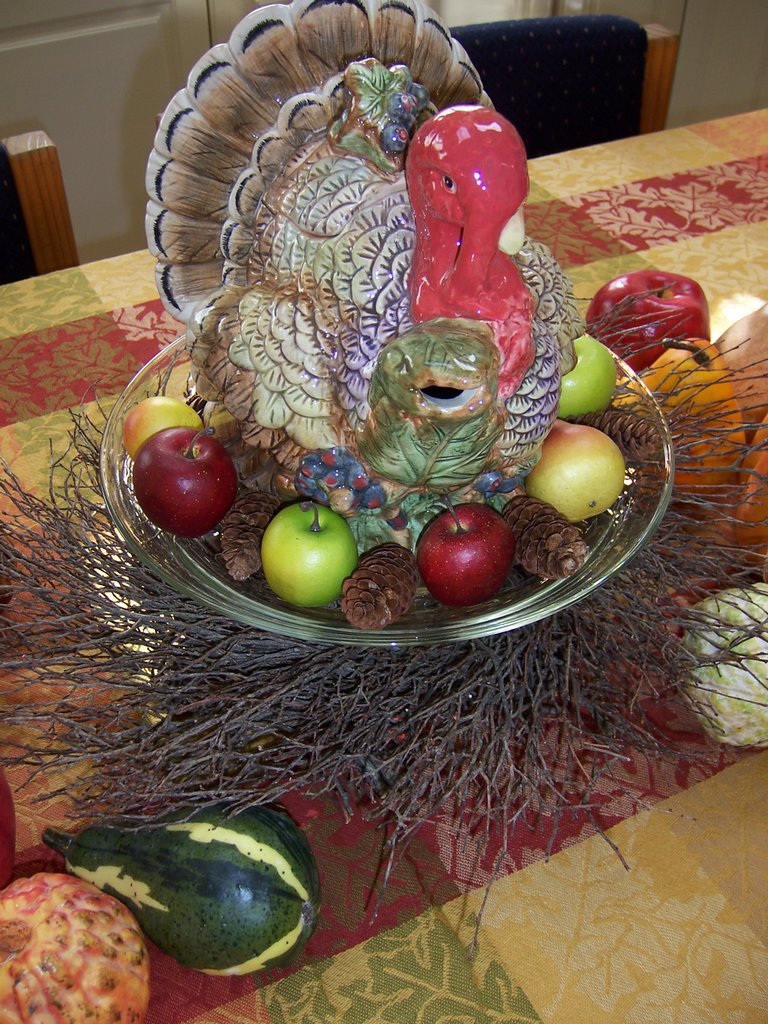
Somewhere Beyond the Sea:

I am somewhat tentative as I approach Sunday Supper this evening. Over at “Baking and Books,” Ari is churning up delicious homemade coconut ice cream. On duty in her "Test Kitchen," Veronica is exploring the art of white truffles and risotto.

Me? I’m about to prepare “Fish Loaf” from page 106 of the 75th Anniversary Edition of “Joy of Cooking.” While my colleagues are investigating new culinary frontiers, I’m wallowing in comfort food. I’m hoping my reputation doesn’t suffer much. This recipe uses pouch tuna. Shocking!

With the hopes of salvaging my culinary self-respect, I set out in search of more information about a dish that probably has the most unimaginative, least appealing name ever created in the history of food.

Frankly, I’d never heard of Fish Loaf. We were all about Meat Loaf growing up in suburban Long Island, and rarely did anyone stray from the standard menu items or ingredients. Nobody wants to be a fish out of water in the suburbs.

So, I take a deep dive into the virtual world and make a few interesting discoveries. I find a recipe for Gefilte Fish Loaf, which is often made for Passover. It is low in fat and low in calories. There are numerous Salmon Loaf recipes attempting to swim upstream, and I learn that in the Italian town of San Remo on the Mediterranean, one can find a dish called “Pan Pesce.” Short of the fancy name, and a touch of European cache, the ingredients are almost identical to the recipe I have in hand. I even find a few versions of a Caribbean-style fish loaf. And, of course, one can’t miss the potential culinary connection to crab cakes, although most of us consider them to be far more upscale. No matter the culture or region of the world, all of the recipes I uncover involve flaked fish, chopped aromatic vegetables, egg, bread crumbs and seasonings.

Yet, I am just at the start of my journey to the bottom of the sea. I gather the ingredients and begin the preparation. The elements are simple: albacore tuna, bread crumbs, chopped celery and onion, egg, lemon juice, red pepper sauce and basil. I combine it all in a food processor, so the preparation couldn’t be easier. Then, I press it into a loaf pan. When all the ingredients are combined it smells suspiciously like a fresh tuna salad sandwich, and as it bakes and that salty smell of the sea fills the air, I am flashing back to the tuna casseroles of my youth.

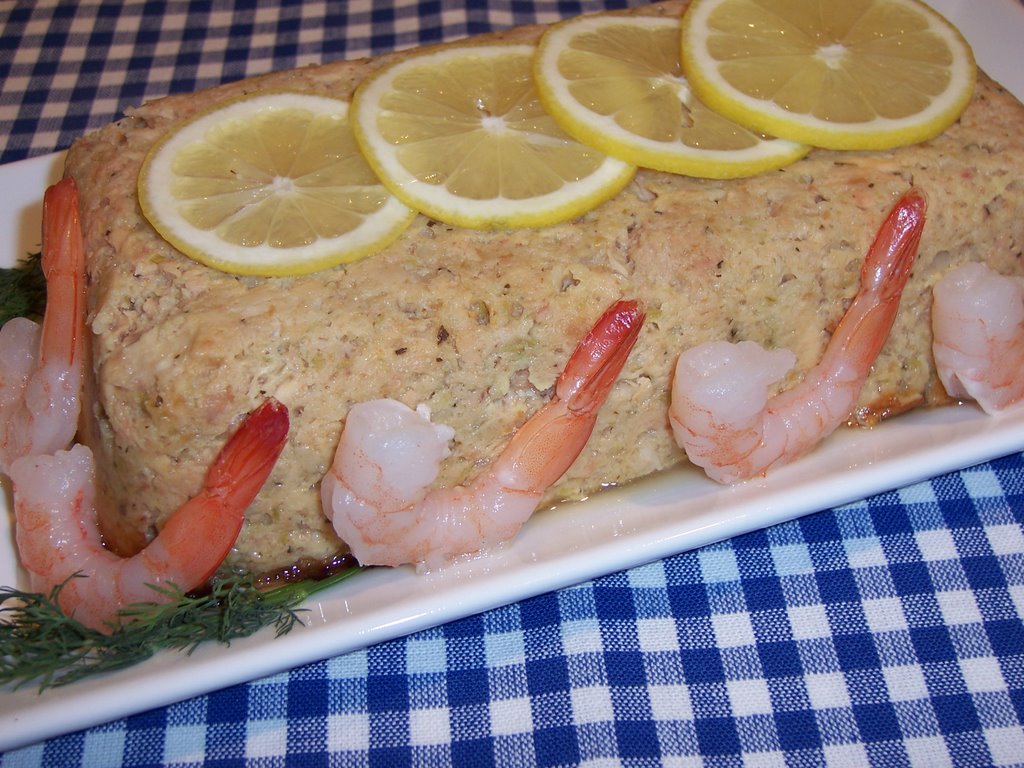
So, is Fish Loaf seaworthy, you may ask? I whip up the recommended side of Horseradish Cream – which is foreshadowed in some of the Gefilte Fish recipes – and is basically whipped cream infused with sharp horseradish and tangy lemon juice. What could be better than that? I garnish the loaf with paper-thin lemon slices, dill, and a few shrimp because every chef must add his own creative flair. It’s starting to look like something that might be served at the Coney Island Mermaid Parade. The taste is comforting, but actually somewhat mild, bordering on the bland. The loaf doesn’t hold its shape for very long and rapidly dissolves into a kind of seafood hash. But, add a dollop of that Horseradish Cream and the tides shift. When that razor-sharp horseradish and sweet fluffy cream collides with the briny tuna, get ready for a tidal wave of flavor.

My suggestion is this. When they re-issue the 80th Anniversary Edition of the “Joy of Cooking” they should rename this dish “Neptune’s Fantasy.” It will get far more respect that way.

© 2006 T.W. Barritt All Rights Reserved
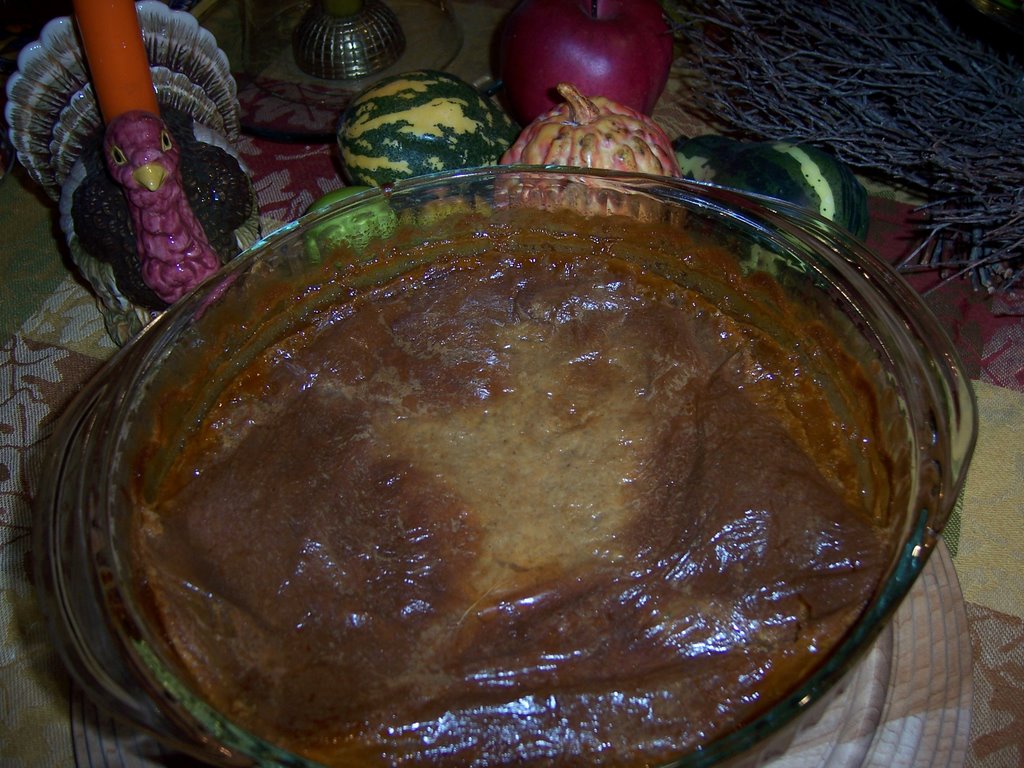
Saturday, November 18, 2006


An 1863 Thanksgiving:

It is an escape in time. I leave behind the pressures of the week and walk straight into the past of Long Island, circa 1863, for a glimpse at the culinary preparations for Thanksgiving.

I pass through the plate glass doors of the reception center at Old Bethpage Village Restoration, and I suddenly standing alone on a winding country road. There are pinkish-gray clouds in the sky, a slight chill in the air and many of the leaves have fallen.

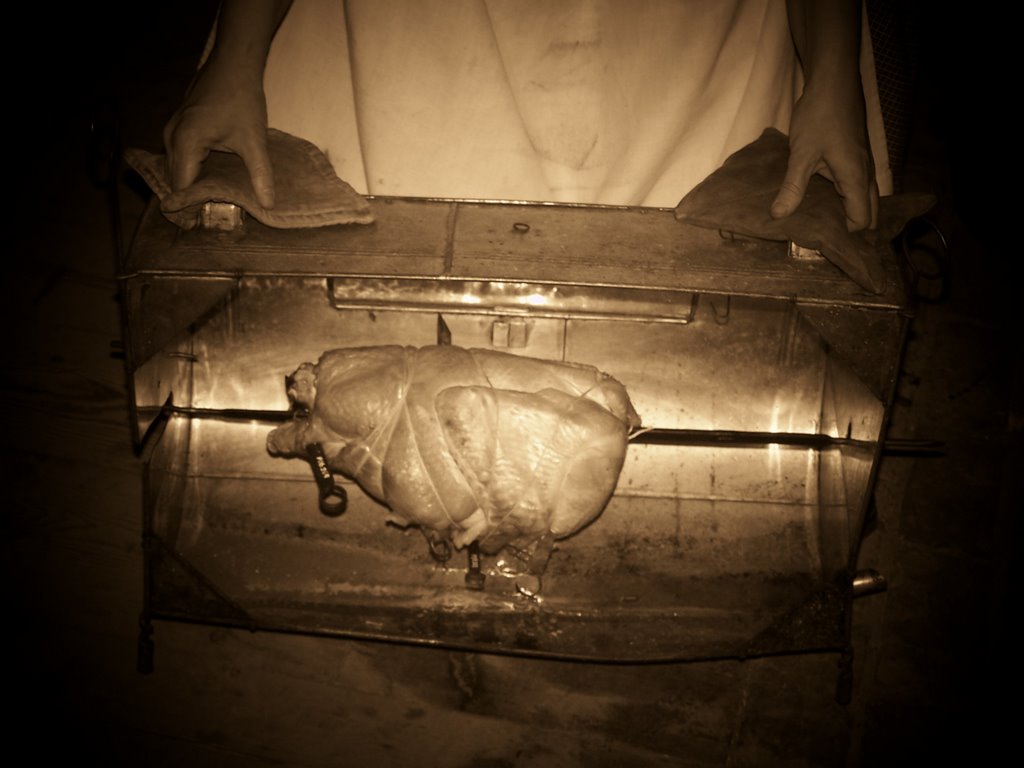
In the Henry R. Williams House (c. 1830) a woman dressed in blue gingham is roasting a turkey in a metal reflector oven. The poultry sizzles as it absorbs the heat from the open hearth. The woman is watching several black cast-iron Dutch ovens which are tucked in close to the flame, with mounds of hot ash on top. In one, a chunky soup is bubbling and another holds an aromatic golden corn bread.

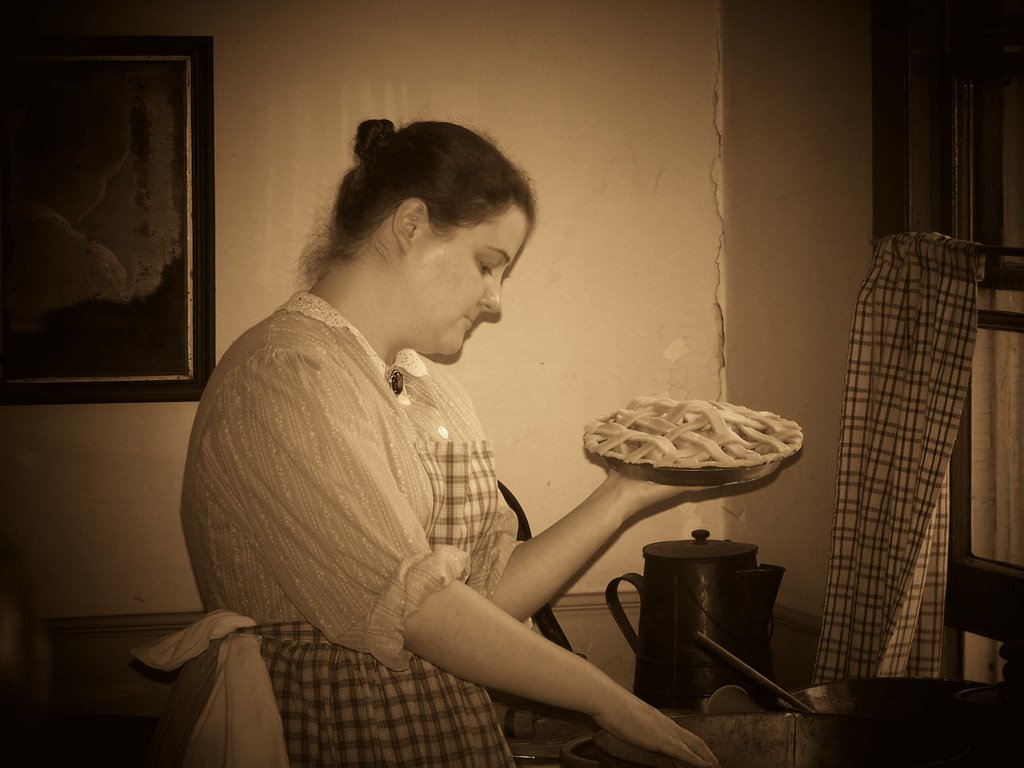
I walk along the dirt road to the Richard S. Powell Farm (c.1855) which sits aside a small creek. Several large cows roam in an adjacent pasture. Inside the kitchen, two women are stoking the brick oven in preparation for a day of baking. They are peeling apples and mixing gingerbread dough, and they work from a hand-written notebook where original recipes have been copied from the personal diaries of women from the period. When the bricks of the oven floor are hot enough, they will bake a week’s worth of fruit pies and cakes.

Inside the Ritch House (c. 1830) a woman with steely gray hair tucked into a white cap is tending to pots of ruby-red cranberry sauce and butter beans, simmering over an open hearth. She tells me that in the year 1863, President Abraham Lincoln – at the urging of a women’s magazine editor named Sarah Hale – set aside the last Thursday of November as a national day of Thanksgiving. Later in the day, she will add brown sugar, molasses and bacon to the beans and bake them overnight in the kitchen’s brick oven.

There is a small kitchen tucked in the back of the John M. Layton General Store and House (c. 1866). Several women are at work adding logs to a wood burning stove and preparing baked goods. They have grated all their own spices. One woman puts the finishing touches on an apple pie lattice crust, and another presses a round cooking cutter into russet gingerbread dough. The glowing embers of the wood fire heats the flat cast-iron burners of the stove and the deep oven where succotash steams and additional pies are baking.

Inside the Noon Inn (c. 1850), the merry tunes of a fiddle player accompany the preparations throughout the village and signal that the Thanksgiving holiday is fast approaching.

© 2006 T.W. Barritt All Rights Reserved
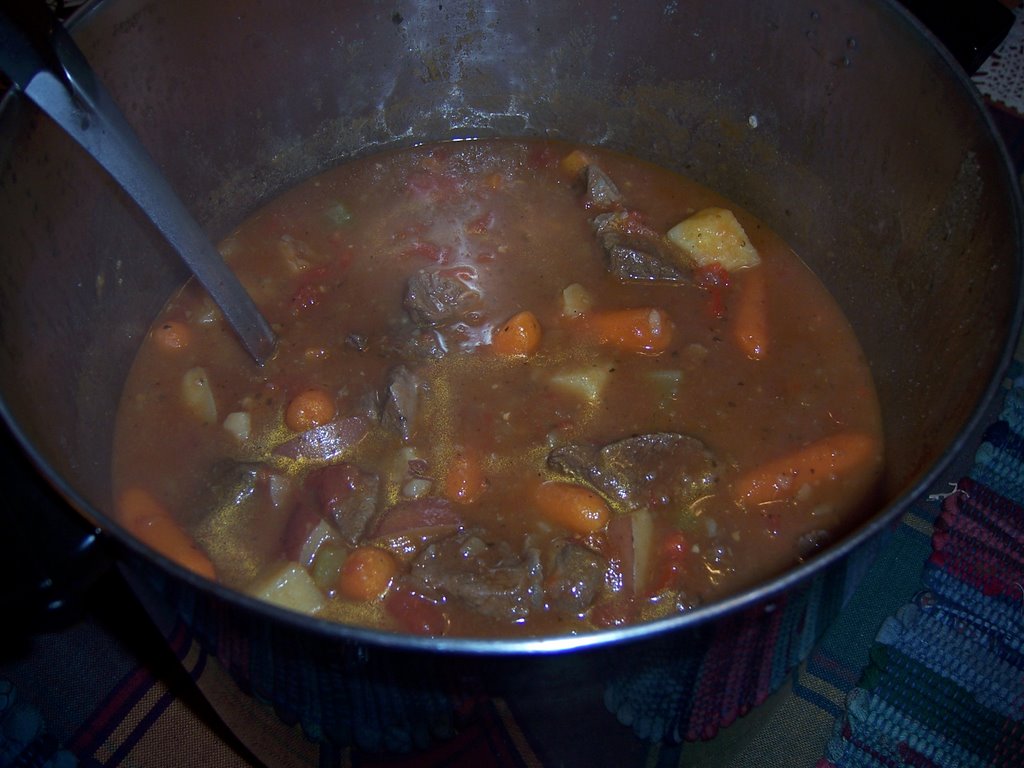
Thursday, November 16, 2006


The Truth about Turkey Day:

It’s not what you were told. The American Thanksgiving Day ritual – with its Turkey, Cranberry Relish, and Sweet Potato Casserole studded with mini-marshmallows – is really the result of the fanciful imagination of magazine editors. There was no Pumpkin Pie at the Plymouth Plantation.

Get used to it.

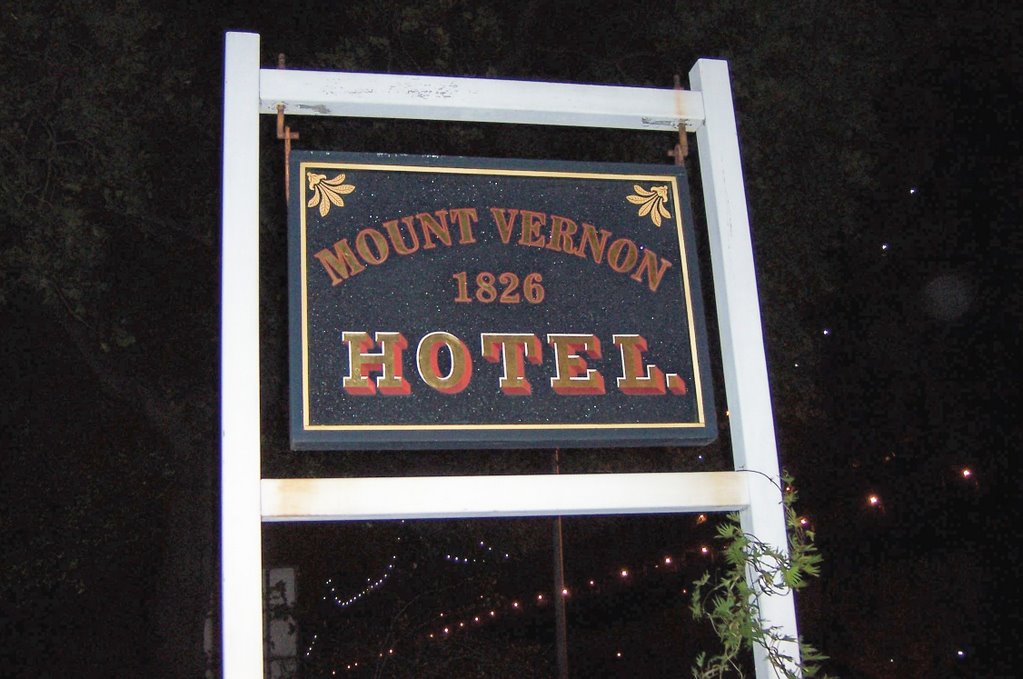
It is a balmy and wet November evening in Manhattan, and I arrive at the historic Mount Vernon Hotel Museum in Manhattan to hear the unvarnished truth about Thanksgiving. I’m there for the November program of the Culinary Historians of New York. The Mount Vernon Hotel is a three-story brick structure tucked away on a small hill in the shadow of the twinkling Queensborough Bridge. It was part of a “country estate” once owned by the daughter of John Adams, which eventually became a “day hotel” visited by folks who wanted to escape the city below 14th Street for an afternoon of leisure activity. I shake the raindrops from my umbrella and step across the threshold.

I can handle the truth about Thanksgiving. It’s still a week until the Super Bowl of culinary holidays. I’ve got seven days of starvation diet ahead of me. I can handle a little more pain.

Food historian Sandra L. Oliver is a gregarious woman with a warm, friendly demeanor and long wisps of gray hair pinned atop her head. She lives in Islesboro, Maine and is the publisher of Food History News.

She is also the co-author of “Giving Thanks” with Kathleen Curtin, a book that was designed to accompany an exhibit at the Plimoth Plantation in Massachusetts about what really happened at the Pilgrim colony in 1621.

Before Oliver’s talk, we sample a buffet of appetizers and sweets in the tap room. There’s a silky Sweet Potato Pie, and a delicious Apple Almond Crostata which evokes flavors of caramel and honey. There is also baked brie and stuffed mushrooms, which might seem odd choices until you hear Oliver's perspective on the holiday.

We take our seats in the second floor parlor of the hotel where Oliver deconstructs the legends and traditions of Thanksgiving. She explains that the meal in Plymouth is now referred to as “the event of 1621” and was not actually the first Thanksgiving. We can’t confirm that turkey was even eaten, but the only 40-word first-person account that exists says that venison was served. However, Thanksgiving is still the oldest American holiday and has been celebrated continuously somewhere on this continent from the 1600s until today.

Oliver explains that the diverse selection of foods served earlier in the tap room reflects the wide variety of foods Americans associate with Thanksgiving, although none of them were served in Plymouth.

She peppers her talk with anecdotes about the evolution of the Thanksgiving meal. Before becoming an official holiday, it was celebrated in the South, until the Civil War happened and nobody wanted to recognize “that damn Yankee holiday.” Eventually, Southerners picked up the tradition again, and that’s when foods like sweet potatoes, pecan pie and corn bread stuffing found their way into the meal.

Thanksgiving was even used as a propaganda tool. In the late 1800s and into the early 1900s immigrants were taught how to become “proper Americans” by learning about Thanksgiving.

As industrialization grew, Thanksgiving foods changed, with mass-audience dishes like the ubiquitous green bean casserole taking its place at the table. Oliver quips that the hugely popular concoction of green beans, mushroom soup and French fried onions is fifty-years old and is now a part of food history. “Some of us wish it was history,” she notes.

She has a word of advice about next week’s Thanksgiving dinner – take pictures of the cherished family menu items and get your loved ones to write down the recipes. So often a family’s idea of what constitutes a traditional Thanksgiving dinner is shaped by the beloved recipes relatives bring to the table each year. When those relatives are gone, that’s a piece of family history and Thanksgiving history that could be lost forever.

Oliver makes a feisty speech in support of Pilgrims, who she says have been stereotyped and much maligned for everything from dowdy clothing to bland foods.

“You ought to stop picking on Pilgrims,” says Oliver. “They gave us one heck of a fine holiday.”

© 2006 T.W. Barritt All Rights Reserved