Showing posts with label Organic Produce. Show all posts

Monday, January 31, 2011

Warm Thoughts on a Winter CSA

A winter CSA requires a bit of imagination on the part of the member. You can’t go to a place. You can’t see the vegetables sprouting, you can’t pick them, and you can’t feel the sun on your back. The experience of picking up the share is unremarkable. It is a cold winter night, and I park my car just outside a gourmet food store in a neighboring town. Inside, I put my signature on a list of roughly 30 names – people who have committed to support New York agriculture through the winter months. I am quickly handed a bundle of frozen vegetables that includes broccoli florets, pureed butternut squash, winter greens and raspberries.

There’s no actual farm experience and the food is frozen. It’s not sexy, or evocative, but it infuses my winter cooking with the best of New York produce. The simply labeled packaging gets you to think about greens and bright colors and the farmers who tilled the soil at a time when one might rather be hibernating. Each package includes the name - the personal brand - of a specific farm. The broccoli florets come from Hepworth Farm in Milton, New York. Hepworth Farms grows certified organic produce, is a seventh generation family farm, and is a business owned and operated by women.


Winter Sun Farms has organized nearly 30 winter CSA shares in the Hudson Valley and New York City regions now through April. There’s a little bonus with every share – tender, sweet, pea sprouts – an infusion of fresh greens that I gobble up on a dark, winter night. It’s a harbinger of spring in January.

All these ideas and images move through my mind as I work in the kitchen. I’m able to think about the origin of the food and the farmer. Chef Rozanne Gold, author of the new book “Radically Simple” has some thought-provoking ideas on her blog about cooking in silence, and considering the people who brought you the food and those who will eat it. She says it makes the whole cooking experience more fulfilling.
Indeed, if I am to be more thoughtful about my ingredients, a healthy, wholesome recipe for brown rice with chicken and broccoli makes a delicious showcase for the produce from Hepworth Farm. I tinker with the recipe and add a little seasoning, and some organic chick peas. The frozen florets steam in the rice liquid until they are bright green and crisp-tender. The vivid flavor of the broccoli is evident.

All the discussion of eating local makes me smile. Does it work? Is it worth it? Will it last? The membership in Winter Sun Farms makes me a more thoughtful, conscious chef and eater - and that works for me.

©2011 T.W. Barritt All Rights Reserved

Sunday, August 29, 2010

Guilt and the CSA

So, I’m lying in bed on a Saturday morning, thinking how nice it is not to have to get up at the crack of dawn. Suddenly, this little voice inside my head starts whispering,

“The cabbage is wilting! The kale is limp! Don’t let them go bad. Get up! Get up!”

So much for sleeping late. Soon, I am padding through the kitchen chopping kale and shredding cabbage. The sun is barely up.

I’ve heard of Catholic Guilt, Jewish Guilt, and Protestant Guilt (can we assume that guilt is largely non-denominational?). But, I actually suffer from CSA Guilt.

I’ve seen what it requires to plant and nurture the seedlings. At times, I’ve even worked in the fields. I know what it takes to grow good food. So if it rots - because I was lazy or let it go to waste - I feel the pain.

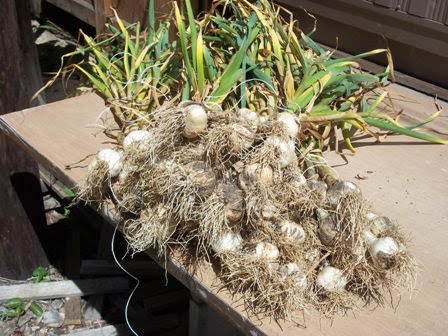
I did cook the turnips, but somehow, they've now migrated to the back of the refrigerator. I barely manage to save the newly-harvested garlic from a creepy mold attack …

The greens – like Kale – are particularly problematic. “Nutrition guilt” is perhaps even more ruthless. “I can’t let the Kale rot. It’s good for me.”
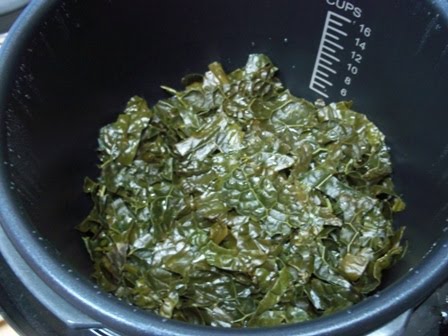
The digital pressure cooker is a pretty good guilt buster.
A full bunch of kale can go from guilt laden …
…to cooked and ready to be frozen, in about 6 minutes (not counting chopping). No guilt there. I’ll dine on greens all winter.

I am particularly proud of how quickly I deal with the Japanese Eggplant.

I mean, what do you do with these things?

But, within thirty minutes, I’ve managed to dice these suckers into uniform disks …

Pop it all into the pressure cooker …

And, ZAM!!!! Instant Ratatouille! It's almost like an episode of Bewitched (Sam is late preparing dinner and has to resort to witchcraft to put the Ratatouille on the table). There are plenty of servings for lunch so I don’t have to feel guilty about spending a fortune for a salad in New York City.

So, thanks to the lightening-quick pressure cooker, my conscience feels a little lighter when it comes to the produce from Restoration Farm.
Although, I have to admit, I still don’t call my parents enough…
©2010 T.W. Barritt All Rights Reserved

Sunday, July 25, 2010

Sweet and Lazy – The Blackberries of Restoration Farm

The blackberries at Restoration Farm are taking their own sweet time. They’re in no hurry to ripen. It’s summer after all. In this age of instant gratification, perhaps the blackberries are teaching us a thing or two about patience.

They are a work in progress. Ripening – by its very nature – suggests that you must wait and see what develops. Bright red berries may be flashy, but in fact they are raw and callow. Wait for inky black berries, and you’ll taste the full, deep expression of the fruit. Give it time.

I note that it is often the lone, single berry at the tip of the branch that has matured, while the less evolved cluster behind. For now we are limited to picking a pint at a time as we wait for more. There is absolutely nothing you can do to rush the rhythms of the berry patch.
So, there is no blackberry pie just yet. Maybe in August. But there is enough from the morning pickings for a single Blackberry Crisp with Candied Ginger, perfect for one with a healthy appetite, or large enough for two to share. The succulent purple juice and piquant ginger is sophisticated and adventurous - and builds a bit of decadent anticipation for what’s to come.

Blackberry Crisp for Two with Candied Ginger
Preheat oven to 375 degrees. For fruit filling, combine 1 ½ cups fresh blackberries, 1 teaspoon minced candied ginger, two teaspoons brown sugar and one teaspoon lemon juice in a small bowl. Let stand briefly and then place in a 2 cup soufflé dish.
In a small bowl, combine ¼ cup of flour, ¼ cup light brown sugar, 3 tablespoons rolled oats and a pinch of salt. Cut 2 ½ tablespoons unsalted butter into small pieces. Combine with the flour mixture. Using your fingers, rub the flour and butter mixture together until crumbly. Top the fruit filling with the flour and butter mixture (you will have some left over). Bake until topping is brown and juices are bubbling, about 25 minutes. Top with Greek yogurt and serve.

©2010 T.W. Barritt All Rights Reserved

Sunday, June 20, 2010

Strawberry Rhubarb Cobbler and Celebrating Summer Solstice at Restoration Farm

I am a rhubarb neophyte. Despite the dozens of blog posts that sing the praise of rhubarb each spring, and those sexy cover stories in Gourmet magazine, I’d never tried it. My first experience actually came just this past April, where it was served as the garnish atop an odd luncheon tart at an industry function. At least I think that was rhubarb.

However, being a member of a CSA is all about new culinary journeys, and when the magenta green stalks were included in the first distribution at Restoration Farm this season, I was genuinely excited by the possibilities.

Back in my kitchen, I find there are many things to appreciate about rhubarb. It slices beautifully, and the crisp stalks pack a powerfully tart punch. Chopped rhubarb can be frozen and used in baked desserts, and it pairs particularly well with strawberries. So I dice up about a pound and place it in the freezer along with a quart of strawberries picked at Restoration Farm. I have learned that with proper planning, nothing will go to waste – and it never hurts to have some fresh-picked fruit ready to go in the freezer.

On the afternoon of Restoration Farm’s Summer Solstice Pot Luck Dinner in the field, I prepare a Strawberry Rhubarb Cobbler as my contribution to the meal. Preparing the cobbler with the frozen fruit is – dare I say it – easier than pie. The tart rhubarb and sweet strawberries combine into a glossy thick garnet-pink fruit filling that is blanketed with crumbly sweet biscuit dough.

Strawberry Rhubarb Cobbler
(Adapted from “From Asparagus to Zucchini – A Guide to Cooking Farm-Fresh Seasonal Produce," Madison Area CSA Coalition, 2004)
1 pound fresh or partially thawed chopped rhubarb
4 cups partially thawed strawberries (when freezing, I combined the berries with ½ cup of sugar, and reduced the amount of sugar below to ½ cup)
¾ to 1 cup of sugar
3 tablespoons of flour
1 tablespoon grated orange zest
Topping:
1 ¼ cups flour
2 tablespoons sugar
¾ teaspoon baking powder
¼ teaspoon baking soda
½ teaspoon salt
5 tablespoons cold butter, cut up
½ cup sour cream
3 tablespoons cream
Addition cream to brush biscuits
Preheat oven to 375 degrees. Combine first five ingredients in bowl and toss fruit occasionally while you prepare the topping. Whisk flour, sugar, baking powder, baking soda, and salt in another bowl. Cut butter into bits and work into flour mixture. Combine sour cream and cream in small bowl and stir into flour mixture until just combined. Turn dough onto floured surface and gently knead 4-6 times. Roll dough into ½ inch thickness and cut into rounds with 2 inch biscuit cutter. Pour fruit mixture into buttered 9 inch square pan and top with biscuits. Brush biscuits with cream and bake until golden and bubbly, about 50 minutes.
At Restoration Farm, members arrive to celebrate the dawn of summer and carry all manner of dishes into the field - exquisite salads made with Restoration Farm greens, family recipes like Pastitsio and Spinach Pie, roasted vegetables, pasta salad and our friend George’s Iowa City Coffee Cake. It is a luminous late spring afternoon buffeted by soft breezes and the sky dappled with white clouds.
Head Grower Dan Holmes is resolute that farm dinners must occur as close as possible to the change in season. Indeed, there is something rhythmic and magical dining in the field on a glorious evening, partaking in food that has been grown on the farm, and enjoying a community meal together.


It is simplicity to be savored. We explore the berry patches and check on the heirloom tomatoes readying in the field up the hill. Rhubarb and strawberries are some of the early jewels of the spring growing season. As the sun sets on our farm dinner, we are more than ready for the rewards of summer.

©2010 T.W. Barritt All Rights Reserved

Sunday, June 06, 2010

Strawberry Fields and Salad Days at Restoration Farm

Despite the song lyric, strawberry fields are not forever. In several weeks, the plush red conical berries will be a memory, but at the moment, they are ripe for the picking at Restoration Farm.

I’ve been traveling, so I haven’t yet had a chance to taste the first fruits from the farm. The morning air is warm and sweet. I meet head grower Dan Holmes bumping along in the truck as I am walking down the path to the farm.

“Are you here for berries?” he asks. “There are bunches!”

I get to the “Sweet Field” and spend time filling a couple of containers. The strawberry plants lie low to the ground adorned with sparkling, juicy fruit. You have to forage around a bit, but underneath, there are plenty of firm, fat, lip-stick red berries. Soon, my fingers are stained a flattering shade of deep pink.

The beauty of fresh-picked berries is that they are already close to perfection and require so little manipulation. Nature and the farmer have done the work already to assure sweetness and flavor.

And, the blackberry bushes are covered in delicate lavender blossoms, a sign of the berries still ahead this summer.

It is also the first distribution of the season, and the start of my third season as a member of a CSA. People wonder if supporting local food is practical, economical or if the produce tastes any different. Yes, to all of the above. The produce from Restoration Farm will provide most of my food well into the autumn.

It has been a very long winter and it is a delicious homecoming. The “salad days” have returned at Restoration Farm, and I am just a bit cockeyed with glee. Head Grower Caroline Fanning is smiling. While I’ve noted that the farmers are reluctant to predict too far ahead, she thinks it is the start of a “good season.” The tender leaves are everywhere. Dan and Caroline and the volunteers have harvested red lettuce, green lettuce, spinach, arugula and mizuna.


I celebrate the start of Restoration Farm’s new season with the freshest of meals from the field – light, sweet, crisp and brilliant in color – a salad of many greens, Capatano Dairy Farmstead Gouda goat cheese, strawberries drizzled with balsamic syrup, and a bright glass of New Zealand Sauvignon Blanc. The strawberries are tart and juicy, and the greens peppery and herbaceous. It’s pretty heavenly. (As I planned this first meal from the farm, look what my friend Julia at the blog “Grow, Cook, Eat” was putting together!)

As Barbara at the blog “Chez Aurora” has put it so well, “Green thumbs up!”
©2010 T.W. Barritt All Rights Reserved

Sunday, March 14, 2010

In the Beginning - Hints of Green at Restoration Farm


The storm is hellacious – belligerent wind and soaking rain. Nature is throwing a chilling late-winter tantrum. Yet, in a well-lit basement work area, a small group of volunteers is painstakingly focused on the promise of sun-drenched organic vegetables. The first CSA pickup is months away. Sometime in early June, members will arrive at the Restoration Farm distribution tent, and delight in that first look and taste of tender greens. Some may never consider how the journey of that verdant lettuce, hearty kale or sweet crimson beets began.

Head Grower Caroline Fanning is instructing a group of volunteers in the process of seeding. She is carefully organized with detailed lists, labeled flats and packets of seeds grouped together. Seed flats are stacked tall throughout the room, each packed with soil and designated for a specific food crop, herb or flower.


I’m given the task of sowing seeds for Red Ace beets. Each compartment of the flat must be “dimpled” to receive the seeds. I plunge an index finger into the cold soil to make the indentation. Larger seeds require deeper holes.


Caroline gives me an index card folded into a v-shape. From the index card holder, two gnarled beet seeds are dropped into each hole. I seed eight flats in total. If all goes well, once the Red Ace seeds germinate and are planted at Restoration Farm they should be ready for harvest in mid-June for use in a Roasted Beet and Goat Cheese Salad. Can’t you taste it already?

Head Grower Dan Holmes arrives with Glen and Caroline’s grandfather George. They work to finish the flats – topping them off with more soil. There are flower seeds to be sown. It is eye-straining work. The flower seeds are tiny – some even dust-like.

Restoration Farm Head Growers Dan Holmes and Caroline Fanning, George and T.W. in the greenhouse.

Outside in the greenhouse, onions, leeks and scallions seeded several weeks earlier have begun to sprout.

The aromatic onion is the foundation for so many dishes. The onion has been cultivated for more than 5000 years, but even today is still seeded by hand at Restoration Farm. The fragile green tops of these aromatics are just one signal of the cultivation, the labor and flavor still to come.

©2010 T.W. Barritt All Rights Reserved

Sunday, November 15, 2009

Garlic Planting at Restoration Farm and a Roasted Garlic Spread

No sooner have I pronounced “twilight” at Restoration Farm when I am reminded by Head Grower Caroline Fanning that there is plenty of activity still to come at the CSA. “With the exception of December and January, when we’re mostly hibernating, there is always something happening at the farm,” says Caroline.

Indeed, for everything there is a season. While the harvest has concluded, planting has quickly begun again, which means that on a crisp and clear autumn morning, some thirty members stream onto the farm to prepare the soil and sow the infamous “stinking rose.”

A few culinary and historical notes about garlic – the bulbous plant is known for its restorative powers, and has been cultivated since ancient times. Garlic likely originated in central Asia, but its fame spread to Europe during the Crusades. It was thought to be so powerful that it could ward off the plague and evil spirits. Raw garlic has a pungent aroma that becomes sweeter when cooked.

The garlic field is tucked between the red Dutch farmhouse and an apple orchard at the northern end of Old Bethpage Village restoration. A table is covered with flats of garlic bulbs, and we sit in a large circle wrapped in coats and wearing wool caps, and learn to divide the bulbs into individual cloves and discard the center. There are children, seniors and singles all pitching in to help, but not a single vampire in sight.

Dan and Caroline are working with a group in the field to rake the soil and they roll a cylindrical device over the soil that creates perfect rows of dimples.

Groups of people follow behind with baskets full of pearly-white cloves. Each clove is tucked into a dimple, about as deep as the knuckle on your hand. The root of the clove goes in first, and the tip of the clove points towards the sky. With so many pitching in, eight beds of garlic are planted in three hours.

Multiple cloves will cluster around that single clove when the bulb matures. Each row is neatly labeled for harvest sometime during the 2010 season.

Somehow, all that garlic leaves one craving more. I roast two Restoration garlic bulbs in the oven for a simple golden roasted garlic spread of rich and buttery consistency.

Roasted Garlic

1. Place two bulbs of garlic in a small crock.
2. Add about ¼ inch of vegetable stock.
3. Drizzle with olive oil and season with salt and pepper.
4. Cover tightly and roast at 375 degrees for 20 minutes
5. Uncover, drizzle with additional oil and roast about 7 minutes more.
6. Squeeze the roasted garlic from the bulb and spread on toasted bread rounds.

©2009 T.W. Barritt All Rights Reserved