Showing posts with label Classic European Breads. Show all posts

Sunday, November 07, 2010

Perfecting the Pippi Longstocking of Breads

During my entire elementary school career, I never tugged on a classmate’s pigtails, but I must confess I have a bit of an obsession for braided bread. Challah is a traditional Jewish bread, enriched with eggs and served on the Sabbath. An egg glaze gives the bread a glossy, bronze finish, and the braided dough is a stunner. The plaited strands are a symbol of love.

Four years ago, I took a month-long course in Classic European Breads at the French Culinary Institute in New York. We worked like dogs, making dozens of baguettes each day for restaurant service, as well as learning to make a range of classic styles of bread. We made some impressive Challah. When I tried to make it at home, the obstacles were numerous. The home kitchen is nothing like the professional bread kitchen. I used a stand mixer to mix the dough, and probably overworked it. I couldn’t’ find a spot in the house with the ideal temperature to encourage bread to rise. I did a nice job with the braiding, but on the final rise, the loaf barely budged. The loaf I brought to a Thanksgiving dinner looked good, but was dense and chewy. Everyone was polite (how could anyone be critical on Thanksgiving?), but I knew I knew my Challah was an unqualified flop.

Recently, I installed a warming drawer with a setting for proofing bread. That hefty investment made, my bread now rises spectacularly well. And, I have to laugh when I think about the fact that my Great Grandmother used to leave her bread to rise by the furnace. That never worked for me, but a pricy warming drawer delivers the desired result. She probably finds this quite amusing.
I’ve also eliminated the stand mixer from the process. I’m a physically fit guy. I can manage a few minutes of kneading. In fact, the tactile approach is what baking bread is all about.
So, I can honestly say this latest attempt was an improvement over the last. When placed in the warming drawer, the braided loaf did actually double in size, and the crumb in the finished loaf had a nice, feathery texture.
I had a little trouble keeping the braid together, and one side got a little tattered. This is probably because I didn’t coat the dough with oil during the second proofing in the refrigerator, and it developed a bit of a skin. This made it harder to roll the dough into ropes, and some of the ropes tended to tear a bit. I can probably fix this next time.

But, heck, right now I’m eating Challah that I kneaded, braided and baked myself. It’s edible, it’s even tasty, and it didn’t come out of a plastic bag. What could be better than that?

©2010 T.W. Barritt All Rights Reserved

Wednesday, November 08, 2006

A Minimalist Approach to Bread:

Devouring the New York Times - Wednesday, November 8, 2006: Mark Bittman's piece "The Secret of Great Bread: Let Time Do the Work" immediately caught my eye, perhaps because of my recent immersion in the bread kitchen. Bittman reports on a "no-knead" approach to bread baking, perfected by Jim Lahey of the Sullivan Street Bakery. Bittman suggests that the method is perhaps "the greatest thing since sliced bread," and something an 8-year old could master. Quite an endorsement.

The secret -- time and moisture. The very wet dough rests for nearly 18 hours and requires no kneading, but Bittman maintains the technique results in a perfect crisp crust and excellent crumb structure. From a scientific perspective, it makes sense -- moisture, more than kneading activates yeast, according to my instructors. And while we're all pressed for time, there is some appeal to starting a dough before bedtime, and finishing it off for dinner the next night.

As always "The Minimalist" offers easy to follow, step-by-step instructions and photos. It looks worth a try, especially if kitchen experiments appeal to you, and you're looking for a weekend culinary project. Check out the details in the "Dining In" section or at the New York Times online.

And, if visions of Turkey Day are already dancing in your head, you'll give thanks for the annual array of sumptuous side dishes and turkey options that are showing up in this week's edition.

© 2006 T.W. Barritt All Rights Reserved

Sunday, October 22, 2006


Bread Baking Resources and Tools
As my “hands on” time in the professional bread kitchen concluded last Friday, and now I must adapt the techniques to my home kitchen, I thought I’d offer up a couple of resources and tools I’ve encountered in the last four weeks for anyone attempting to try artisanal breads at home.

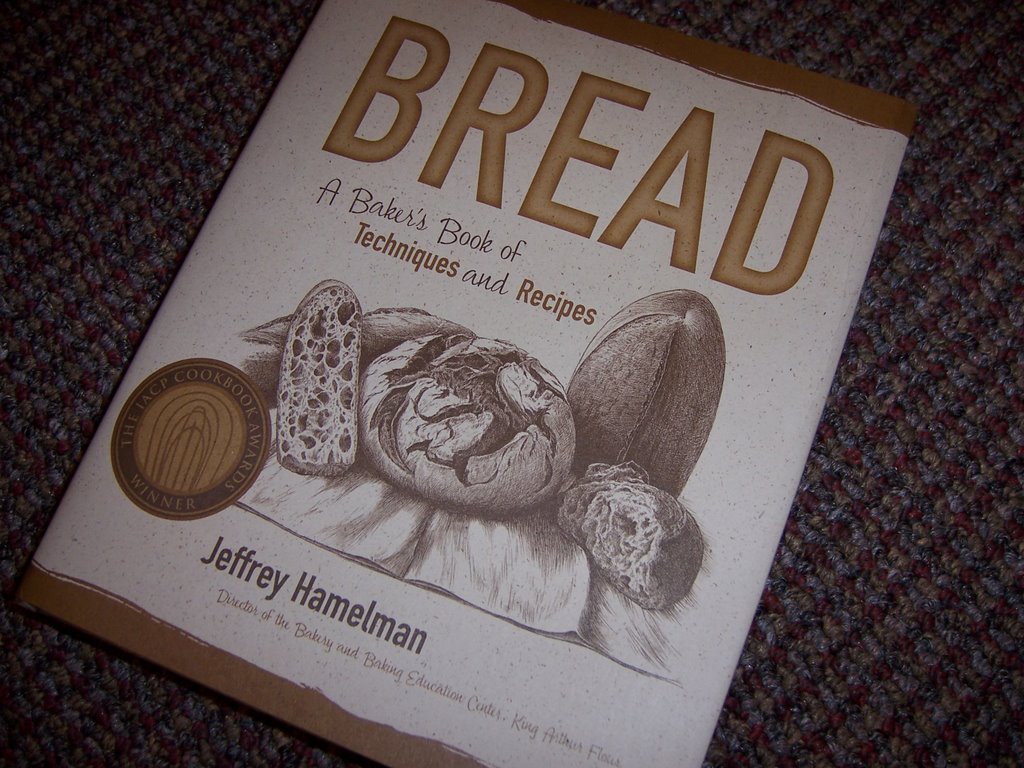
Try and get a copy of “Bread: The Baker’s Book of Techniques and Recipes” by Jeffery Hamelman. This seems to be the reference book of choice among professionals and, in fact, Hamelman, a Certified Master Baker, is the director of the Bakery and Baking Education Center for King Arthur Flour. Hamelman covers every type of loaf imaginable, from yeast breads to rye sourdough, and provides measurements in U.S. and metric, as well as specific formulations for home baking and larger batches. There are beautiful photos and detailed instructions for shaping each style of bread. “Bread” is available in hardcover and was published by John Wiley & Sons in 2004.

A digital thermometer is essential to take the temperature of the dough. Many recipes show a “desired dough temperature” based on the types of ingredients in the formulation. If the temperature of the dough is higher after mixing, that means the loaf is likely to ferment more quickly and you may need to shape and bake it sooner.

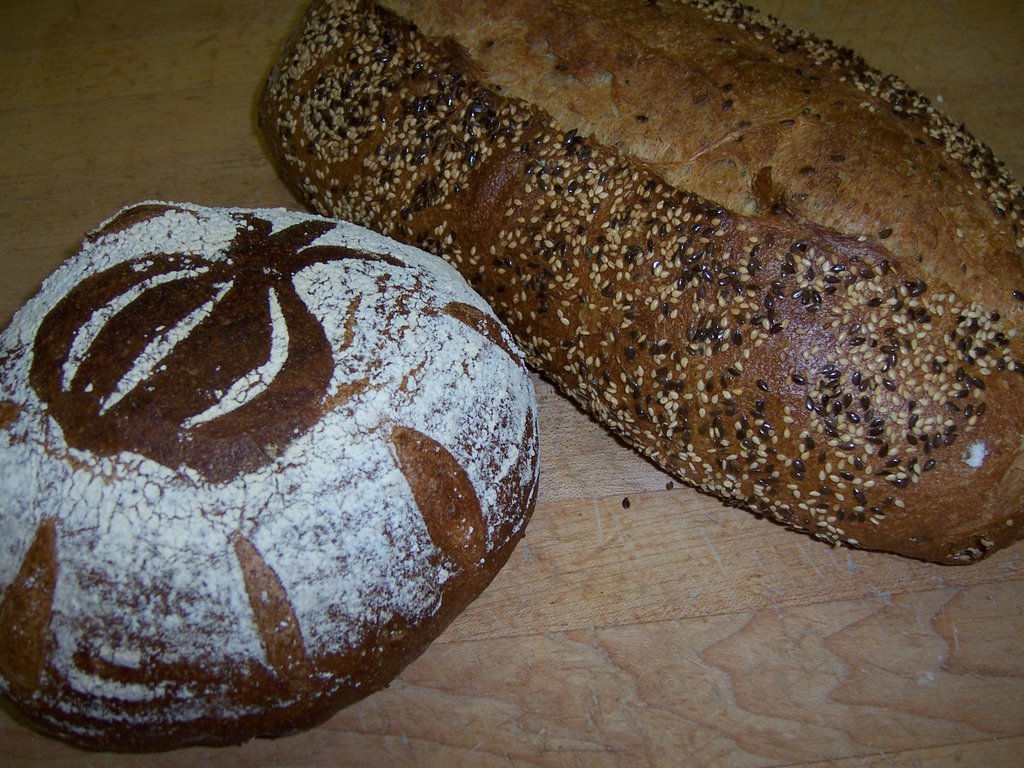
Until taking my recent class, I wondered how those interesting circular shapes and patterns were achieved on round rustic loaves. Check out retail stores like Sur La Table for a circular woven basket, sometimes called a “banneton,” where the bread is kept for its final proofing and gets that circular beehive pattern on top. A dusting of flour in the basket helps to define the circles.

Finally, for a little bit of historical context, it’s fun to read Julia Child’s narrative of how she investigated the correct procedure for making classic French bread in her memoir “My Life in France.” Julia’s reflections on bread begin on page 253, and you can read her humorous account of what she describes as “the Great French Bread Experiment” as she worked on the manuscript for “Mastering the Art of French Cooking Volume II.”

© 2006 T.W. Barritt All Rights Reserved

Friday, October 20, 2006


Bye Bye Baguettes
Our final day of Classic European Breads is both tasty and whimsical. We mix a batch of Swedish Limpa bread, a sourdough rye with molasses, fennel, coriander and orange zest. The rye and citrus is intoxicating as it bakes, and the resulting rich brown loaf smells sweet and spicy.

On Thursday, we did the prep work for authentic German salt pretzels or “Laugenbrezel.” Chef K gives us a brief history of the knotted delicacy. The pretzel icon hangs from many bakeries in Germany and has religious connotations. The traditional three holes are said to represent the Holy Trinity, and some say the knot resembles a person praying. The pretzel was invented somewhere between the 5th and 7th century by monks, ever the ingenious clerics. Children in Germany will tie a pretzel around their neck on a string on New Years as wish for prosperity. Some pretzels are first boiled in lye before baking to establish a crisp brown crust, but we use boiling water and baking soda. The auburn crust is crisp and the inside moist and chewy and we even stuff some with a grating of gruyere cheese, which is downright yummy.

We concoct Ciabatta, a pale, Italian “wet dough” that is called the “Lady Slipper” because of the lacy design effect achieved by rolling the cut dough in flour and turning it flour-side-up in the oven.

For lunch, we make pizza dough and create individual pizzas with cracker crisp crusts, topped with homemade tomato sauce, roasted garlic, caramelized onions and cheese. We all agree it is the best lunch we’ve had in a month.

We conclude four weeks of intensive labor right where we started, shaping and loading the baguettes for the evening dinner service at L’Ecole. For a moment, I stare at the not-yet-baked baguette in my hands on the bench in front of me. It actually looks like it was shaped correctly by someone who knows what he’s doing.

Chef K presents our course completion certificates, we toast each other with champagne, and she gives us a lovely “go forth and bake bread” blessing. She mentions that we Three Bread Musketeers have done the work of twelve students during this class. Our aching muscles confirm that, but our bread baskets are indeed overflowing.

© 2006 T.W. Barritt All Rights Reserved

Thursday, October 19, 2006


Scones
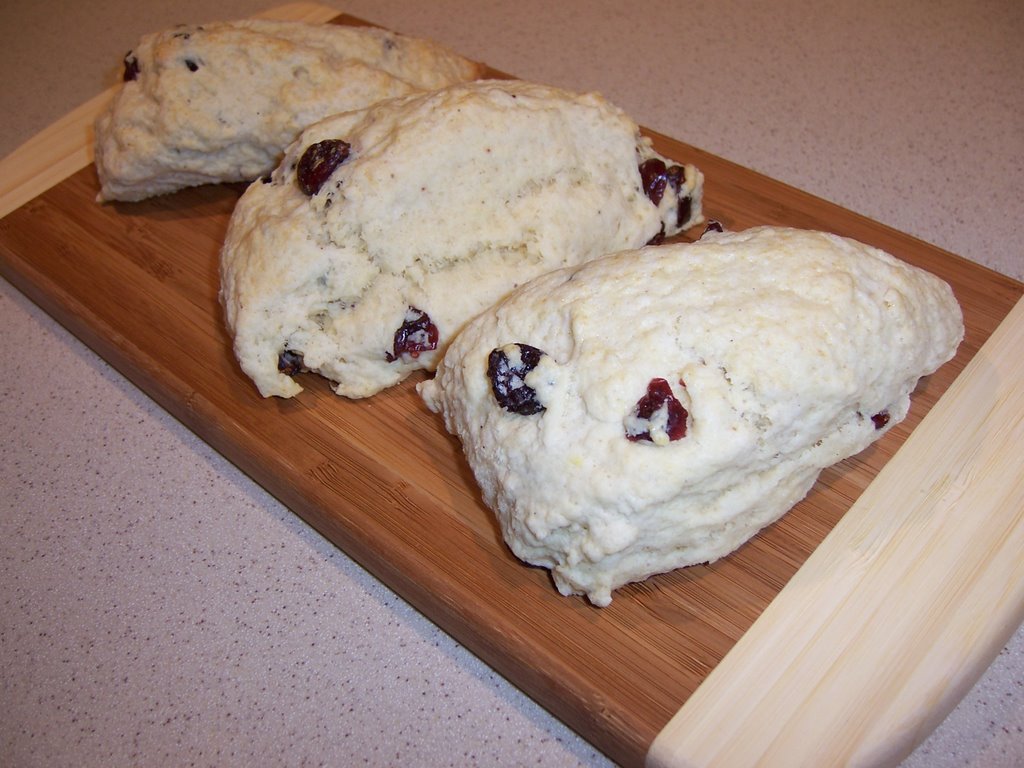
As Classic European Breads draws to a close, we are dropping in on diverse cultures and cuisines. This morning we make a brief stop in Great Britain and dip our bakers’ hands into the preparation of scones. The recipe is remarkably easy. A little baking powder, flour, butter, milk and egg mixed by hand, and you’re on your way to a proper afternoon tea. I sprinkle my mixture that resembles pie dough with cranberries and nutmeg in honor of the cool autumn days. My teammates are showing bursts of creativity, mixing in lemon zest, ginger and candied citron.

Chef K gives us a nifty tip – once you’ve pulled the shaggy dough together, shape it into a long, rectangular log. Then, you can cut neat triangular wedges from the log, or even freeze the log for several days and just pull it from the fridge and slice and bake to serve hot scones to guests. The key is you must serve them hot, as scones can quickly become stale.

We pull them from the oven just before lunch. My lofty, buttery scones are warm and crumbly and dotted with bright crimson, tart-tasting sweet cranberries.

© 2006 T.W. Barritt All Rights Reserved

Wednesday, October 18, 2006


Croutons from the Bread Kitchen
Today seemed like a series of odd episodes. There’s a certain drama that exists in any workplace and a bakery is no different. Things go wrong, chefs complain, people screw up and sometimes voices are raised. But you still have to produce bread. The production schedule supersedes any drama and you must deliver bread.

We delivered two varieties. Broa is a long rectangular loaf of cornbread that hails from the northern part of Portugal. The dough was sunny gold and almost fluffy, yet the finished product is hearty enough to stand up to a Portuguese soup made with cabbage and chorizo.

Krauterquarkbrot has perhaps the longest name of any bread, and while it does contain the dreaded rye sour, it is also nicely flavored with fromage blanc and fresh herbs. In fact, the translation of the German name means “herb bread made with quark cheese.”

Later in the afternoon the pace quieted down a bit. The Maitre Boulanger is preparing for a competition and his mind appears to be on the event. Chef K will be back for our final two classes. News of her return pleased us.

For a brief moment, Chef Jacques Pepin breezed through the kitchen, and I was reminded of all those aspects of food – the history, the legacy, and the time-honored techniques – that keep me in the game.

© 2006 T.W. Barritt All Rights Reserved

Tuesday, October 17, 2006


More Rye from the House of Pain: It is week four – the final week – of Classic European Breads at the French Culinary Institute and once again we are struggling with the German unit and rye sour starters. I want to know if there are any other countries in Europe that make bread, and how come our tour hasn’t visited there yet???

My fingernails are caked with grayish residue as I plunge my hands into yet another bin of cold, slick rye sour starter. The stuff bonds to surfaces so well that it could fill the cracks in my kitchen ceiling. I’ve washed my hands dozens of times, but it has given me a second skin. Whereas there is indeed a touch of romance in mixing and shaping a baguette, there is nothing remotely alluring about the preparation of rye bread. Think heavy duty home improvement project, and you’ll get the picture. Bottom line, it’s messy.

The Maitre Boulanger informs us that we are preparing “Vinchgauer,” a flatbread that is 70 percent rye and 30 percent wheat flour. And it only has an ingredient list that is about a mile long. My teammate, “A” is awfully perky today, and seems to be enjoying playing in the starter and inhaling fermented rye fumes. Its annoying and I’m somewhat less optimistic about our prospects.

I’ll admit the history on Vinchgauer is intriguing. The bread originated in Austria and contains several spices – coriander, fennel, and caraway. What were all those spices doing in Austria, you ask? The Maitre Boulanger tells us that Austria sat smack in the middle of the spice route from Asia and as merchants traveled through, they left samples behind.

After mixing, we scoop the mortar-like dough onto the bench and let it rest. It doesn’t seem to have much life in it, but there is some evidence of activity. We attempt to roll the sticky dough into balls, but end up scraping a lot of it off our palms and the bench. Then, the Maitre Boulanger shows us how to sprinkle the rounds with course rye flour and press them flat on a bagel board. The little pancakes look kind of gray and listless. Any remaining optimism has faded and I am convinced we are on our way to another kitchen disaster. (I haven’t shared our pumpernickel nightmare – it was just too painful.)

We slide the disks into the oven, and try and occupy ourselves with other tasks. Twenty minutes later, though, a bit of a culinary miracle has occurred in the oven. Our Vinchgaur is now deep reddish gold, puffed up like pita bread, and a heady aroma of spices is wafting from the oven. The Maitre Boulanger inspects the product and says “Hey, these look good.” I suspect he was skeptical too…

We cut into a loaf. It has a lovely cross pattern that has blossomed on top naturally and is about an inch-and-a-half tall at the center. The blend of rye and spices gives the Vinchgauer a deep rich flavor, with an essence licorice.

Maybe it was worth the effort.

© 2006 T.W. Barritt All Rights Reserved

Saturday, October 14, 2006

The Secrets of Challah


Who doesn’t dream of being able to create a shiny bronze loaf of braided Challah bread? I’ve had Challah envy just walking down the bread aisle of even the most rudimentary grocery store. There were always all sorts of questions. What is the origin of this exquisite bread? How do you achieve the braided effect? How do you create that glossy, golden sheen?

On Friday in Classic European Breads, we became privy to the secrets of Challah. Originating in Europe, the shimmering yellow dough is enriched with oil, sugar and honey. The slightly-sticky dough forms nicely into balls, which are then rolled into ropes.

There are many braiding techniques, but we focused on braiding three and four ropes of dough at a time. The “three” technique is just like braiding hair and uses three strands of dough lined side-by-side on the work bench. The “four” technique creates a thicker chain link effect. Four strands of dough are positioned on the bench at 90 degree angles and then alternately folded over each other until they bulge into a braid. Once shaped, the loaves are brushed with egg wash to achieve that burnished gold look during baking.

The “bumps” of the braid are meant to represent the 12 tribes of Israel (assuming you braid it properly and get twelve bumps!) Challah is traditionally served on a white towel that symbolizes the manna from heaven, and rather than slicing, guests pluck a bump from the loaf with their hands.

Rich, fresh and downy soft, the end result was a blessing of theological scope!

© 2006 T.W. Barritt All Rights Reserved

Friday, October 13, 2006


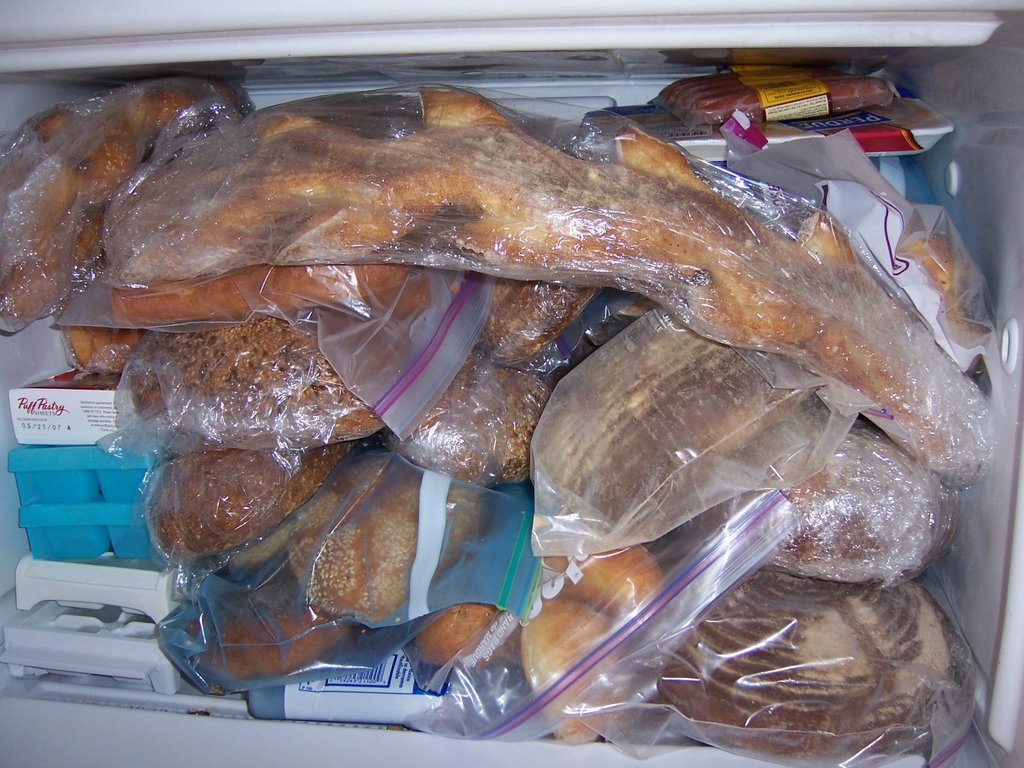
Creative Uses for Bread: I’m three weeks into an intensive bread baking course and “my bread basket runneth over.” I’ve got bread in the freezer with barely enough room for ice cubes, bread on the counter and bread in the den. I’ve given bread to relatives, friends and colleagues, and there’s still a surplus. One friend in Canada suggested establishing a roadside bread stand, similar to the lemonade stand of bygone childhood days. Not a bad way to earn some extra cash. As the weather is getting cooler, maybe I can convince the heating oil company to take bread as payment instead of cash.

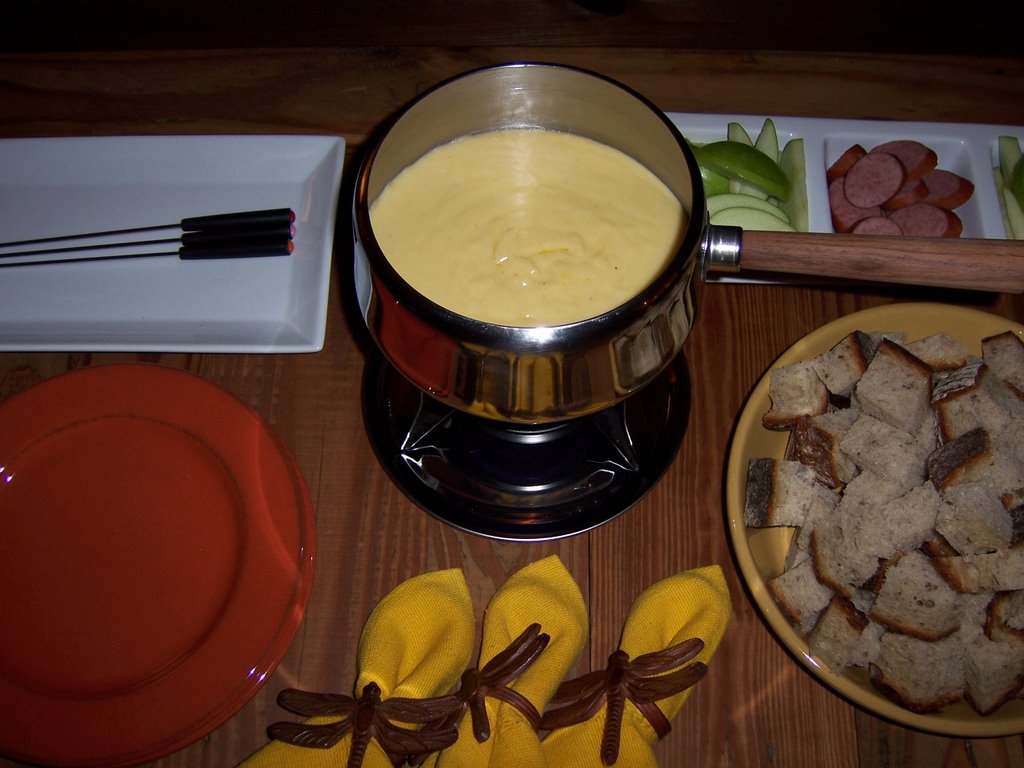
There have been some practical and delicious solutions. I’ve made Panzanella, the traditional Tuscan bread salad, and tonight I had some laughs with my friends Mary and John over Dutch Gouda and Beer Fondue which went beautifully with cubes of German rye bread. Next weekend the high school crowd arrives for their 30th reunion celebration, and you can bet they’ll get French toast or Strata for brunch.

I’m thinking about bread pudding and bread stuffing, since Thanksgiving is just around the corner, but that’s still not going to get me to the back of a very packed freezer. Who would have thought that rolling in dough could be such an issue? If you’ve got any interesting ideas for creative ways to use bread, I’m open to any and all suggestions!

© 2006 T.W. Barritt All Rights Reserved

Tuesday, October 10, 2006


The Problem with Rye Bread: This little loaf represents more than 24 hours of labor. I really didn’t have a concept of how rye bread evolved until yesterday’s “Rye Enlightenment.” The foundation of a dense, chewy, sour rye bread is a “levain” which is basically a thick paste of wheat flour, rye flour and water that ferments overnight, developing quite an odor. We started our levain at about 2:00 p.m. on Monday and this little loaf popped out of the oven at about 2:45 p.m. on Tuesday.

Does the phrase “time management” come to mind?”

During that period, the levain was reduced by a small amount and then fed at several intervals with additional flour and water to increase activity of the fermentation. There are all sorts of analogies to yogurt cultures and various types of bacteria. In fact, very little yeast is used in the final product, with the levain generating most of the leavening.

It’s an incredibly time intensive process and not for the faint of heart. You have to, not just like, but love the aroma of rye, and you have to remember to feed the beast with additional water and flour throughout the day. When you finally mix the levain with the other ingredients, the dough is the strange consistency of modeling clay. You’ve really got to worship rye bread to go through all this effort. With all the time issues we face, one has to wonder if the artisan approach to rye bread can survive.

Right now, I am trying to decide the fate of this loaf of rye. Something of this caliber deserves a top-of-the line corned beef with a little sauerkraut and a great microbrew on the side.

© 2006 T.W. Barritt All Rights Reserved

Monday, October 09, 2006


Breads Hearty and Wry: Our European bread odyssey at the French Culinary Institute moves into week three and we arrive in the land of the Rhine River for a taste of the breads of Germany. This is the Maitre Boulanger's forte, as he is a native of the country, and he gives us a quick briefing on the impervious nature of the tough rye seed, which must be soaked longer than other grains for proper fermentation.

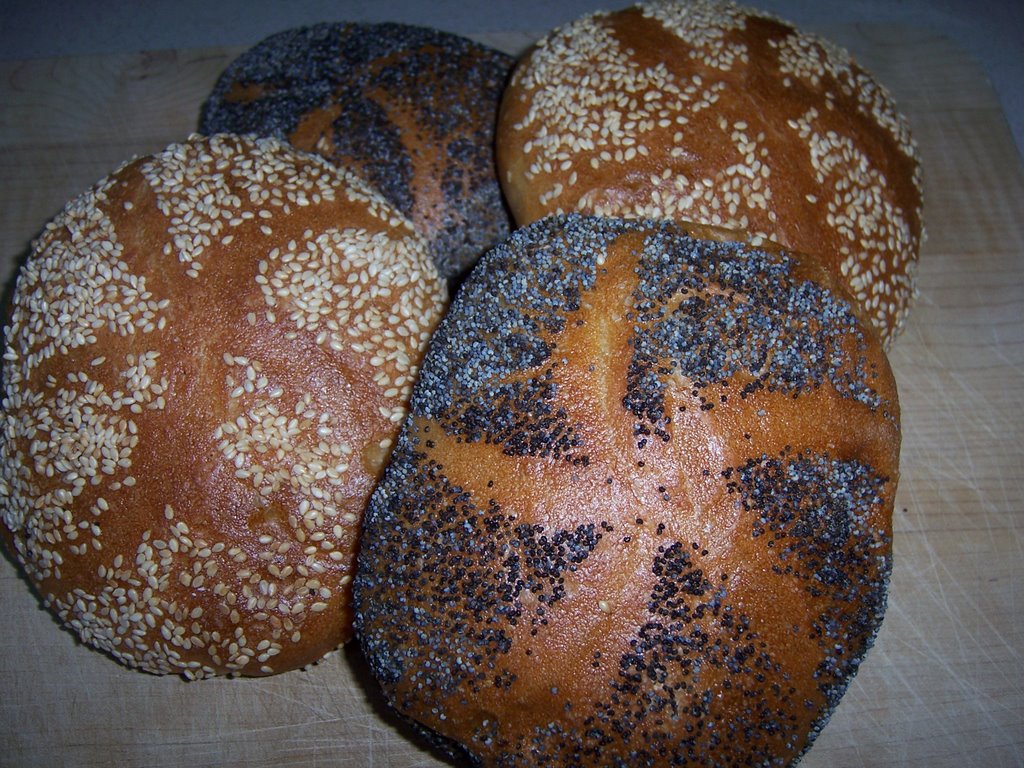
We begin with the venerable Kaiser roll, and learn how to quickly mix the simple, serviceable dough, shape it into rounds and stamp it with a tool that gives it that distinctive pinwheel pattern. Some of our rolls proof too long, and don't expand like they should in the oven, but the slightly tart, nutty taste and golden crust is distinctly genuine.

My teammate "A" is working like a dynamo today. She is anticipating what the chef will need, and sprinting ahead in terms of scaling out the remaining recipes. Eventually, I start to catch up to her, after a serious case of the Monday blahs, and we begin to work as a pretty efficient team, quickly moving through one job after another.

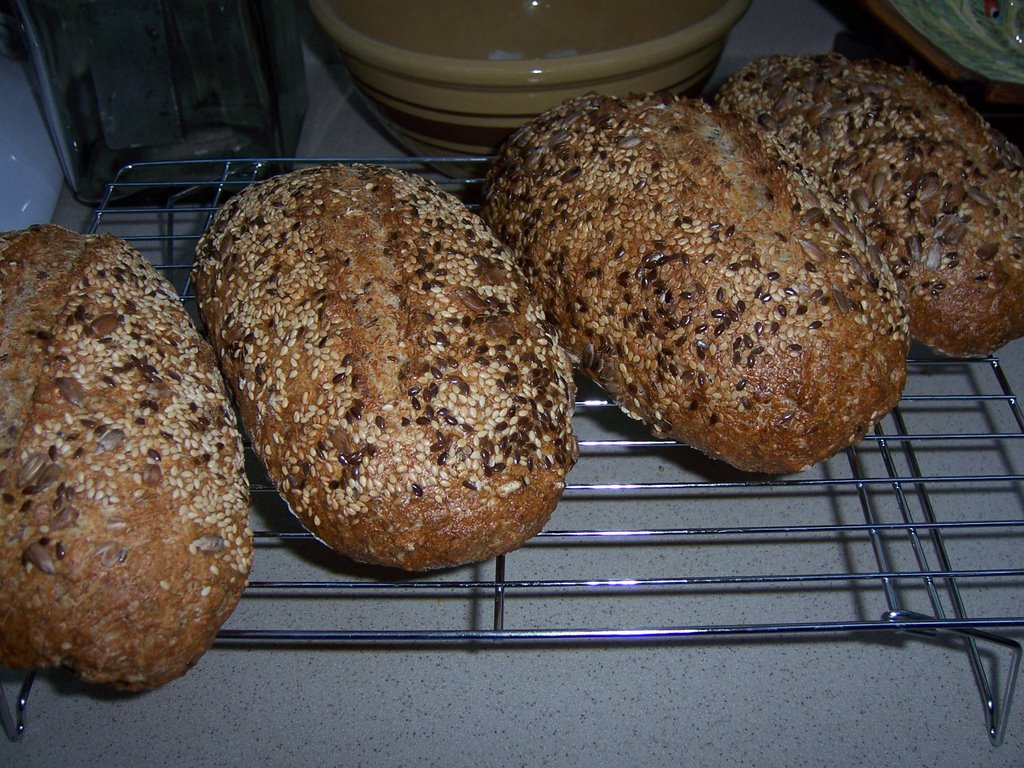
Later, we get to work on a multigrain rye bread that is packed with toasted grains -- sesame seed, flax seed, sunflower seeds and rolled oats. I am salivating as I sniff the aroma of grains toasting in the oven.

All this is the prelude to some serious wrestling with rye. The Maitre Boulanger pulls out a large round tub of "rye saur" starter and informs us that this formula was first mixed 100 years ago in Germany. "Treat it with care," he advises. The starter is a stiff and grainy caramel-colored mixture that looks pretty healthy given its century-old status. There is a wonderful strong smell of rye that is reminiscent of a brewery. The Maitre Boulanger invites us to taste the starter, and I savor the powerful flavor of intense, sour rye on my tongue. We take a scoop of the starter, add wheat flour, rye flour and water, and tomorrow we shall see what develops.

© 2006 T.W. Barritt All Rights Reserved

Saturday, October 07, 2006


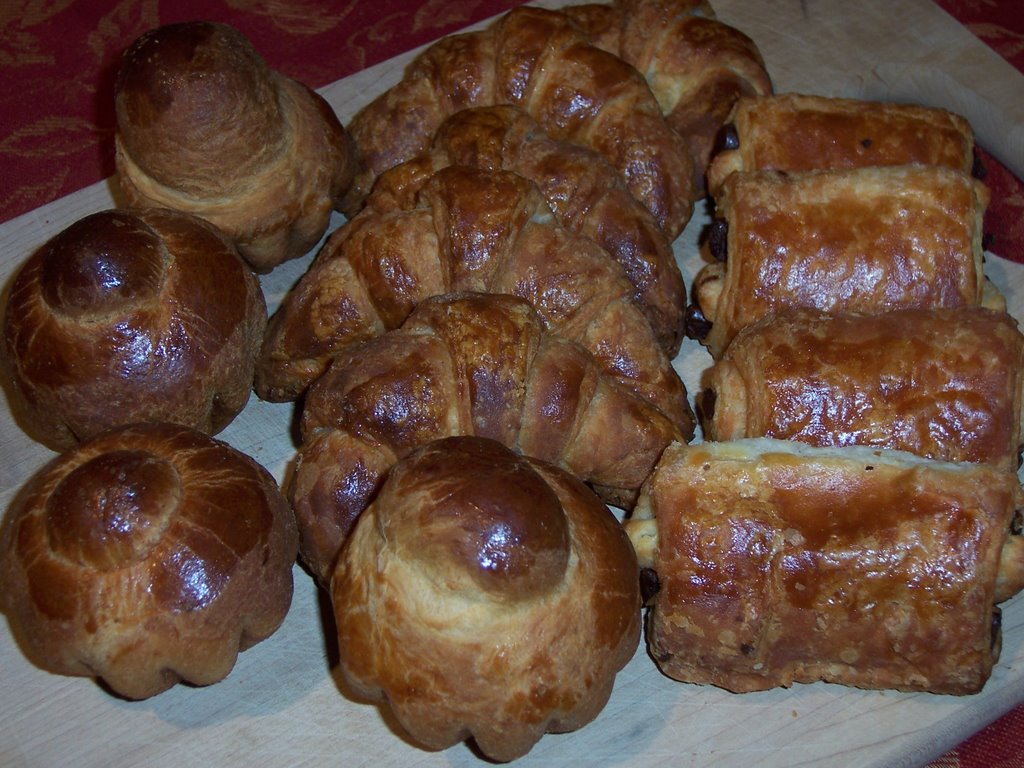
Field of Croissant Dreams: As week two of Classic European Breads concludes, we are on to the stuff of the romantic French “petite dejeuner” – Croissants, Pain au Chocolat and Brioche.

There is something miraculous about making croissant dough by hand. The butter and dough is “laminated” together, one fold after another, until you achieve a dough with many layers of butter and pastry that puff in the oven. There are precise measurements for each triangle, and a traditional method for rolling the croissant into the spiral shape. It is a time-intensive labor of love, and you get a kind of spiritual lift as you sniff the aroma of warm yeast and butter surrounding you and watch the golden crescents swell in the oven.

While technically simpler to shape, the flavor of pain au chocolat with its subtle mélange of butter and rich chocolate is sublime. The twigs of chocolate are specially-made with a higher melting point to assure a substantial mouthful of chocolate in the final product.

Brioche loaves are enriched with eggs and butter. The dough is slippery and elastic and fun to shape. We make large and small ball-shaped loaves and create that distinctive “tete” that resembles the cap of a clergyman. Some of our tetes topple a bit in the oven, but the downy golden dough is deliciously soft and sweet and smells like a French country morning.

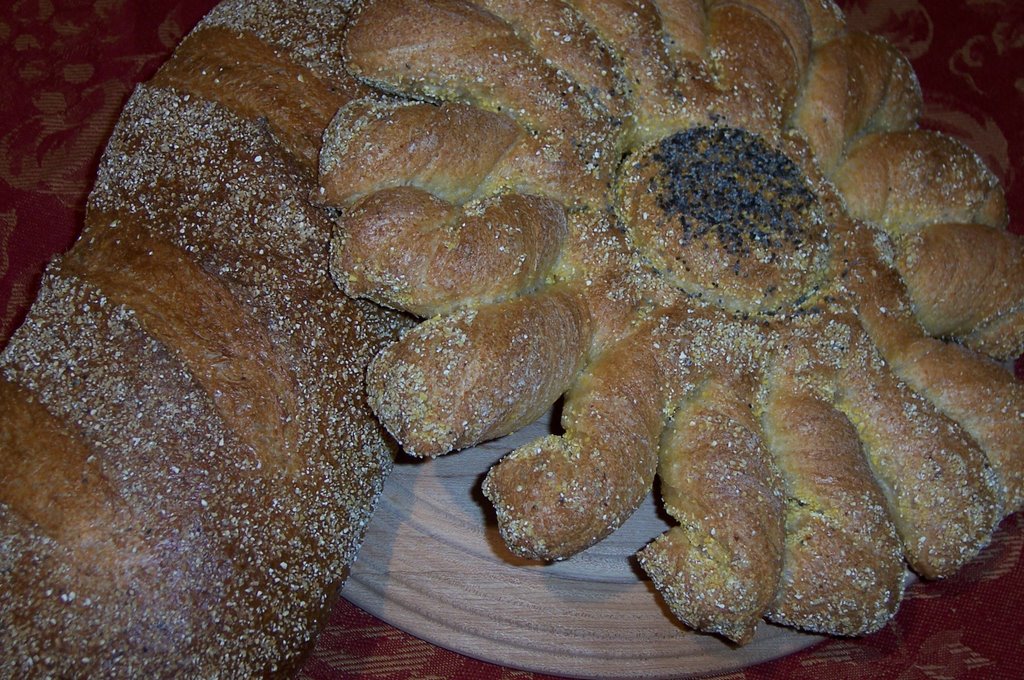
Just to keep us on top of our game, Chef has us prepare a batch of Pain de Mais, a hearty yellow bread of corn meal and olive oil. Chef isn’t sure exactly how this variety emerged, since corn is not a typical ingredient throughout France, but the crunchy loaves have a sweet and spicy flavor and we shape some into beautiful sunflowers that remind me of the radiant fields glimpsed from the bus during my recent travels through Burgundy.

© 2006 T.W. Barritt All Rights Reserved

Thursday, October 05, 2006


Man Does Not Live By Bread Alone: We near the half-way point in our bread baking immersion with certain daily rituals and do’s and don’t becoming clear.

Shortly after 8 a.m. each morning, a number of the chef instructors at the school gather in our kitchen for bread and coffee. They toast dense, dark, square German bread the color of molasses over the burners of the gas stove and gossip about school issues, often in French so we students can’t understand what they are saying. By 8:26 they are off to their various classrooms.

I’m becoming more comfortable with the Maitre Boulanger, and it’s evident he has a distinctive culinary ethos, not to mention a sense of humor that is perhaps as dry as day-old bread crumbs. Today, he suggested that we place a sign on the door to the bread kitchen that reads “House of Pain,” which is pretty funny if you speak French or if you’ve rolled a thousand baguettes over the last two weeks. The other day, he worked quietly in one corner all day building a three-foot tall clock tower out of bread dough – my first encounter with bread sculpture. I was terrified I would sneeze and knock the whole thing over.

I love the insight into regional country breads in France, many made with ingredients that are indigenous to the region. Pain Normand, uses cider and the apples that are prolific in Normandy. Pan Citron is bread infused with abundant lemon zest, and Pain de Provence is packed with olives and a mix of Herbes de Provence which includes lavender. Brioche is one of the oldest breads of France, and the large amounts of egg and butter in the silky dough make it a joy to work with.

Each morning I silently recite my “Dos and Don’ts” of Bread Baking:

  • DO remember to hit the steam button on the oven or the baguettes will look like shriveled old hot dogs.
  • DO roll back the canvas on the loading tray each time you remove it from the oven. If you don’t it’s very hard to rearrange the baguettes again after you’ve already laid them on a reversed loader.
  • DO slash deeply when you score the baguette – it feels like a criminal act, but scoring is essential to allow the baguette to expand in the oven and develop that lovely braided pattern on top.
  • DON’T measure twice the amount of flour for a recipe. It can really screw up the consistency of the dough.
  • DON’T over-handle or fuss over the dough. Each time you touch it, you suck a little bit of life out of it. In other words, keep your big klutzy hands to yourself, and practice economy of movement.

Right now, we’ve got croissant dough resting in the refrigerator which we will shape on Friday. Saturday breakfast is going to be outstanding!

© 2006 T.W. Barritt All Rights Reserved

Monday, October 02, 2006


Sweet and Savory Breads: As week two of Classic European Breads opens at the French Culinary Institute we are coping with some of the typical New York obstacles – there’s a film crew tying up pedestrian traffic on Crosby Street and construction in the building forces us to enter for the week through a service entrance around the corner, and carry our lunch through a small obstacle course before we are able to eat.

We are introduced to the Maitre Boulanger for the first time, a solemn German gentleman who began baking as an apprentice in his teens. Even though we have a week of experience under our belt, the pressure of a new instructor has an effect on us. “A” can’t remember the technique for shaping loaves, and “E” and I must deal with several casualties. A number of baguettes are sent to that great bread basket in the sky as we repeatedly botch the necessary steps for precisely loading the loaves into the oven. I take on the job of removing the finished baguettes from the oven, but some are under baked. The Maitre Boulanger is patient, but I suspect his tolerance for our incompetence will not last for long.

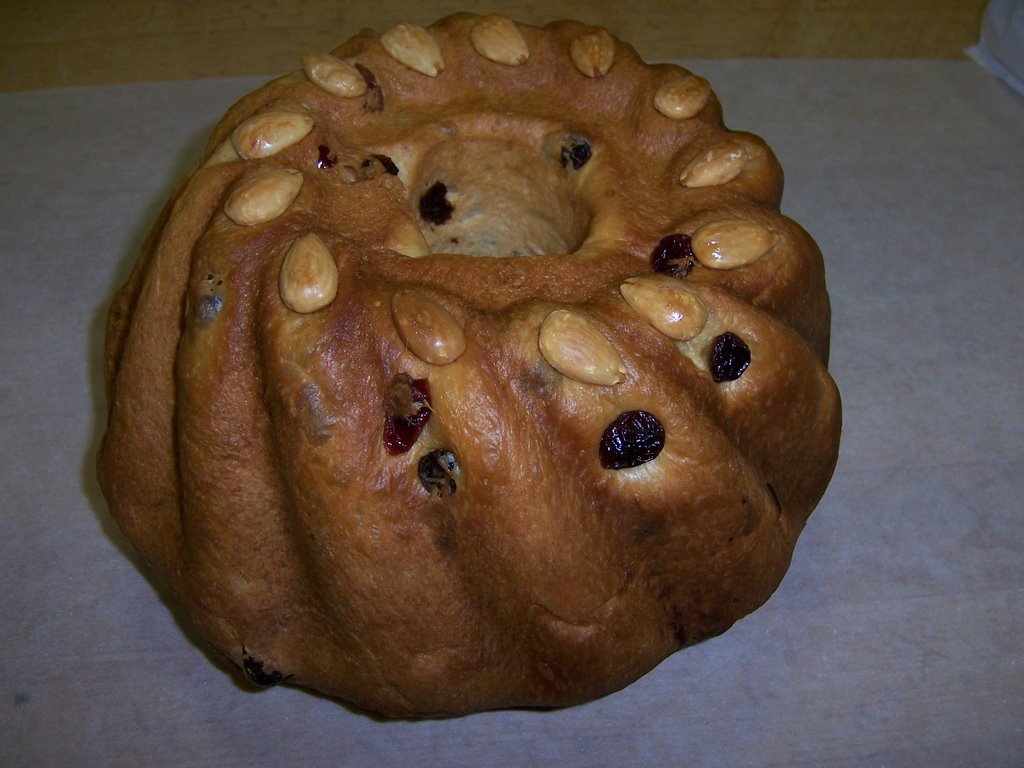
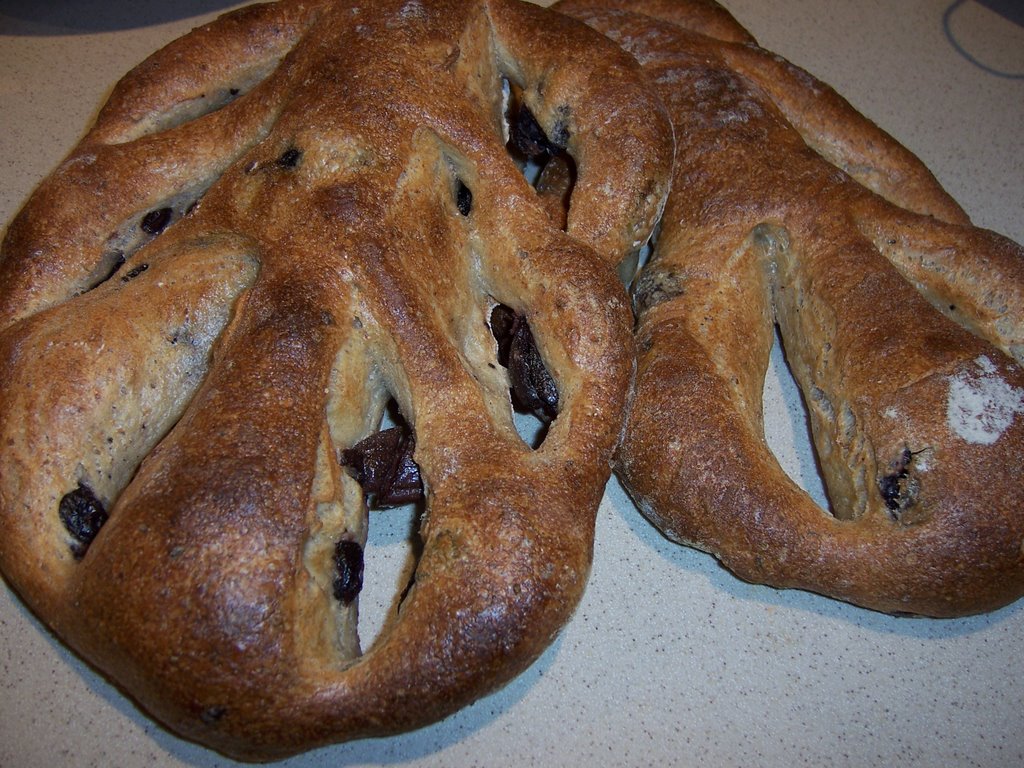
Despite the baking mishaps, I am struck by the enormous versatility of bread. On Friday, we baked “Kugelhopf” from the Alsace region of France, a tall feathery yeast cake, laced with butter and rum-soaked cherries, which is crowned with a beautiful ring of almonds and baked in a bell shaped tube pan. It makes a fine dessert or a decadent breakfast. Today, we mastered “Fougasse” a dense bread of white and rye flour filled with briny black olives and succulent fresh thyme. We cut hash marks in the loaf with a sharp wheel cutter and spread the wet dough like a butterfly before putting it in the oven. The result is a rustic open leaf pattern with a crispy crust and savory bread that is almost like a pretzel in consistency. It’s good with a strong cheese and a smooth glass of red wine, particularly as I decompress after another day in the orifice of the bread oven.

© 2006 T.W. Barritt All Rights Reserved

Sunday, October 01, 2006


Diary of A Mad Bread Baker – Week One: To say we are busting our buns would be an understatement.

I’d had this vision of lovingly hand-kneading my own personal loaf of artisan bread each day, watching it rise in the oven, caressing the crisp golden crust and transporting home my labor of love to eat and share with friends.

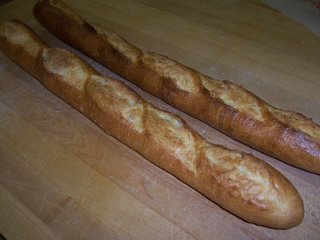
The reality is this. We’re in bread boot camp. We’re a baguette assembly line. In a mere five days, we’ve shaped, rolled scored and baked hundreds of loaves, and there are still 15 class sessions to go. We have a morning lecture, and then we dive into a mixing and pre-shaping endurance marathon. The afternoon is spent lining up raw loaves on loaders, scoring them so they don't explode and lifting and sliding them into the dark, cavernous ovens which I’ve fondly knick-named “Jaws.” It is incredibly physically and mentally demanding. Lose your concentration and the ingredients are off, the dough is brutalized or you burn a patch of skin or throw out your back.

But, despite the intensity and the overwhelmingly addictive aroma of yeast, certain things are becoming clear through the haze of King Arthur flour dust:

  • If cooking is about technique and innovation, and pastry is about science and creativity, bread baking is certainly the most sensual of the culinary arts.
  • Bread baking requires all the senses – sight, smell, touch, hearing and even taste. Sight and touch are critical. I am fascinated by Chef’s ability to know that a blob of dough is ready just by sizing it up and giving it a poke.
  • At the risk of sounding so “Sideways,” bread is a living thing. It grows, it expands, it moves! You have to treat it with great care. Handling a piece of dough feels just like carrying a newborn infant.
  • Bread is deeply intertwined with human sustenance and history. Chef tells us that the French Revolution was actually fought over the peasants’ right to eat white bread. And, all this time, I thought cake was the issue.

As for my two fellow “Bread Musketeers?” "A" is like a sponge, no pun intended. She takes copious notes and asks really smart questions. She has an admirably adroit technique with the dough, and never seems to lose her focus or her optimism. "E" is still mangling the dough. He has yet to develop that light touch and gets involved in too many distracting side conversations. Some of his pre-shapes have looked like deflated beach balls, but then he will have a brilliant insight about a mathematical formula or measurement. On Friday, he caught me in the nick of time before I began to weigh out three times the amount of flour needed for a large batch, since I chronically confuse grams and kilograms. Clearly his core strengths lie on the numbers side of baking (and mine don’t). But he’s a sweet, considerate guy and a team player.

I am in awe of Chef. She serves up science, technique and philosophy in equal doses and observes our actions like a hawk, gently advising and correcting each misstep.

On Monday, we meet the “Maitre Boulanger” of the Institute for the first time.

© 2006 T.W. Barritt All Rights Reserved

Tuesday, September 26, 2006

The Zen of Bread Baking – Yesterday Morning: I check in for a month’s worth of training in Classic European Breads at the French Culinary Institute in New York City. I am issued my uniform, apron and textbook, and meet my fellow students for the next four weeks. “A” is a baker from a cooperative in Mississippi. She has journeyed north on a fact finding mission as the co-op looks to expand their variety of fresh baked breads. She has long braids and a sunny disposition. “E” is a former computer consultant from Brooklyn. He is looking to gain some new skills and perhaps open a restaurant in the future. I’m a culinary enthusiast and, at the moment, a roving adventurer on leave from my day job. Consider us the Three Musketeers of the bread baking world. Although, perhaps not as swashbuckling.

“Chef” is an accomplished baker and educator, tranquil, whip smart, and a database of information on the techniques, ingredients, history and technology attached to bread. She walks us through the 13 steps of bread baking which are far more complex than most peoples’ typical, “go to store, purchase bread, and open twist tie.” It’s a little overwhelming, but the aroma of warm yeast and flour in the baking studio is intoxicating.

Then, she breaks the news to us. In addition to learning to bake French, German and Middle European breads, our “job” is to prepare the bread served at the school restaurant each day for lunch and dinner. I look at Chef skeptically.

“Are you sure we’ll be able to produce something edible?’ I ask.

Almost immediately, we dive head first into the rhythms of a professional bakery. We learn about yeast, flours and fermenting methods. We fold, we divide and we pre-shape. We take the dough’s temperature. We practice the motions of shaping bread dough, which is something like yoga with a purpose. And, perhaps most daunting of all – for anyone who grew up in the American school system – we learn how to measure ingredients on a balance scale with counter weights using the metric system.

Chef has zeroed in on the Zen of bread baking. She radiates calm as she manipulates unruly dough into perfectly shaped baguette loaves. She’s like a dancer, a sculptor and a chiropractor all rolled into one. I, on the other hand, am stilted, stiff, stressed out by the whole thing, and a little worried about those patrons who are probably scrutinizing the bread basket in the restaurant.

Oh ye of little faith. It’s a little like the miracle of the feeding of the five thousand. In the course of several hours, we manage to shape, bake and score nearly one hundred loaves. We even roll out bagel dough for use in a subsequent class. Surprisingly, the end results all look pretty respectable.

I stumble out of the studio at about 3 in the afternoon, covered with a thin dusting of King Arthur Flour.

Today: I wake up realizing that my hands are doing this little pantomime of shaping a baguette. I’m wondering if I will be able to look at another baguette, and in fact, we’ll be making three versions of them, using different methods of fermentation.

I’m starting to learn my way around the baking studio and get familiar with the tools and ingredients. The school stocks many varieties of flour, including white, whole wheat, rye and others. Chef walks us through the physical composition of the wheat berry and the protein content of various flours. Bread dough has a higher protein content, which develops better structure in the final loaf.

We weigh out ingredients for three different baguettes and dump the ingredients into massive mixers that look like computerized witches cauldrons. Large batches of dough are combined and left to rest.

Moving on to bagels, we first boil the doughnut shaped beauties and then coat them in poppy seeds, sesame seeds or salt. They are popped into the oven for a quick bake before we return to the baguette dough and start to shape. E seems to handle the dough a little too roughly, but he’s got four kids, so that’s understandable. A is finding that mental connection to the process. I notice that she’s even closing her eyes as she rhythmically massages each baguette into a long serpentine shape. I’m still finding the volume and time pressures a bit daunting, and feel a little like Lucy Ricardo in the chocolate factory.

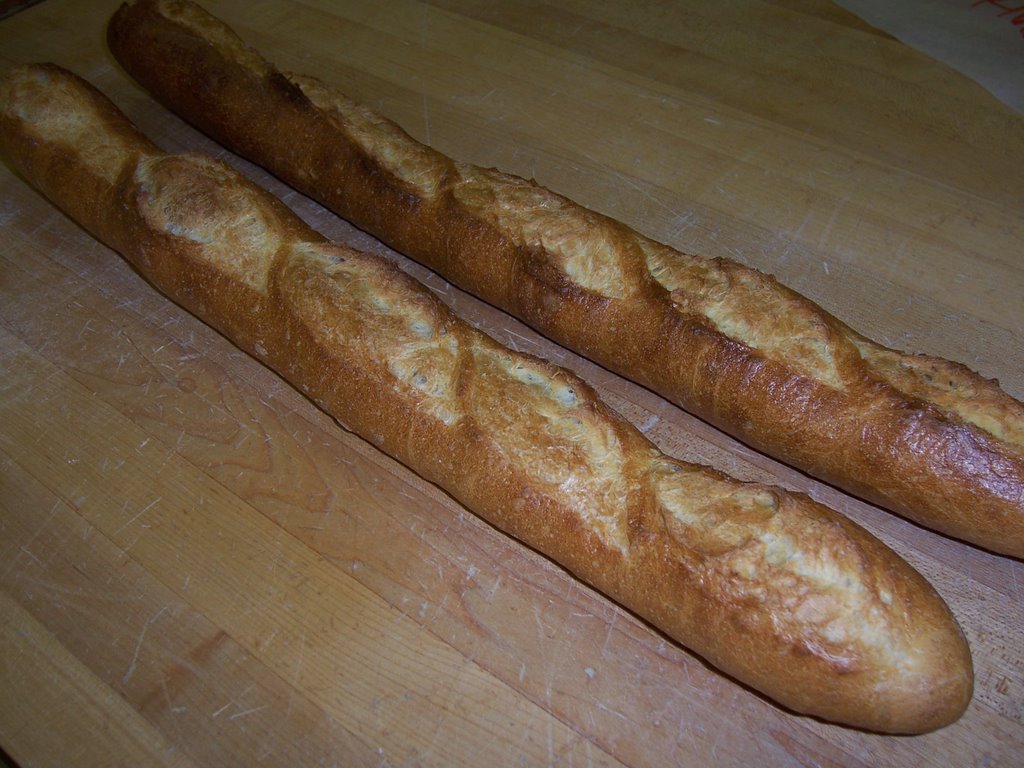
We continue to practice our scoring, and quickly learn that a baker must have cut throat instincts. A baguette requires five deep slashes with a razor to allow the loaf to bake evenly and blossom into that distinctive diamond pattern on top.

Filling the oven is an intensely physical task, as we position the loaves on large metal racks with rolling canvas that slide the bread into the hot oven.

By late afternoon, we are sitting around the bench to analyze and taste our finished loaves. We finger the crust and smell the aroma of the inner crumb. Much like sampling wine, we taste the loaves and compare the different flavors from mild to tart to nutty to slightly sour. It’s all pretty gratifying and although I’m exhausted, I think I’m starting to find that elusive connection to the “bread zone.”

Back at home, I compose a dinner sandwich of ham, Danish blue cheese and apple, captured within a hearty slice of my crisp, honey gold baguette.

© 2006 T.W. Barritt All Rights Reserved