Wednesday, November 15, 2006

Broken Pie Crust


Devouring the New York Times – Wednesday, November 15, 2006: I was already hungry for this week’s “Dining In” section when I arrived at the newsstand at daybreak. The annual “Thanksgiving Edition” comes but once a year. I’d heard the radio promotions on WQXR announcing Melissa Clark’s feature on “the perfect pie crust.” It was going to be a tasty commute.

I was so wrong!

Certainly, Clark’s quest to prepare the flakiest Thanksgiving pie crust in Heaven or on Earth is admirable, and as a long time student of the pastry arts, I do believe the debate over lard versus butter as the critical ingredient has merit. Clark’s language and imagery are striking. There is also some sinfully good, mouth-watering photography and enticing recipes for pie filling like Pear-Pomegranate Pie, Honey Apple Pie with Thyme, and Nutmeg-Maple Cream Pie.

But, before you ever get to Clark’s solution of a combination of 70 percent butter and 30 percent animal fat for the flakiest pie crust in history, you are likely to go on a sudden diet.

Clark violates one of the most important tenants of food writing. The prose should taste good. Don’t make the reader lose his appetite!

It’s Thanksgiving, Melissa! It’s supposed to be about abundance, family, flavor and good taste! Do we really need the horrific descriptions of rendering lard, the endless barnyard analogies and the graphic references to a pig’s anatomy? After Clark’s lead in, I’m ready to take a pass on dessert.

Pastry is the ultimate sweet treat – the decadent escape. Some things are better left unstated. I’ll stick to Harold McGee for the science of food. But, if I want to dream of the perfect pie crust, I’m heading straight for Martha Stewart. At least she understands what visions of sugarplums are all about.

© 2006 T.W. Barritt All Rights Reserved

Tuesday, November 14, 2006

The Best Little Burgers in Omaha:

Business travel is brutal. You’ve got to deal with all kinds of indignities -- delays, bad food, delays, bad wine, toiletries in zip lock bags, really bad wine that comes in screw top bottles, more delays and ominous Code Orange security announcements. Did I mention delays?

If you’re really, really lucky, you’re routed through Chicago O’Hare Airport, which has turned the delay into an art form.

So, here I sit in the Omaha Airport, having arrived early for my 4:45 flight home, which is already delayed – and, connecting in Chicago. My colleague, Splint McCullough won the business traveler’s lottery today. He got out on an earlier flight that might actually get him home to his part of the country before sundown. I, on the other hand, am already looking like the poster child for bad business travel karma.

After years of doing this, I’ve learned a couple of things. You’ve got to have coping mechanisms to survive. I’m partial to glossy food magazines, people watching, and my video Ipod is a new accessory that allows me to keep current on episodes of “Prison Break.”

You also have to know where your next meal is coming from. Most of the airlines are not even offering peanuts or pretzels anymore. That’s fine for people on a liquid diet, but some of us need more substantial fare.

In anticipation of a seat in “food-free economy class” I take a secluded table in “The Hanger” restaurant at the Omaha Airport and request a glass of Geyser Peak Chardonnay and a plate of “Sliders” – the absolutely best deal offered at any restaurant in Omaha.

For a mere $6.95, you get six – count ‘em – SIX tennis ball-sized prime beef burgers on toasted sourdough buns. The burgers are nicely grilled and have a smoky charcoal flavor. Accompaniments include crisp pickle chips, chopped onions, and Heinz Mustard and Ketchup, two of the venerable “57 Varieties.” (Has anyone ever tasted the other 55 varieties?)

I wolf down four of the six sliders and start to feel my strength again. The burgers are primitive, yet petite. Decadent, but demure. I’m like a marathon runner carb-loading before the big race. I can make it back to the East Coast. I can sprint to my connecting flight. I can endure another night in the air. I’ve found the fuel that will get me to the finish line.

I think of Splint McCullough – the avowed carnivore – cruising at 30,000 feet with his stomach growling. I suspect he’s just a bit envious of me right now.

Meanwhile, they say my first flight is on the ground and will be ready for boarding shortly …

© 2006 T.W. Barritt All Rights Reserved

Sunday, November 12, 2006

In Search of Johnny Marzetti

It’s a culinary mystery worthy of Sue Grafton’s, Kinsey Milhone. Who was Johnny Marzetti?

There was absolutely no evidence that he’d been a great chef or even attended culinary school, yet Johnny has the distinction of the lead position in the old/new “Joy of Cooking’s” Brunch, Lunch, and Supper Dishes chapter – Johnny Marzetti Spaghetti Pie. Hardly gourmet fare, but certainly worthy of a Sunday Supper.

But, who was Johnny Marzetti?

I didn’t have much to go on – a name, a recipe and a town in the midwest. The author’s note in “Joy” says this pasta casserole was made famous at Marzetti’s restaurant in Columbus, Ohio.

I put my Internet browser on overdrive and managed to track down a few leads. The trail takes me to a clipping in the Pittsburgh Post-Gazette which confirms that the casserole was create in the 1920’s by the owner of Marzetti’s and named for his brother Johnny.

There are other connections. Marzetti’s, located in downtown Columbus, was a hang-out for writer James Thurber and his newspaper cronies. It’s not clear when it was demolished, but by 1981, a reference in the New York Times indicates that Marzetti’s had given way to a fast-food store. I even surface a sepia postcard of Marzetti’s dining room, available for $5.00 on EBay. It looked like a respectable establishment with crisp white table cloths and comfortable chairs.

I push further. The name evokes fond memories from hungry baby boomers, mostly in middle-America, where folks recall eating “Marzetti” at lunch in the school cafeteria. Others deem it “quasi-Italian” but nobody really seems to mind. There are multiple versions of the recipe, including one made with turkey which was clearly designed to use up Thanksgiving leftovers. The Bob Evans restaurant appears to have offered Johnny Marzetti on the menu in the not-to-distant past, and I uncovered a gourmet shop that promotes their version of Marzetti as perfect for a tailgate picnic. There’s even a passing reference in “The Oxford Encyclopedia of Food and Drink in America.” Beyond that, the man remains a bit of a question mark.

Now, it’s time to taste for myself – what is the culinary legacy of one Mr. Johnny Marzetti? I turn to page 95 of “Joy of Cooking” to begin the voyage. For added authenticity, I pull out my suburban Sunbeam Electric Frying Pan, circa 1979. It was standard issue for those of us who grew up in the “Casserole Corridor.”

The ingredients are simple. Ground beef, green pepper, spaghetti, cheddar cheese, and diced tomatoes. I toss in the “chef’s choice” suggestions offered by the original “Joy-rider" Irma S. Rombauer – sliced mushrooms and olives – but I throw in a few culinary twists of my own to add dimension – thick, tubular Perciatelli instead of spaghetti for added bite, Italian-style Panko breadcrumbs for a heartier crunch and black Kalamata olives for a briny snap.

As the ingredients hit the frying pan, I am transported back to the kitchen of my youth – the astringent freshness of the green pepper, the sharpness of the raw onion and the sizzle of the beef tickles my nose. It reminds me of the many spaghetti and meat dishes we used to dine on growing up in the 60s – but ours were usually clipped from Family Circle, and had names like Noodle Lasagna, Spaghetti Bravisimo or Spaghetti Amore. Great “handles,” no doubt, but lacking the obvious cachet of being named after the sibling of a colorful restaurateur from Ohio. While the truth about Johnny and his casserole-crazed brother may be lost to the annals of time, Johnny is just one of a long line of auspicious “celebrities” immortalized in the kitchen. Even the ubiquitous béchamel sauce was named for Louis de Bechamel, the Marquis de Nointel (1630-1703).

The meat sauce simmers, and I combine the cooked pasta with the cheddar cheese and bake for 30 minutes before removing from the oven. My first impression is that it’s a heck of a lot of food. No wonder the Ohio Public School System dubbed it the cafeteria dish of choice. Impression Number Two – it’s a lot of carbs. I’m going to have to do extra time on the stationary bicycle tomorrow morning. Impression Number Three – I should have invited a dozen people over to join me for dinner.

I pour a glass of Chianti because I think Johnny would have wanted it that way and take a taste. The meat sauce is rich and savory with the taste of garlic and simmered tomatoes. The cheddar cheese and bread crumbs give the pasta a crispy and nutty crust. It’s certainly not haute cuisine, but it’s pretty darn tasty. So much so, that I have three helpings.

Who was Johnny Marzetti?
We may never know his complete back story, but I do know this. He liked food that sticks to your ribs and probably enjoyed cooking for a crowd. And, if Johnny’s up there in heaven enjoying a little grappa right now, he knows I ate well tonight.

© 2006 T.W. Barritt All Rights Reserved

Saturday, November 11, 2006


Polenta Express:

Polenta is an excellent base for all kinds of dishes, and nothing could be faster than quick-cook polenta – except perhaps quick-cook couscous!

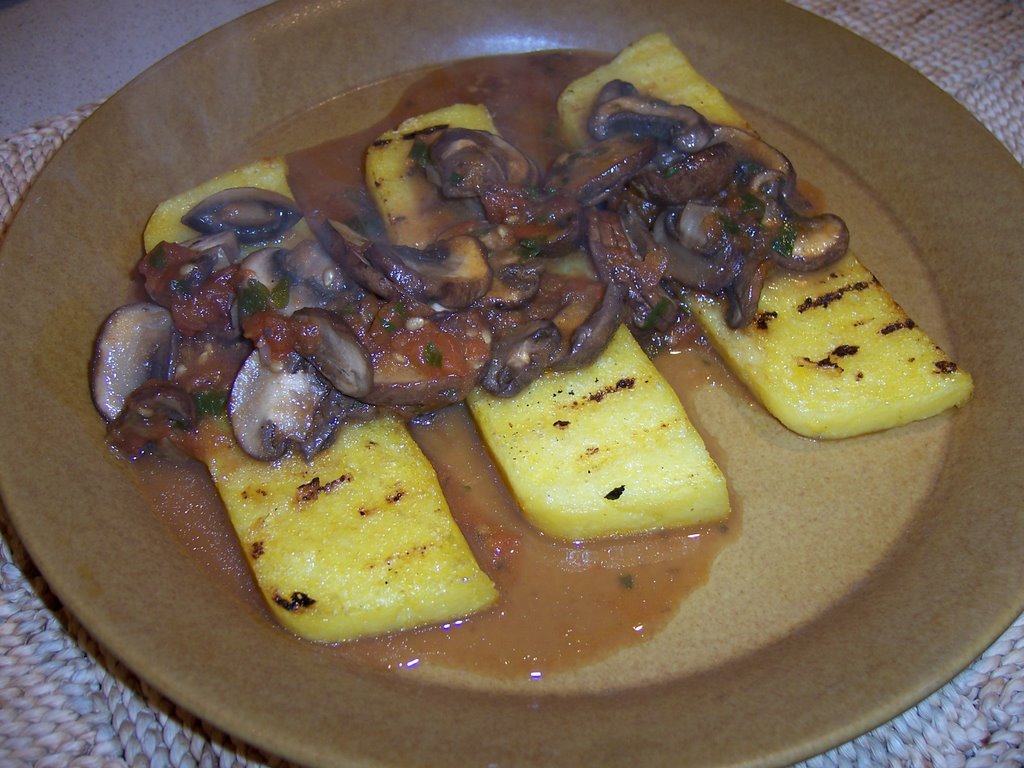
I cooked up a batch this morning, which I purchased in an Italian deli, and left it to chill in the refrigerator, pressed into a loaf-shaped pan. Around dinner time, it slices nicely into rectangular crostini, which I toasted, crispy in a grill pan.

The crostini is adorned with a ragu of tomato, mushroom, garlic and parsley sautéed in extra-virgin olive oil and butter. The deep, savory woodiness of the mushrooms and sweetness of the tomatoes mingles with the toasted corn meal like a brilliant autumn day. Imagine the golden sun dipping down to kiss the shaded forest and you’ll have a sense of the pleasures of this quick and satisfying dish.

© 2006 T.W. Barritt All Rights Reserved

Friday, November 10, 2006

Garlic Galore in San Francisco

Work is completed in Oakdale, California and my colleague, Splint McCullough and I are in search of some good dining. We are joined by our associate Danbury, an impossibly tall Connecticut aristocrat. He’s trailing us in a rented blue Subaru station wagon.

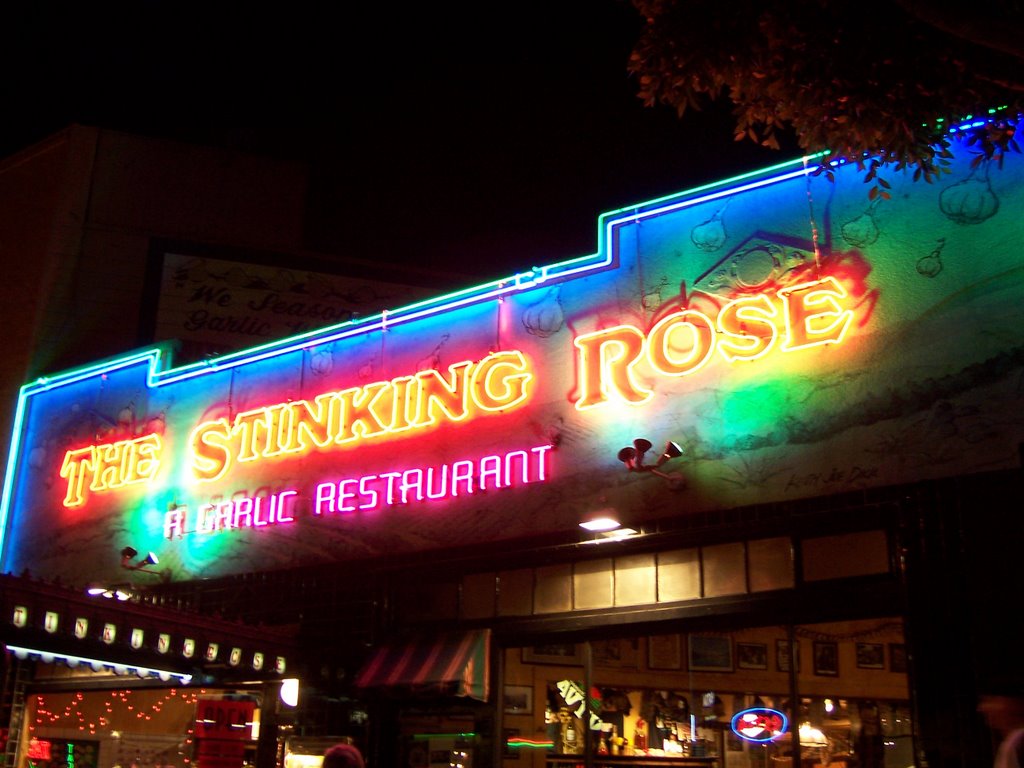
Splint programs Gloria, our Neverlost GPS device and the Digital Dame of Directions points us towards “The Stinking Rose,” a garlic restaurant at 325 Columbus in San Francisco. The Stinking Rose (http://www.thestinkingrose.com/) is all garlic, all the time – a temple to the aromatic bulb, and homage to the annual gargantuan garlic crop of Gilroy, California.

Both Splint and Danbury have previously dined at the Stinking Rose, while I am a novice to this baptism by garlic. “You’re going to have to bathe after dinner,” recommends Danbury.

It sounds irresistible.

During the 86 mile journey, Gloria has a slight freak out and advises Splint to make a sharp left while we’re still on the peak of the San Francisco Bay Bridge. Fortunately, Splint has a way with technology and coaxes Gloria back from the brink. She regains her senses, and guides us safely to the Stinking Rose in North Beach.

A rainbow-colored neon sign marks The Stinking Rose, and the unmistakable pungent aroma of garlic seeps from the front door. The décor is patterned after a Moroccan marketplace. Our booth is concealed within a red velvet cabana adorned with gold tassels. In fact, it’s a bit like the inside of Barbara Eden’s bottle on “I Dream of Jeannie.”

We order the signature appetizer, “Bagna Galda” which also goes by the very California name of “Garlic Soaking in a Hot Tub.” It’s basically a couple of dozen cloves of garlic submerged in warm olive oil, butter and anchovies. The garlic cloves are soft, succulent and taste rich and earthly, almost like sautéed mushrooms. We dab the garlic paste on chunks of focaccia bread and devour it.

For our entrees, Splint orders Halibut with Garlic Mashed Potatoes (when in Rome…), Danbury selects 40-Clove Garlic Roast Chicken, and I can’t resist the salute to Hannibal Lechtor, “Silence of the Lamb Shanks with Chianti Glaze & Fava Beans.” I suggest to Danbury that he count his garlic cloves to make sure his dish is authentic, and proceed to attack my lamb, which is so tender it falls from the bone. The red wine reduction has a long finish, and Splint and Danbury offer up their best imitations of Anthony Hopkins.

Danbury must shortly leave us for an overnight flight home to the east coast, but I have an inkling that desert may offer up a confection that could even manage to win over a vampire with a sweet tooth. I am proven correct. I request Gilroy Garlic Ice Cream with Hot Caramel and Mole Sauce. It arrives in a serving dish the size of a communion chalice. The boys watch with trepidation as I take my first spoonful. How do I describe the moment? It is perhaps a garlic epiphany. There is first a rush of sweetness, and a touch of spice from the caramel and mole sauce. Then, a sweet toasty tang of mellow garlic wraps several times around my tongue. As the heady flavor finally dissipates, there is the finish of rich, luxurious cream. My head feels like it’s in orbit.

Danbury departs for the airport, and Splint and I take a walk through the North Beach neighborhood, where former flower children and derelicts are in ample supply. Before heading for the car, we stop at a bodega and purchase the inevitable after-dinner chaser.

Splint gets a pack of Rolaids and I secure an industrial-sized roll of Certs.

© 2006 T.W. Barritt All Rights Reserved

Wednesday, November 08, 2006

Dinner by Satellite


The automobile congestion on California Interstate 205 is worse than trying to exit Shea Stadium after a Mets game. I'm riding shotgun in a red Ford mid-size and my colleague Splint McCullough is in the driver's seat, as usual.

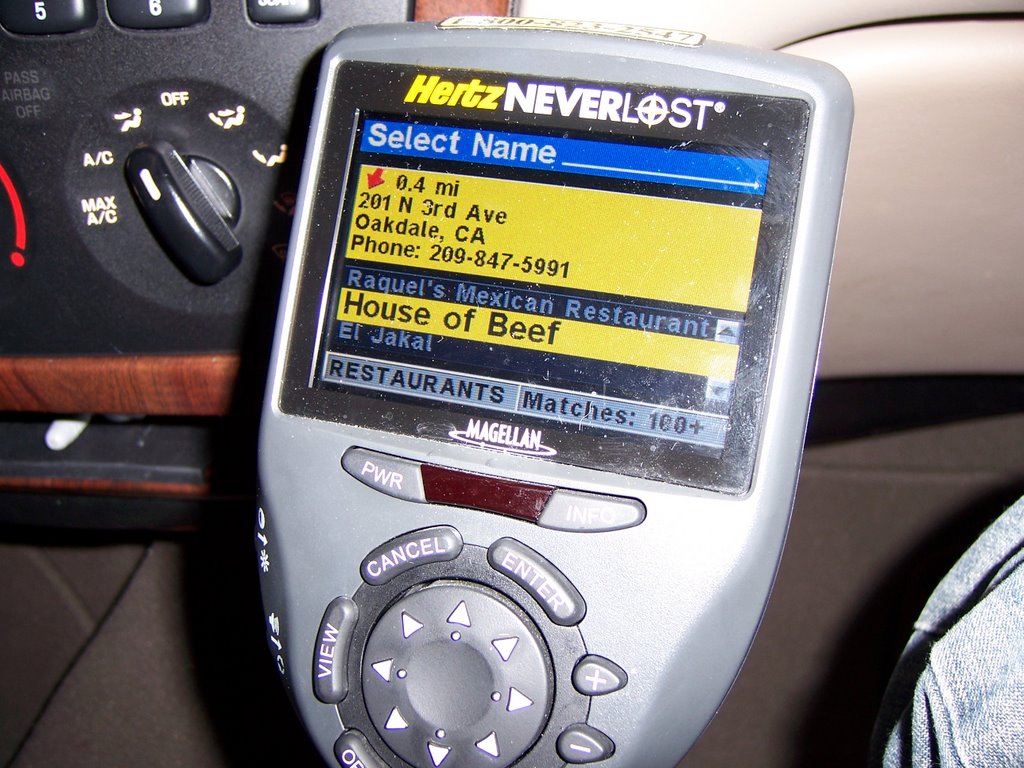
In order to innoculate against our tendency towards misdirection on the road, Splint has ordered up a "Neverlost" Global Positioning System Navigator (GPS) from Hertz that will guide us to our destination. It's like having Hal the Computer from "2001 A Space Oddessy" give you directions. "Turn right," orders the sultry female voice. "Turn left," she demands. It's a little annoying. We nick-name the voice "Gloria" and set out for our overnight stop in Oakdale, California, some 100 miles east of San Francisco.

Splint points out that "Gloria" not only gives directions, but can serve up restaurant recommendations at the push of a button. "It's like Magellan meets Zagat," he quips gleefully.

"But, can she tell us if the food is any good?" I ask.

Splint pauses. "I think Gloria is more likely to send us to Arby's than Aquavit." My stomach sinks.

Some hours later we finally emerge from the traffic and are maintaining a decent clip on a dark California highway. The dining options are few and far between. We pass by "Hula's Homestyle Food," which is sort of a roadside luau, and Splint guns the accelerator to avoid "The Whisky River Saloon."

"Gloria will give us the answer," Splint vows.

"That's what I'm afraid of," I murmur under my breath.

It is nearing 7:00 p.m. Pacific Time when we pull into the parking lot of the Holiday Inn Express in Oakdale, California. "You have arrived," Gloria announces. "Yes, we have," says Splint in a somber voice as he surveys the surroundings.

It is way past dinner on our body clocks, so Splint consults Gloria's database for our dining options. Immediately, she offers up 100 choices. There's 'The Almond Tree" which is right across the street and sports a cluster of nuts and a martini glass on its sign. There's a "Taco Bell," a "Panda Buffet," and can it be? "The House of Beef! " Splint -the avowed carnivore - is ecstatic. We drive the quarter mile only to discover that "The House of Beef," which is just across the street from "The House of Prayer," has a Livestock Processing Center out back, and a parole officer stationed in the parking lot.

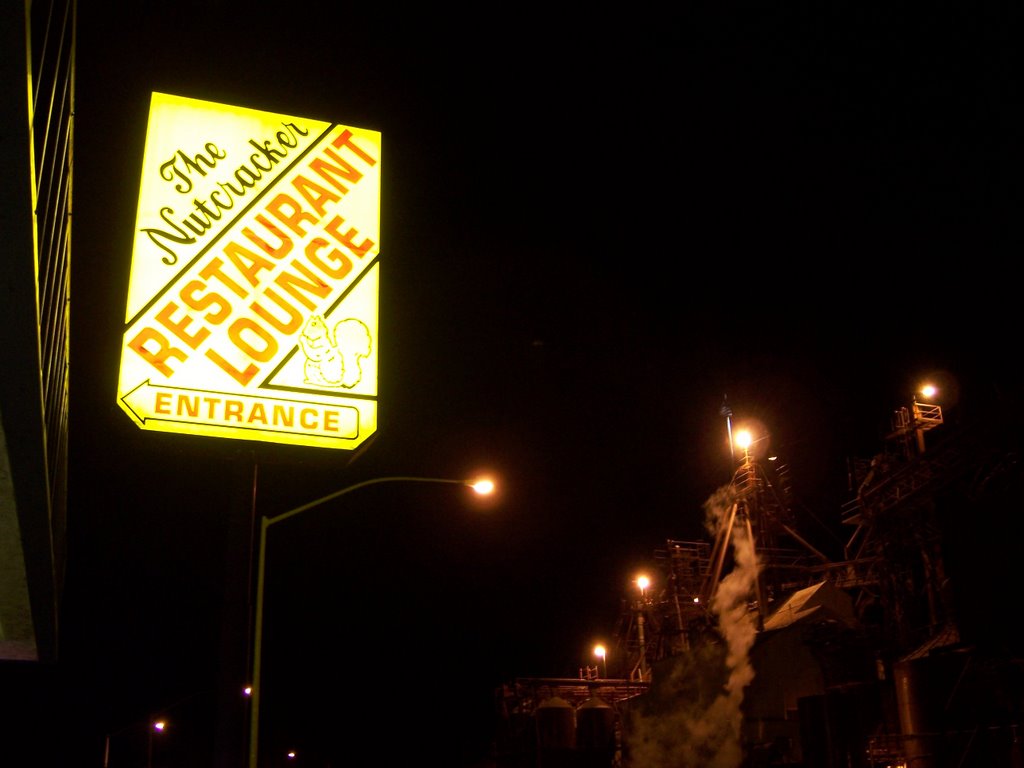
"No way," says Splint. He checks Gloria's listings again and we settle on "The Nutcracker Restauarant and Lounge." It has a cheery yellow sign with a cuddly squirrel on it. And, there's a banner over the front door that screams, "Ribs, Steaks, Seafood, Cheese Fondue."

"When was the last time you had Cheese Fondue?" I ask. "We have to try it."

"Nothing says home cooking like a furry rodent," replies Splint gamely.

Inside, "The Nutcracker" is all paneled wood and beer signs, and a four-foot-tall wooden carved squirrel flanks the entrance to the restaurant. The staff is cordial and we are escorted to a nice booth where our order is taken. The menu is about as beefy as you can possibly get, and Splint orders prime rib, while I select the barbequed beef ribs. And, the best news ever -- a cheese fondue comes with the meal!

"I'm kind of a fondue expert," I tell Splint.

"What are you expecting here?" he asks. "I'm thinking it ends in "Whiz" or "Veeta."

Our dashing culinary genius is right on the money. We are presented with some large slabs of french bread, and a saucer of bright orange liquid over a small flame. There is nothing natural about this cheese. I taste a hint of prepared mustard in the mix. Splint takes one taste and turns up his nose. "I'll stick to butter, thanks."

Our main dishes are huge, and my beef ribs are Flintstone-sized. They are slathered in a sweet and spicy mahogany colored barbeque sauce. Splint notes that his prime rib is still mooing.

"Do you think these were processed at the House of Beef?" I ask.

"The only thing not processed at the House of Beef was that cheese fondue," Splint notes.

As we are leaving, Splint can't resist the urge to ask the hostess where the restaurant got its name.

"Well, I haven't been here that long," she replies helpfully, "but I think it used to be a nut house."

She clarifies that the building was once an almond processing plant, but Splint has already made a mad dash for the parking lot.

© 2006 T.W. Barritt All Rights Reserved
A Minimalist Approach to Bread:

Devouring the New York Times - Wednesday, November 8, 2006: Mark Bittman's piece "The Secret of Great Bread: Let Time Do the Work" immediately caught my eye, perhaps because of my recent immersion in the bread kitchen. Bittman reports on a "no-knead" approach to bread baking, perfected by Jim Lahey of the Sullivan Street Bakery. Bittman suggests that the method is perhaps "the greatest thing since sliced bread," and something an 8-year old could master. Quite an endorsement.

The secret -- time and moisture. The very wet dough rests for nearly 18 hours and requires no kneading, but Bittman maintains the technique results in a perfect crisp crust and excellent crumb structure. From a scientific perspective, it makes sense -- moisture, more than kneading activates yeast, according to my instructors. And while we're all pressed for time, there is some appeal to starting a dough before bedtime, and finishing it off for dinner the next night.

As always "The Minimalist" offers easy to follow, step-by-step instructions and photos. It looks worth a try, especially if kitchen experiments appeal to you, and you're looking for a weekend culinary project. Check out the details in the "Dining In" section or at the New York Times online.

And, if visions of Turkey Day are already dancing in your head, you'll give thanks for the annual array of sumptuous side dishes and turkey options that are showing up in this week's edition.

© 2006 T.W. Barritt All Rights Reserved

Monday, November 06, 2006

Meatloaf Remastered:

It's autumn, there's a chill in the air and our thoughts immediately turn to comfort food.

Across Manhattan, meatloaf cominates menus. This somewhat stodgy mainstay of suburban cuisine - once glorified as trendy "comfort food" - has transcended the hype, with New York restaurateurs applying their deeply personal stamp to a dish that has become a durable urban classic.

Check out my "Culinary Types: Stories about Food and Food Enthusiasts" website for a tasty look at Meatloaf Remastered.

© 2006 T.W. Barritt All Rights Reserved

Sunday, November 05, 2006


Wiggle, Wiggle, Wiggle You Got Nothing to Lose:

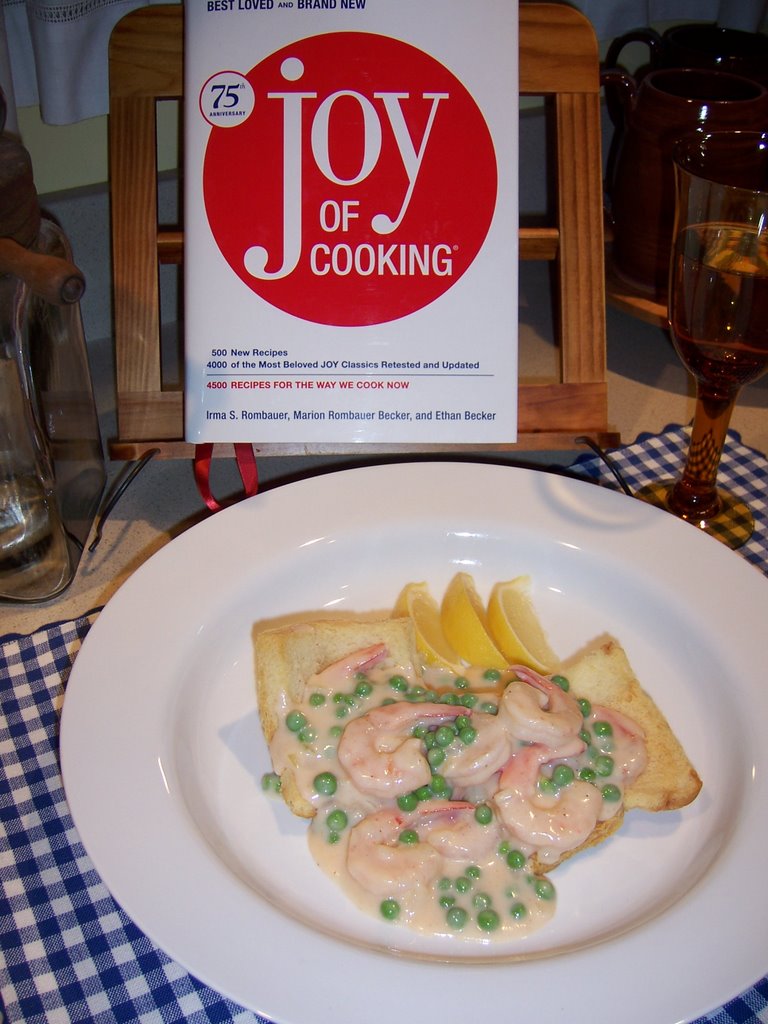
The name inspires a haughty smirk, a touch of smug food snobbery, yet this past week the media coverage may have exceeded that of John Kerry. Yes, the 1931 classic recipe “Shrimp Wiggle” is back, courtesy of the “Joy of Cooking” 75th anniversary edition.

The news left many staunch foodies scratching their heads. Shrimp Wiggle was a revered standard in the original “Joy” but was unceremoniously axed from the 1975 and 1997 editions. There were plenty of reviewers who seemed to feel it was better that way. I wondered why? So I headed for Google in search of answers.

The name intrigued me. It sounded like something out of Beatrix Potter. Such a moniker can’t help but inspire a smile and isn’t that what dinner is all about? What’s more fun than food that wiggles? It is, in fact, the ultimate pantry supper, with all ingredients freezer safe or shelf stable until you are ready to cook. And there’s nothing we suburban gourmands love more than convenience – we who were reared on Betty Crocker and Pillsbury Poppin’ Fresh Dough, and still show traces of Chef Boyardee in our blood.

I found a surprising number of recipes online and many varieties, some simple and others more elaborate. But they all centered on the idea of a few sea-worthy crustaceans doing the backstroke though a creamy pink lagoon of sherry, lemon and petite pois.

If that’s not enough, the venerable authors of “Joy” add the ultimate retro touch in presentation. The dish is served in “toast baskets,” crispy little containers described as “delicious and utterly charming” and whipped up by spreading white sandwich bread with butter, pressing each slice into a muffin cup and toasting in a 275 degree oven until golden. It is so faux-elegant, so suburban-stylish to transform white bread into something it’s not.

I just had to try it. So here I stand solemnly at the stove, the Sunday Supper tradition weighing heavily on my shoulders. Surprisingly, there are classic culinary techniques stirred into “Shrimp Wiggle.” The base of the sauce is a roux, and a standard reduction method concentrates the flavor. But, be sure to season generously, as roux-based sauces can be notoriously bland and those little wigglers do love the taste of the sea.

The result? Why, Neptune himself would salivate at the velvety-smooth, coral-pink sauce with sprightly shrimp and bright green peas bobbing throughout. The sherry lends a nutty taste, and there’s a slight tang from the lemon. The crisp, buttered toast adds an appealing crunch and nicely soaks up the delicious deep-sea sauce.

I’m a convert, and in true blogger fashion, I’m now planning to sample all of the additional 65 recipes in the “Brunch, Lunch, and Supper Dishes” chapter of “Joy of Cooking” for my Sunday Supper. I might even invite a few guests. My study should be completed in early 2008, but heck, there is Welsh Rarebit and Johnny Marzetti Spaghetti Pie in my future!

Welcome back, “Shrimp Wiggle.” It was worth the 75 year wait. (With thanks to Bob Dylan for today's title.)

© 2006 T.W. Barritt All Rights Reserved

Wednesday, November 01, 2006

Oh Joy!

Devouring The New York Times - Wednesday, November 1, 2006: If you're considering a purchase of the spanking new edition of "Joy of Cooking" check out Kim Severson's comparision of this latest volume against the 1975 and 1997 versions in this week's "Dining In" section. In what is labeled "The Cookbook Issue," Severson does a thorough analysis of the various incarnations of "Joy" and offers her impressions of the value of the nostalgia, kitsch and homespun advice presented in this "all new" edition. In true consumer reporter style, Severson provides a detailed guide to what's in and out in the 75th anniversary edition.

Severson is clearly a most practical cook and appears unimpressed by some of the homey "back to basics" restored to this edition, like the use of Campbell's Cream of Mushroom Soup as an ingredient, or the classic recipe for "Shrimp Wiggle." I'll admit I have a distinct fondness for nostalgic recipes and suburban comfort food, so I'm immediately intrigued. But, she does acknowledge that different types of chefs will be attracted to different editions and each has something unique to offer.

Enhancing this 21st century snapshot of the Bible of home cooking, there's a plethora of side dishes on other treasured kitchen classes as well as a retrospective of the Rombauer family who created the original "Joy" way back in 1931. Grab it from the newstand or find it online. This week's "Dining In" is a must-have guide for cookbook addicts.

© 2006 T.W. Barritt All Rights Reserved

Tuesday, October 31, 2006


Ghastly Menu:

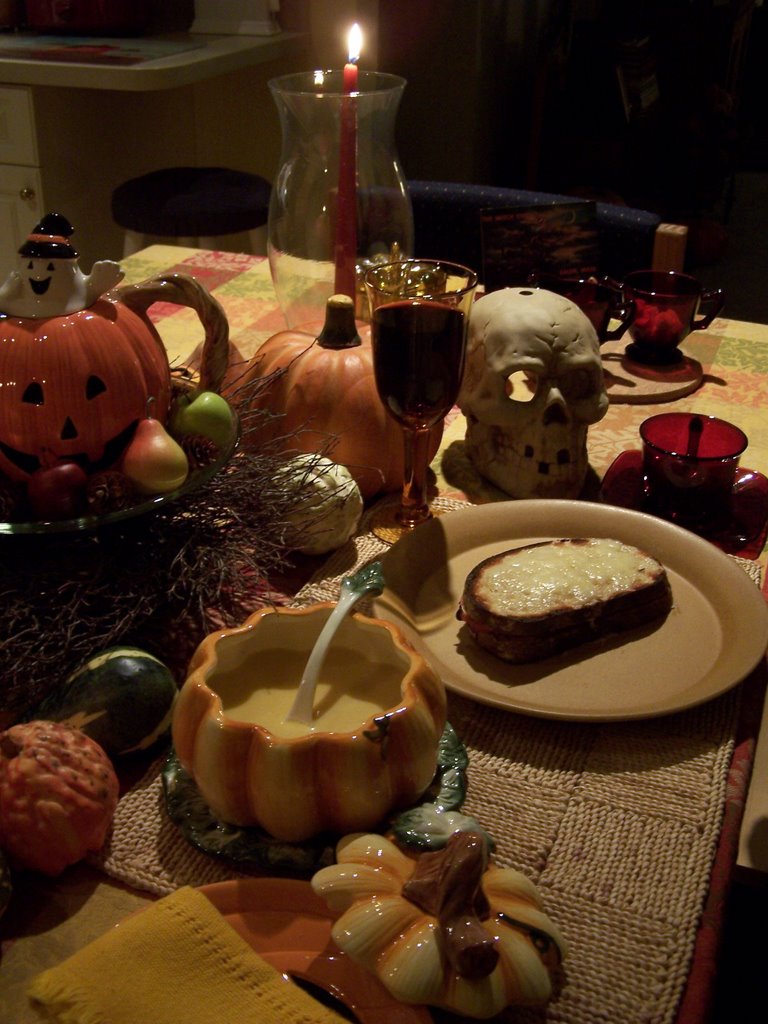
Long before Martha Stewart ever decided to “own” October 31st, I was celebrating All Hallows Eve with a menu of autumnal foods that I’d dubbed “Halloween Tea” – tasty, creative, but just a little spooky.

This year’s selection of “tricks and treats” drew from the bewitchingly best ingredients of the season and included:

Toadstool Crostini
“Original Sin” Hard Cider
Butternut Squash-Apple Soup
“Croaked” Monsieur Grilled Sandwich
Pumpkin Brioche Pudding with Bourbon Caramel Sauce


The perfect holiday menu – a little bit of earthiness, a dash of temptation, a sandwiched grilled until dead on arrival, and a dastardly spiked squash dessert. It was all served up with a “heady” screening of Tim Burton’s “Sleepy Hollow.”

Happy Halloween! As my brother said this morning, "May the Great Pumpkin shower you with treats, and may all your goblins be benign gourmands."


© 2006 T.W. Barritt All Rights Reserved

Saturday, October 28, 2006


Perfecting Pasta

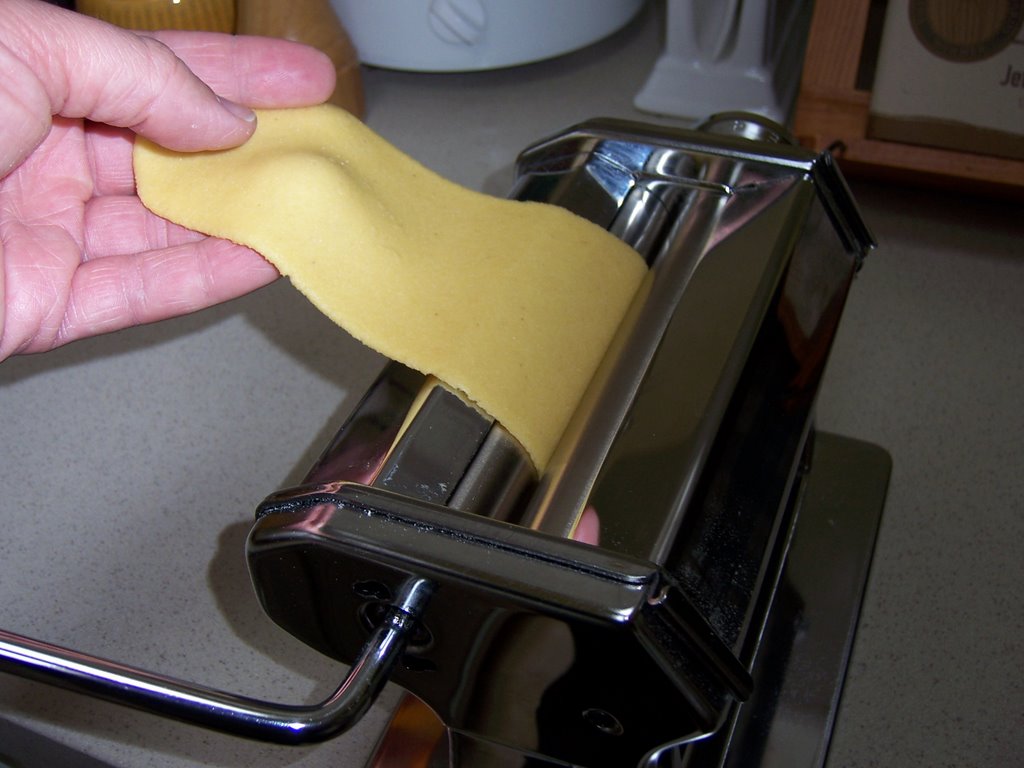
I’d returned from Italy with grand ambitions. I had successfully created fresh pasta from scratch in Florence and now I’d make it at home. After four styles of pasta, I was now an experienced pasta chef. Immediately, I purchased a gleaming Atlas 150 pasta machine, manually operated with a shiny chrome crank. I insisted on a hand operated machine. All that physical energy would certainly assure a most authentic taste. Yet immediately, my pasta plans began to perforate. Adapting the recipe to the home kitchen and the quirks of U.S. ingredients proved challenging.

Perhaps initially I was too ambitious, too “faux Gourmet.” I decided I would start by making pumpkin flavored pasta, but the orange puree made the dough too wet to handle. I ended up with a sticky ball of dough floating in the water, more like a pumpkin dumpling than trim and tender egg tagliatelle.

Maybe it was the flour? At Apicius, The Culinary Institute of Florence, we’d used semolina flour, but I’d scoured my local stores and could find none. So I settled for unbleached all purpose flour and decided to start again by going back to basics.

I followed the formula to the letter – one egg for every one hundred grams of flour. No more, no less. I kneaded the dough and chilled it for thirty minutes. I even got the hang of the Atlas 150 after several failed attempts, and nearly breaking my toe when the crank fell to the floor. But when I’d finally cut those lovely tagliatelle noodles in the final pass through the machine, they clumped together like a bad hair day.

On paper, pasta is such a simple recipe. Why wasn’t it working? There had to be a solution. So I put on my Julia Child thinking cap and mulled things over. I remembered reading how Julia pursued culinary success by trial and error. She made batch after batch of rich French food and took copious notes on the successes and failures. Like Julia, I’d have to practice to perfect my pasta. First, I haunted the gourmet stores in New York City and finally found selmolina flour at Dean and Deluca. I mixed the two eggs carefully into the sandy grain and gently prodded the concoction into soft yellow, pliable dough. I passed the dough through the rollers of the machine until I had thin sheets. But, when I jumped to the final cutting, again the tagliatelle strands stuck together.

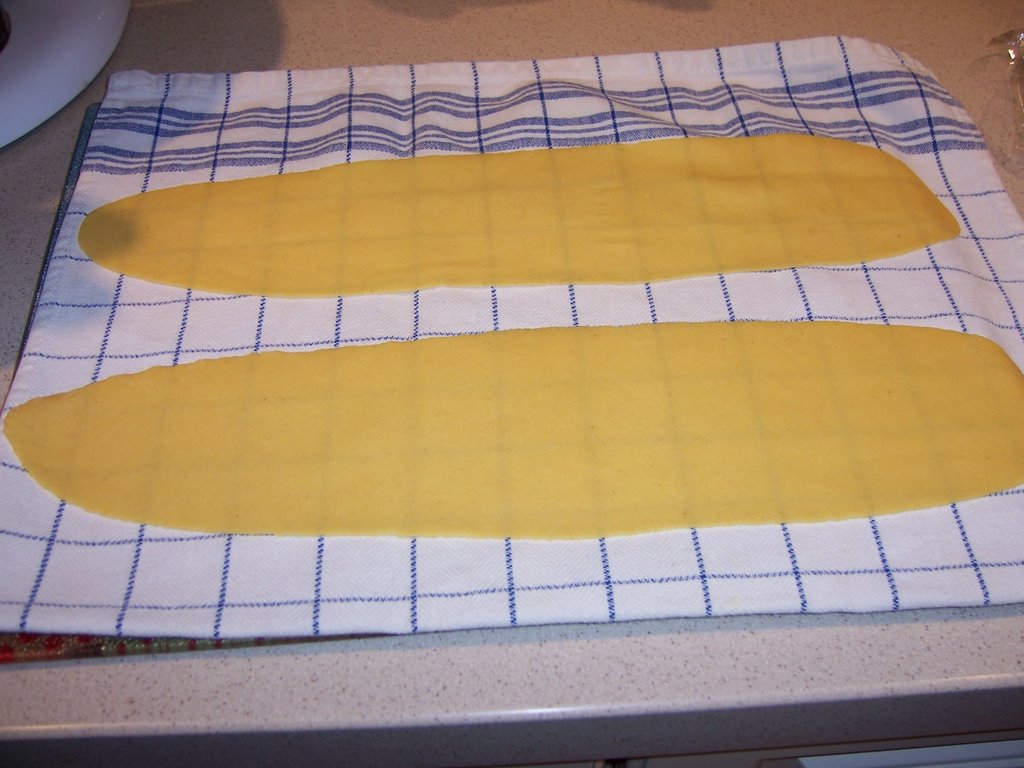
Surrounded by cookbooks with directions on fresh pasta, I tried to understand where I was stumbling. Then, a brief notation in “Essentials of Classic Italian Cooking” by Marcella Hazan jumped off the page. In my zeal and enthusiasm to get to the meal, I had missed an interim step. I’d neglected to let the long, wide sheets of pasta dry for 10 minutes or more before cutting them into noodles. What a difference 10 minutes makes! My pasta cut perfectly, without sticking, and each strand dried singularly straight and narrow!

From there, it was minutes to a steaming bowl of perfect tagliatelle with tomato basil sauce, shavings of Parmigiano Reggiano and a ruby glass of Chianti Classico.

The moral of the story? Don’t let hunger blind you to proper technique.

© 2006 T.W. Barritt All Rights Reserved

Friday, October 27, 2006

Night of the Turkey Club
The flights out of LaGuardia to Chicago have been backed up for hours, but I finally arrive in the Windy City at about 10 p.m. Central Time after leaving the New York office at 3:45 p.m. Do the math. That means for approximately five of my seven hours of travel, I was going absolutely nowhere.

When I finally stumble off the flight at O’Hare with my carry-on wheeler and my zip lock bag of toiletries, I am half starved. I’ve survived on Fritos, Rold Gold and Cranberry Juice Cocktail for what seems like forever.

My colleague Splint McCullough, whom I haven’t seen in more than eight weeks, steps out of the crowd in baggage claim and says, “This way, Mr. Bond.” This greeting is a relief. He usually impersonates Kato from the Inspector Clousseau movies. Splint has weathered similar atrocities during his trip in, including flight delays and lost luggage that was later discovered soaking wet on the wrong baggage carousel. But, he’s resolved his issues and is waiting with a white Ford Bronco rental to take us to our accommodations in Naperville.

I eye the vehicle skeptically. “Are you on the lam?” I ask. Fortunately, there are no law enforcement or media choppers on our tail, and we cruise out of the airport with little difficulty and ease onto the expressway.

“I can do this route in my sleep,” Splint promises, and promptly misses the exit to Naperville. I look at him askance. I haven’t seen Splint in more than eight weeks, and I haven’t missed an exit in that time either. But we seem to share a certain directionally challenged karma.

After a quick course correction, we are on our way to Naperville. “The bad news is that most of the restaurants closed at 10 p.m.,” says Splint. “But, the good news is, I saw bright lights near the highway. We’ll find you some food.” Splint, by the way, has already eaten.

Following a quick trip along Route 88, we pull into a well-lit parking area in Lisle, Illinois. There’s a distinct chill in the air. The red neon sign screams “Mullen’s Bar & Grill” and there are cars in the parking lot. “I think they’re open,” Splint declares optimistically as we enter the establishment, whose threshold is adorned with a selection of Halloween scarecrows.

Inside, the first patron we encounter is a man in full clown makeup and costume, who has bellied up to the bar and is watching the World Series.

“I hate clowns!” Splint says with passing glance and a shudder. He quickly accosts a waitress who informs us that the kitchen closed five minutes ago. “Is there a diner in the neighborhood?” he pleads as I am about to expire at his side. She volunteers to check and disappears into the kitchen. Moments later, the manager returns and graciously offers to retain the kitchen staff long enough to whip me up a turkey club with fries. He escorts us to a table, where Diet Pepsi and Sierra Mist are delivered and both he and the waiter settle in with us to chat about nothing in particularly. It seems that no matter where Splint goes, he attracts an entourage and it is clear that Mullen’s caters to weary travelers and thirsty circus performers.

My turkey club arrives and it is enormous, worthy of Dagwood Bumpstead. I can barely fit the tall stacks of turkey, crisp bacon and golden toast into my mouth, but I attack the food voraciously as the restaurant manager recounts his day in detail, which began by dropping his mother-in-law at the airport at the crack of dawn.

Within minutes, there is nothing but a few crumbs and an errant French fry on my plate, and I am grateful for Mullen’s hospitality and Splint’s incomparable instincts for locating fine cuisine. Frankly, I’m thinking of spending the weekend. Mullen’s is hosting a “Seven Deadly Sins Halloween Party” this Saturday night and I’d like to see if I can add a few more to my repertoire beyond my usual gluttony.
www.mullensbarandgrill.com

© 2006 T.W. Barritt All Rights Reserved

Wednesday, October 25, 2006


Kids in the Kitchen
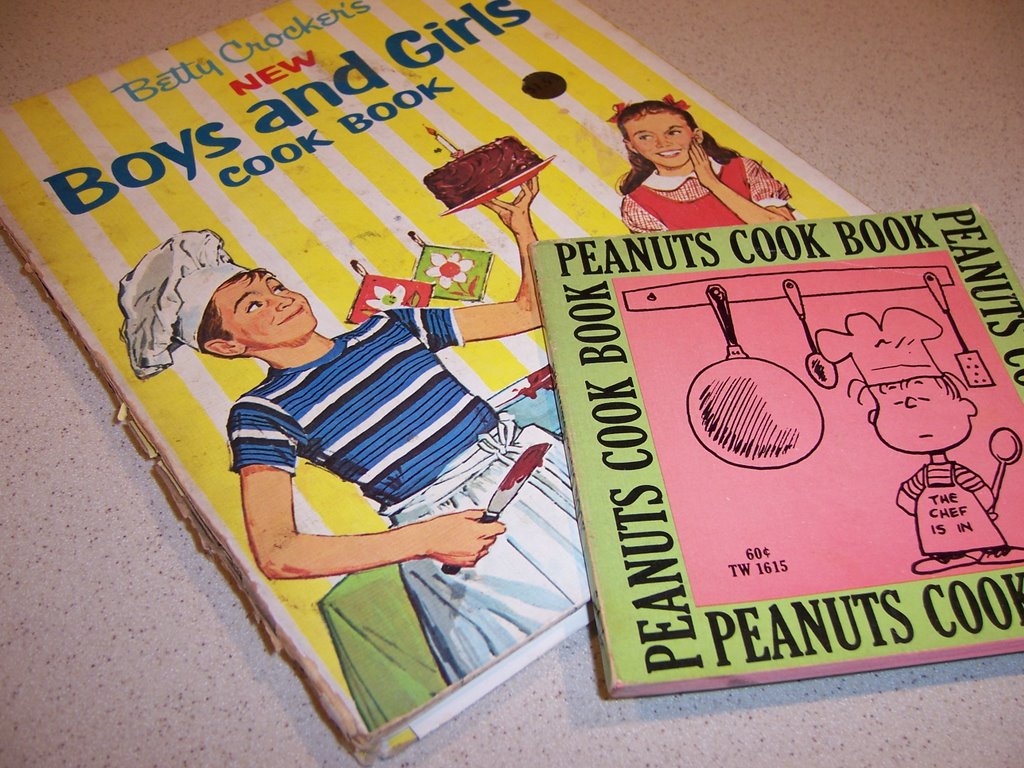
Teach a young person to cook and they learn a bounty of life skills – resourcefulness, teamwork, organization, creativity and sensory skills. As a young chef I was reared on "The Betty Crocker Boys and Girls Cookbook," which featured recipes like “Mad Hatter Meatballs” and “Polka Dot Macaroni and Cheese.” Mom let us pick our favorites, which my brothers and I would each cook in rotation for the family dinner. Later on, I remember becoming quite enamored of the “Peanuts Cook Book” and making Linus’s “Security Cinnamon Toast” and “Red Baron Root Beer.” Both volumes are still on my cookbook shelf.

At a recent gathering of old friends, we were reminiscing about learning to cook as kids and realized that many of us were alumni of the “Betty Crocker Boy's and Girls Cookbook.” Some had even memorized certain recipes even though they no longer owned a copy of the cookbook. So it’s clear that experiences in the kitchen can be formative for kids.

Think about it. When did you first learn to cook? Was there a defining moment as a youngster, or a habit learned early on in life? How does that early experience impact your eating habits, your purchasing choices and your passion for food today?

More and more professionals have recognized the importance of kids and families cooking together, particularly as issues of diet and obesity among young people become a national concern. FamilyCook Productions (http://www.familycookproductions.com/) uses family time in the kitchen as an opportunity to learn, and develops curriculum for young people and their parents centered around meal time. The mission of FamilyCook Productions is to “bring families together around delicious fresh food while positively impacting their health and well being.”

And now, chef and award-winning cookbook author Rozanne Gold has published “Kids Cook 1-2-3: Recipes For Young Chefs Using Only 3 Ingredients.” Rozanne, former chef to New York Mayor Ed Koch, three-time James Beard Cookbook award winner and all around neat person, pioneered the idea of simple fresh ingredients and flavorful meals with her three-ingredient approach well before anyone was trying to knock out meals in 30 minutes. Her charming volume and its companion website http://www.kidscook123.com/ addresses kids in honest, enthusiastic language about the pleasures of cooking. There are whimsical recipes like “Bowties with Broccoli,” “Crazy Leg Drumsticks” and “Strawberries-in-Nightgowns” that are bound to capture the imagination of future gourmets everywhere. Not to mention a few grown-ups like me!

What was your childhood inspiration in the kitchen? I’d love to know.

© 2006 T.W. Barritt All Rights Reserved

Monday, October 23, 2006

Cheese Whiz!

Just catching up on some new publications and got my hands on “The Murray’s Cheese Handbook” (© 2006 Broadway Books) by Rob Kaufelt, proprietor of Murray’s Cheese in Greenwich Village in New York City.

I became a fan of Murray’s when I worked near Grand Central Station and would stop by the Murray’s booth in the gourmet market. One visit with the well-informed cheese experts on staff and I was off and running with a regular Friday night cheese plate tradition for dinner to sooth the effects of a tough week at the office.

Now, Kaufelt has taken that knowledge so evident to shoppers and turned it into a portable handbook with profiles of more than 300 artisanal cheeses. Kaufelt explains cheese terminology and answers frequently asked questions in a lively, laid back style that makes it clear this guy is crazy about cheese. He also provides a bit of history about the establishment of Murray’s which is more than 65 years old, and the oldest cheese shop in New York City.

If you don’t live in New York, check out Murray’s online at http://www.murrayscheese.com/. They ship! I’ve got a serious addiction to Chimay, once made by monks in Belgium, and the powerfully pungent Cabrales blue cheese from Spain.

© 2006 T.W. Barritt All Rights Reserved

Sunday, October 22, 2006


Bread Baking Resources and Tools
As my “hands on” time in the professional bread kitchen concluded last Friday, and now I must adapt the techniques to my home kitchen, I thought I’d offer up a couple of resources and tools I’ve encountered in the last four weeks for anyone attempting to try artisanal breads at home.

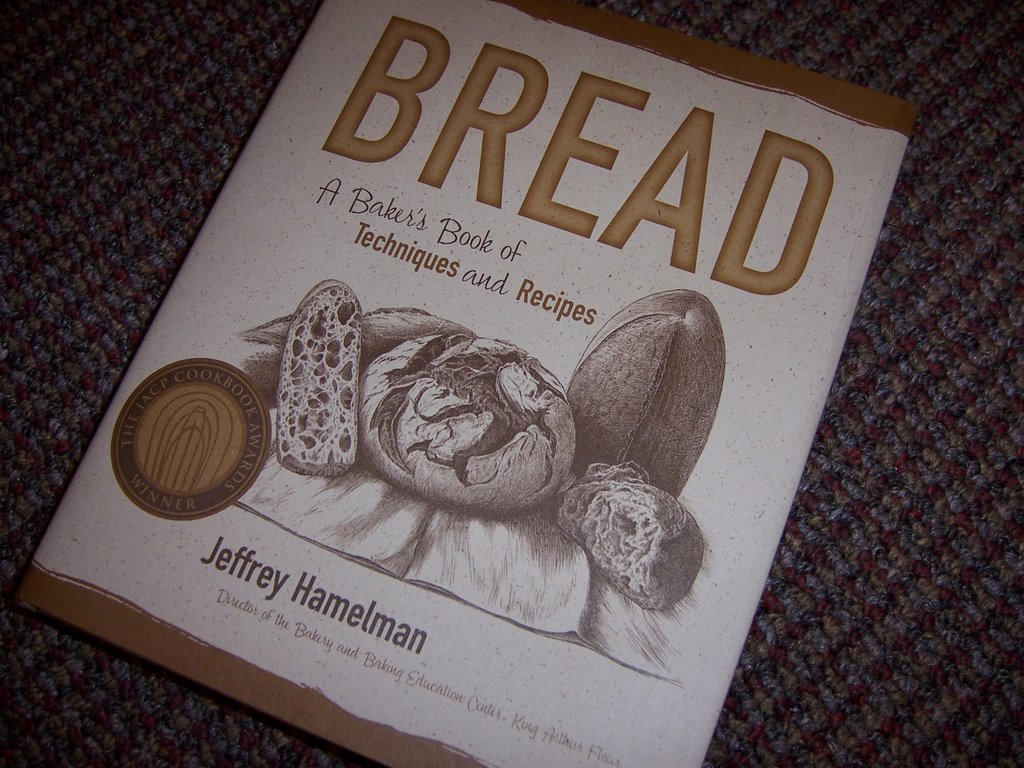
Try and get a copy of “Bread: The Baker’s Book of Techniques and Recipes” by Jeffery Hamelman. This seems to be the reference book of choice among professionals and, in fact, Hamelman, a Certified Master Baker, is the director of the Bakery and Baking Education Center for King Arthur Flour. Hamelman covers every type of loaf imaginable, from yeast breads to rye sourdough, and provides measurements in U.S. and metric, as well as specific formulations for home baking and larger batches. There are beautiful photos and detailed instructions for shaping each style of bread. “Bread” is available in hardcover and was published by John Wiley & Sons in 2004.

A digital thermometer is essential to take the temperature of the dough. Many recipes show a “desired dough temperature” based on the types of ingredients in the formulation. If the temperature of the dough is higher after mixing, that means the loaf is likely to ferment more quickly and you may need to shape and bake it sooner.

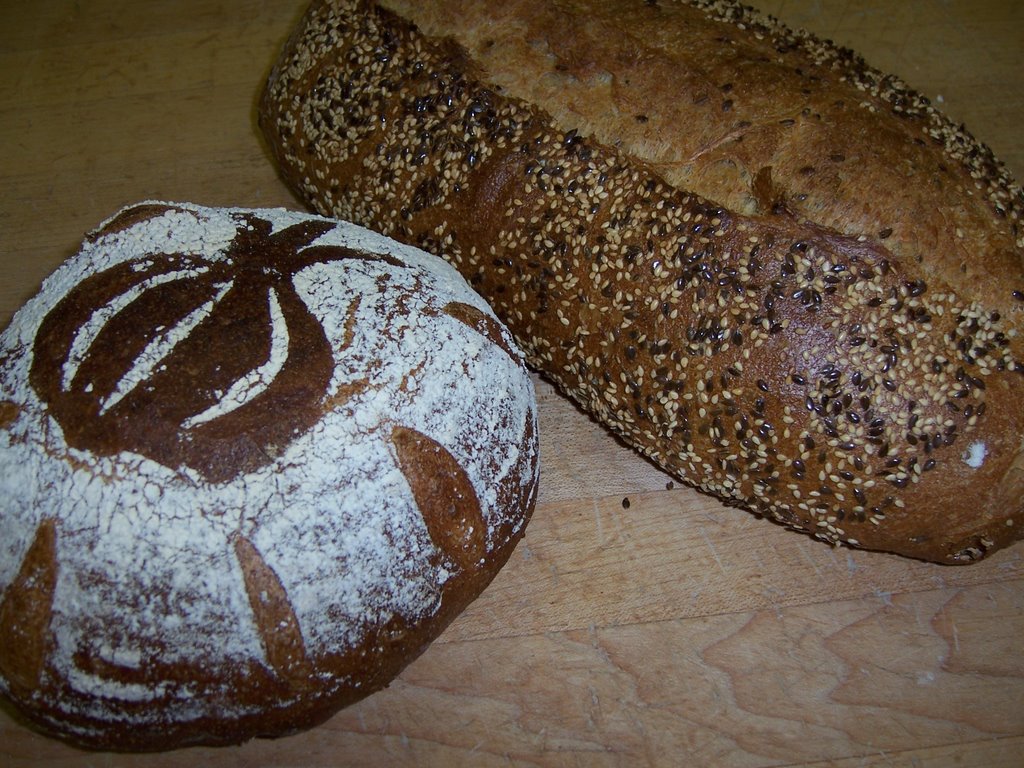
Until taking my recent class, I wondered how those interesting circular shapes and patterns were achieved on round rustic loaves. Check out retail stores like Sur La Table for a circular woven basket, sometimes called a “banneton,” where the bread is kept for its final proofing and gets that circular beehive pattern on top. A dusting of flour in the basket helps to define the circles.

Finally, for a little bit of historical context, it’s fun to read Julia Child’s narrative of how she investigated the correct procedure for making classic French bread in her memoir “My Life in France.” Julia’s reflections on bread begin on page 253, and you can read her humorous account of what she describes as “the Great French Bread Experiment” as she worked on the manuscript for “Mastering the Art of French Cooking Volume II.”

© 2006 T.W. Barritt All Rights Reserved

Friday, October 20, 2006


Bye Bye Baguettes
Our final day of Classic European Breads is both tasty and whimsical. We mix a batch of Swedish Limpa bread, a sourdough rye with molasses, fennel, coriander and orange zest. The rye and citrus is intoxicating as it bakes, and the resulting rich brown loaf smells sweet and spicy.

On Thursday, we did the prep work for authentic German salt pretzels or “Laugenbrezel.” Chef K gives us a brief history of the knotted delicacy. The pretzel icon hangs from many bakeries in Germany and has religious connotations. The traditional three holes are said to represent the Holy Trinity, and some say the knot resembles a person praying. The pretzel was invented somewhere between the 5th and 7th century by monks, ever the ingenious clerics. Children in Germany will tie a pretzel around their neck on a string on New Years as wish for prosperity. Some pretzels are first boiled in lye before baking to establish a crisp brown crust, but we use boiling water and baking soda. The auburn crust is crisp and the inside moist and chewy and we even stuff some with a grating of gruyere cheese, which is downright yummy.

We concoct Ciabatta, a pale, Italian “wet dough” that is called the “Lady Slipper” because of the lacy design effect achieved by rolling the cut dough in flour and turning it flour-side-up in the oven.

For lunch, we make pizza dough and create individual pizzas with cracker crisp crusts, topped with homemade tomato sauce, roasted garlic, caramelized onions and cheese. We all agree it is the best lunch we’ve had in a month.

We conclude four weeks of intensive labor right where we started, shaping and loading the baguettes for the evening dinner service at L’Ecole. For a moment, I stare at the not-yet-baked baguette in my hands on the bench in front of me. It actually looks like it was shaped correctly by someone who knows what he’s doing.

Chef K presents our course completion certificates, we toast each other with champagne, and she gives us a lovely “go forth and bake bread” blessing. She mentions that we Three Bread Musketeers have done the work of twelve students during this class. Our aching muscles confirm that, but our bread baskets are indeed overflowing.

© 2006 T.W. Barritt All Rights Reserved

Thursday, October 19, 2006


Scones
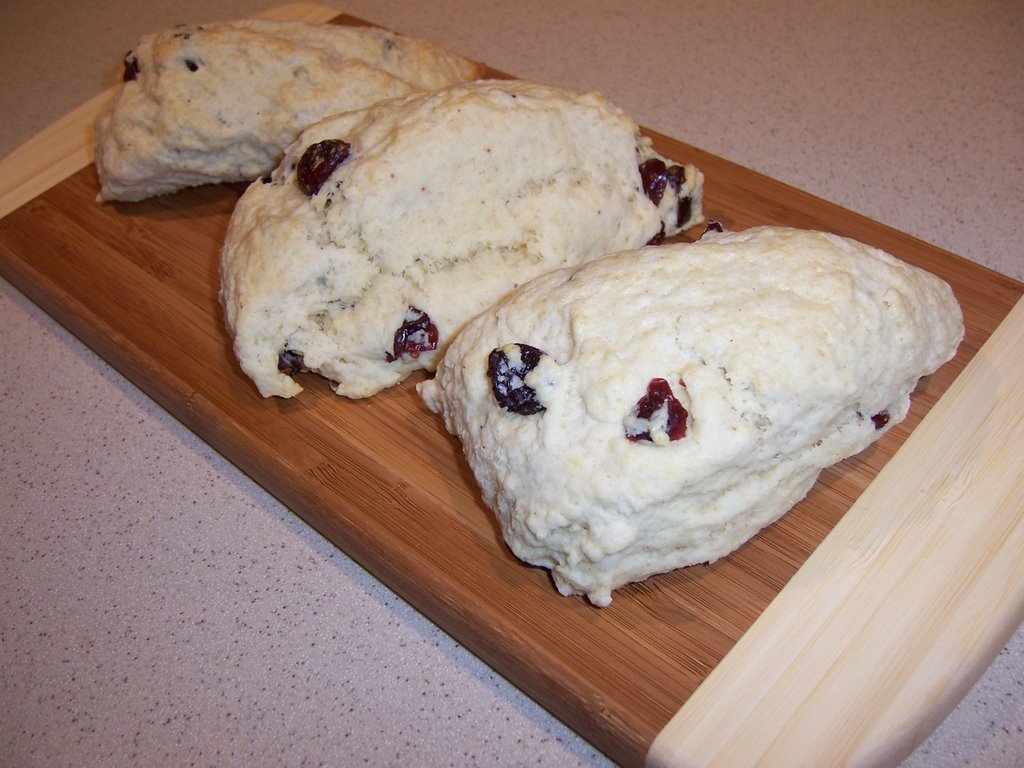
As Classic European Breads draws to a close, we are dropping in on diverse cultures and cuisines. This morning we make a brief stop in Great Britain and dip our bakers’ hands into the preparation of scones. The recipe is remarkably easy. A little baking powder, flour, butter, milk and egg mixed by hand, and you’re on your way to a proper afternoon tea. I sprinkle my mixture that resembles pie dough with cranberries and nutmeg in honor of the cool autumn days. My teammates are showing bursts of creativity, mixing in lemon zest, ginger and candied citron.

Chef K gives us a nifty tip – once you’ve pulled the shaggy dough together, shape it into a long, rectangular log. Then, you can cut neat triangular wedges from the log, or even freeze the log for several days and just pull it from the fridge and slice and bake to serve hot scones to guests. The key is you must serve them hot, as scones can quickly become stale.

We pull them from the oven just before lunch. My lofty, buttery scones are warm and crumbly and dotted with bright crimson, tart-tasting sweet cranberries.

© 2006 T.W. Barritt All Rights Reserved

Wednesday, October 18, 2006


Croutons from the Bread Kitchen
Today seemed like a series of odd episodes. There’s a certain drama that exists in any workplace and a bakery is no different. Things go wrong, chefs complain, people screw up and sometimes voices are raised. But you still have to produce bread. The production schedule supersedes any drama and you must deliver bread.

We delivered two varieties. Broa is a long rectangular loaf of cornbread that hails from the northern part of Portugal. The dough was sunny gold and almost fluffy, yet the finished product is hearty enough to stand up to a Portuguese soup made with cabbage and chorizo.

Krauterquarkbrot has perhaps the longest name of any bread, and while it does contain the dreaded rye sour, it is also nicely flavored with fromage blanc and fresh herbs. In fact, the translation of the German name means “herb bread made with quark cheese.”

Later in the afternoon the pace quieted down a bit. The Maitre Boulanger is preparing for a competition and his mind appears to be on the event. Chef K will be back for our final two classes. News of her return pleased us.

For a brief moment, Chef Jacques Pepin breezed through the kitchen, and I was reminded of all those aspects of food – the history, the legacy, and the time-honored techniques – that keep me in the game.

© 2006 T.W. Barritt All Rights Reserved

Tuesday, October 17, 2006


More Rye from the House of Pain: It is week four – the final week – of Classic European Breads at the French Culinary Institute and once again we are struggling with the German unit and rye sour starters. I want to know if there are any other countries in Europe that make bread, and how come our tour hasn’t visited there yet???

My fingernails are caked with grayish residue as I plunge my hands into yet another bin of cold, slick rye sour starter. The stuff bonds to surfaces so well that it could fill the cracks in my kitchen ceiling. I’ve washed my hands dozens of times, but it has given me a second skin. Whereas there is indeed a touch of romance in mixing and shaping a baguette, there is nothing remotely alluring about the preparation of rye bread. Think heavy duty home improvement project, and you’ll get the picture. Bottom line, it’s messy.

The Maitre Boulanger informs us that we are preparing “Vinchgauer,” a flatbread that is 70 percent rye and 30 percent wheat flour. And it only has an ingredient list that is about a mile long. My teammate, “A” is awfully perky today, and seems to be enjoying playing in the starter and inhaling fermented rye fumes. Its annoying and I’m somewhat less optimistic about our prospects.

I’ll admit the history on Vinchgauer is intriguing. The bread originated in Austria and contains several spices – coriander, fennel, and caraway. What were all those spices doing in Austria, you ask? The Maitre Boulanger tells us that Austria sat smack in the middle of the spice route from Asia and as merchants traveled through, they left samples behind.

After mixing, we scoop the mortar-like dough onto the bench and let it rest. It doesn’t seem to have much life in it, but there is some evidence of activity. We attempt to roll the sticky dough into balls, but end up scraping a lot of it off our palms and the bench. Then, the Maitre Boulanger shows us how to sprinkle the rounds with course rye flour and press them flat on a bagel board. The little pancakes look kind of gray and listless. Any remaining optimism has faded and I am convinced we are on our way to another kitchen disaster. (I haven’t shared our pumpernickel nightmare – it was just too painful.)

We slide the disks into the oven, and try and occupy ourselves with other tasks. Twenty minutes later, though, a bit of a culinary miracle has occurred in the oven. Our Vinchgaur is now deep reddish gold, puffed up like pita bread, and a heady aroma of spices is wafting from the oven. The Maitre Boulanger inspects the product and says “Hey, these look good.” I suspect he was skeptical too…

We cut into a loaf. It has a lovely cross pattern that has blossomed on top naturally and is about an inch-and-a-half tall at the center. The blend of rye and spices gives the Vinchgauer a deep rich flavor, with an essence licorice.

Maybe it was worth the effort.

© 2006 T.W. Barritt All Rights Reserved

Saturday, October 14, 2006

The Secrets of Challah


Who doesn’t dream of being able to create a shiny bronze loaf of braided Challah bread? I’ve had Challah envy just walking down the bread aisle of even the most rudimentary grocery store. There were always all sorts of questions. What is the origin of this exquisite bread? How do you achieve the braided effect? How do you create that glossy, golden sheen?

On Friday in Classic European Breads, we became privy to the secrets of Challah. Originating in Europe, the shimmering yellow dough is enriched with oil, sugar and honey. The slightly-sticky dough forms nicely into balls, which are then rolled into ropes.

There are many braiding techniques, but we focused on braiding three and four ropes of dough at a time. The “three” technique is just like braiding hair and uses three strands of dough lined side-by-side on the work bench. The “four” technique creates a thicker chain link effect. Four strands of dough are positioned on the bench at 90 degree angles and then alternately folded over each other until they bulge into a braid. Once shaped, the loaves are brushed with egg wash to achieve that burnished gold look during baking.

The “bumps” of the braid are meant to represent the 12 tribes of Israel (assuming you braid it properly and get twelve bumps!) Challah is traditionally served on a white towel that symbolizes the manna from heaven, and rather than slicing, guests pluck a bump from the loaf with their hands.

Rich, fresh and downy soft, the end result was a blessing of theological scope!

© 2006 T.W. Barritt All Rights Reserved

Friday, October 13, 2006


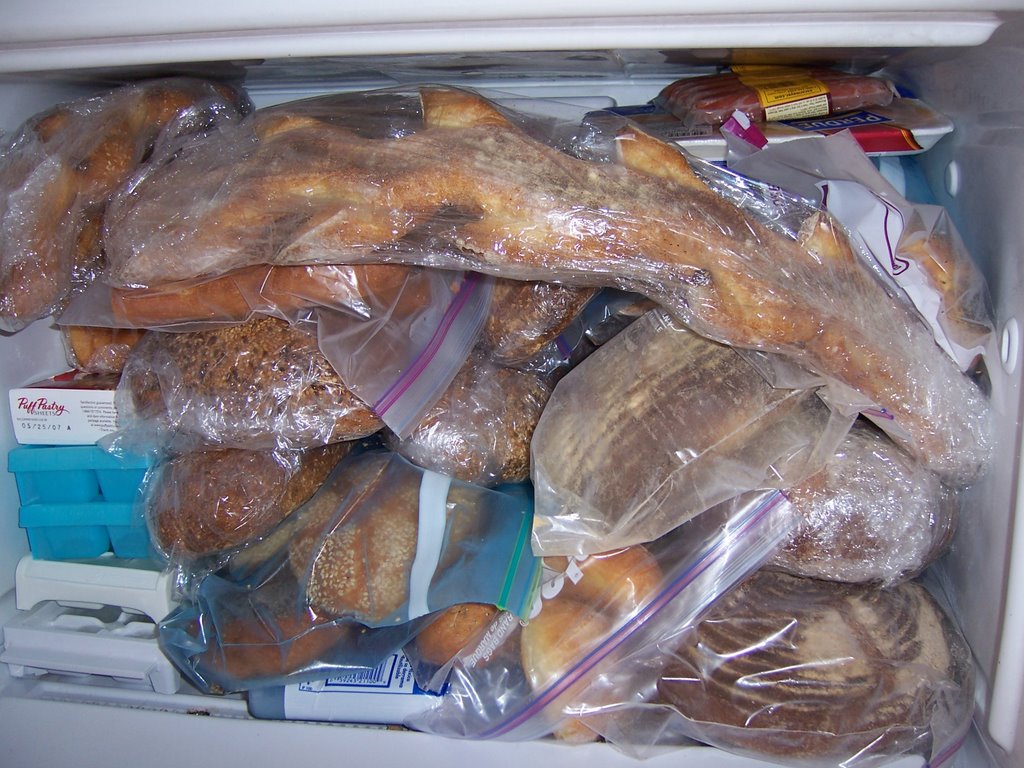
Creative Uses for Bread: I’m three weeks into an intensive bread baking course and “my bread basket runneth over.” I’ve got bread in the freezer with barely enough room for ice cubes, bread on the counter and bread in the den. I’ve given bread to relatives, friends and colleagues, and there’s still a surplus. One friend in Canada suggested establishing a roadside bread stand, similar to the lemonade stand of bygone childhood days. Not a bad way to earn some extra cash. As the weather is getting cooler, maybe I can convince the heating oil company to take bread as payment instead of cash.

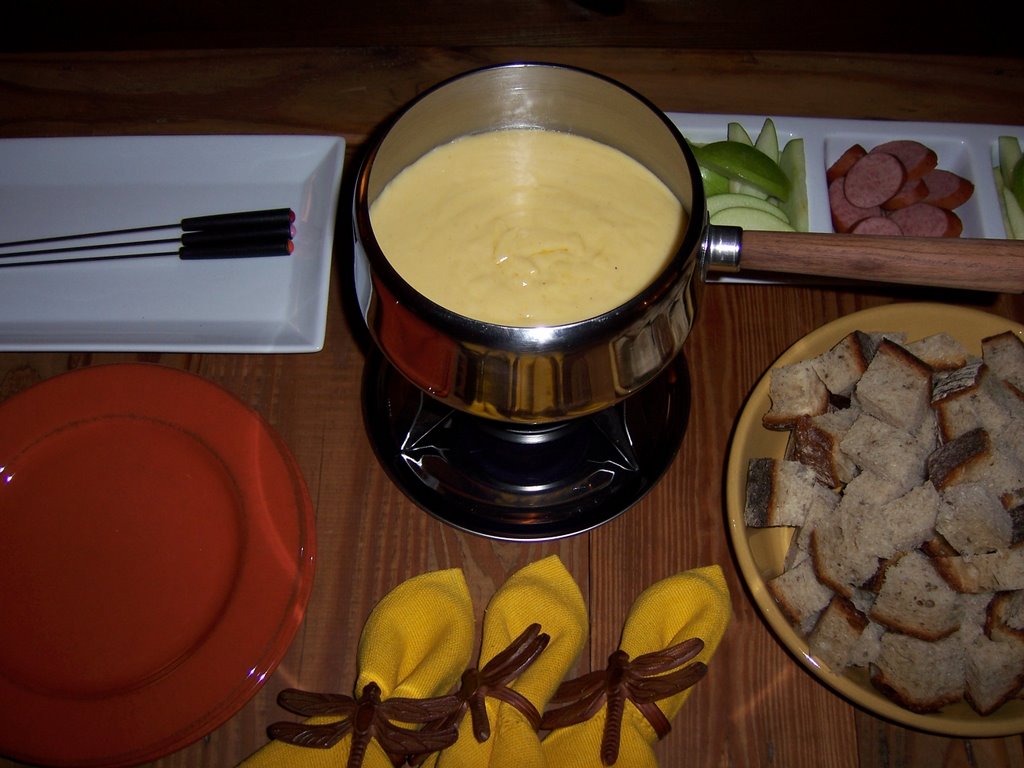
There have been some practical and delicious solutions. I’ve made Panzanella, the traditional Tuscan bread salad, and tonight I had some laughs with my friends Mary and John over Dutch Gouda and Beer Fondue which went beautifully with cubes of German rye bread. Next weekend the high school crowd arrives for their 30th reunion celebration, and you can bet they’ll get French toast or Strata for brunch.

I’m thinking about bread pudding and bread stuffing, since Thanksgiving is just around the corner, but that’s still not going to get me to the back of a very packed freezer. Who would have thought that rolling in dough could be such an issue? If you’ve got any interesting ideas for creative ways to use bread, I’m open to any and all suggestions!

© 2006 T.W. Barritt All Rights Reserved

Tuesday, October 10, 2006


The Problem with Rye Bread: This little loaf represents more than 24 hours of labor. I really didn’t have a concept of how rye bread evolved until yesterday’s “Rye Enlightenment.” The foundation of a dense, chewy, sour rye bread is a “levain” which is basically a thick paste of wheat flour, rye flour and water that ferments overnight, developing quite an odor. We started our levain at about 2:00 p.m. on Monday and this little loaf popped out of the oven at about 2:45 p.m. on Tuesday.

Does the phrase “time management” come to mind?”

During that period, the levain was reduced by a small amount and then fed at several intervals with additional flour and water to increase activity of the fermentation. There are all sorts of analogies to yogurt cultures and various types of bacteria. In fact, very little yeast is used in the final product, with the levain generating most of the leavening.

It’s an incredibly time intensive process and not for the faint of heart. You have to, not just like, but love the aroma of rye, and you have to remember to feed the beast with additional water and flour throughout the day. When you finally mix the levain with the other ingredients, the dough is the strange consistency of modeling clay. You’ve really got to worship rye bread to go through all this effort. With all the time issues we face, one has to wonder if the artisan approach to rye bread can survive.

Right now, I am trying to decide the fate of this loaf of rye. Something of this caliber deserves a top-of-the line corned beef with a little sauerkraut and a great microbrew on the side.

© 2006 T.W. Barritt All Rights Reserved

Monday, October 09, 2006


Breads Hearty and Wry: Our European bread odyssey at the French Culinary Institute moves into week three and we arrive in the land of the Rhine River for a taste of the breads of Germany. This is the Maitre Boulanger's forte, as he is a native of the country, and he gives us a quick briefing on the impervious nature of the tough rye seed, which must be soaked longer than other grains for proper fermentation.

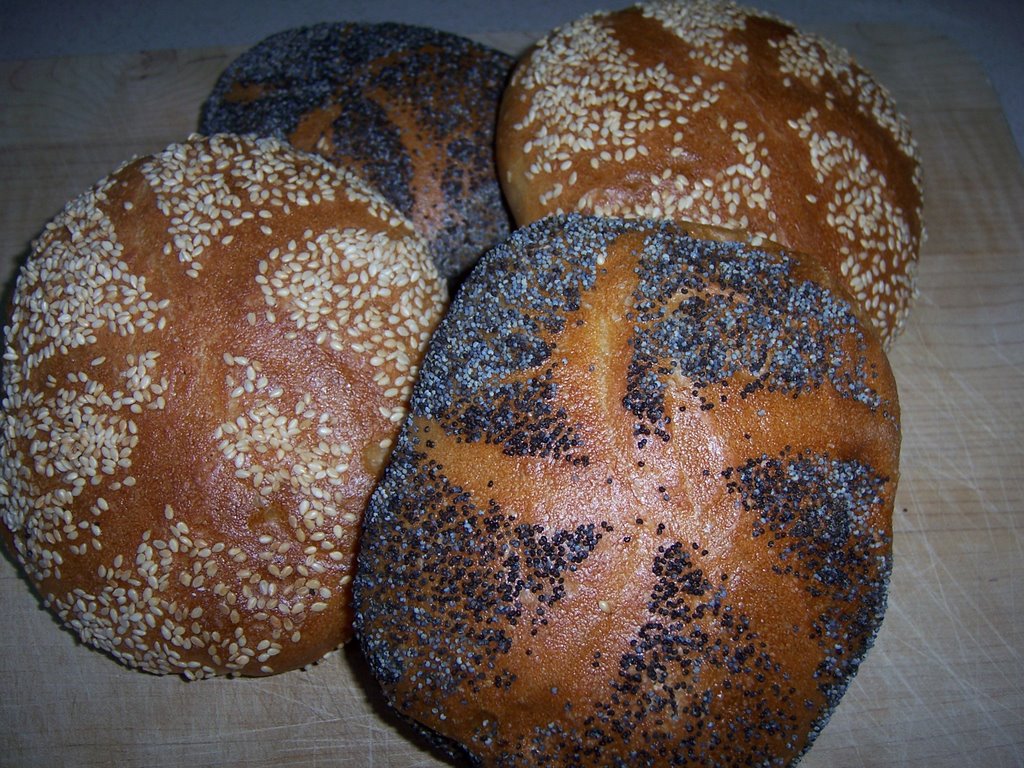
We begin with the venerable Kaiser roll, and learn how to quickly mix the simple, serviceable dough, shape it into rounds and stamp it with a tool that gives it that distinctive pinwheel pattern. Some of our rolls proof too long, and don't expand like they should in the oven, but the slightly tart, nutty taste and golden crust is distinctly genuine.

My teammate "A" is working like a dynamo today. She is anticipating what the chef will need, and sprinting ahead in terms of scaling out the remaining recipes. Eventually, I start to catch up to her, after a serious case of the Monday blahs, and we begin to work as a pretty efficient team, quickly moving through one job after another.

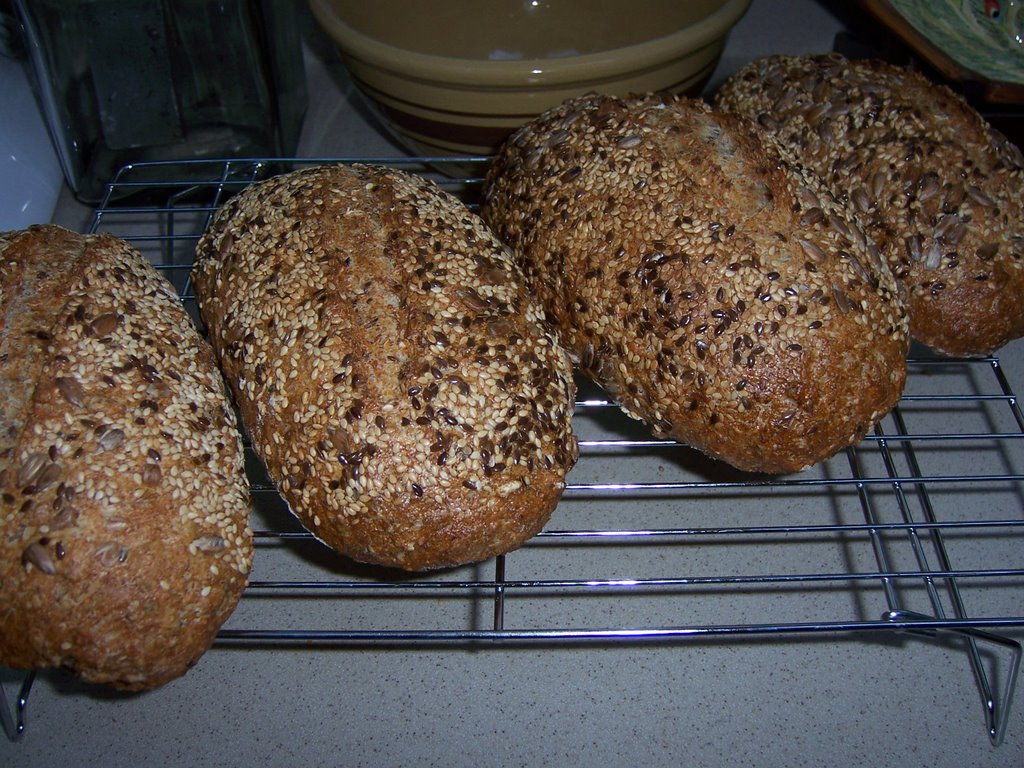
Later, we get to work on a multigrain rye bread that is packed with toasted grains -- sesame seed, flax seed, sunflower seeds and rolled oats. I am salivating as I sniff the aroma of grains toasting in the oven.

All this is the prelude to some serious wrestling with rye. The Maitre Boulanger pulls out a large round tub of "rye saur" starter and informs us that this formula was first mixed 100 years ago in Germany. "Treat it with care," he advises. The starter is a stiff and grainy caramel-colored mixture that looks pretty healthy given its century-old status. There is a wonderful strong smell of rye that is reminiscent of a brewery. The Maitre Boulanger invites us to taste the starter, and I savor the powerful flavor of intense, sour rye on my tongue. We take a scoop of the starter, add wheat flour, rye flour and water, and tomorrow we shall see what develops.

© 2006 T.W. Barritt All Rights Reserved

Saturday, October 07, 2006


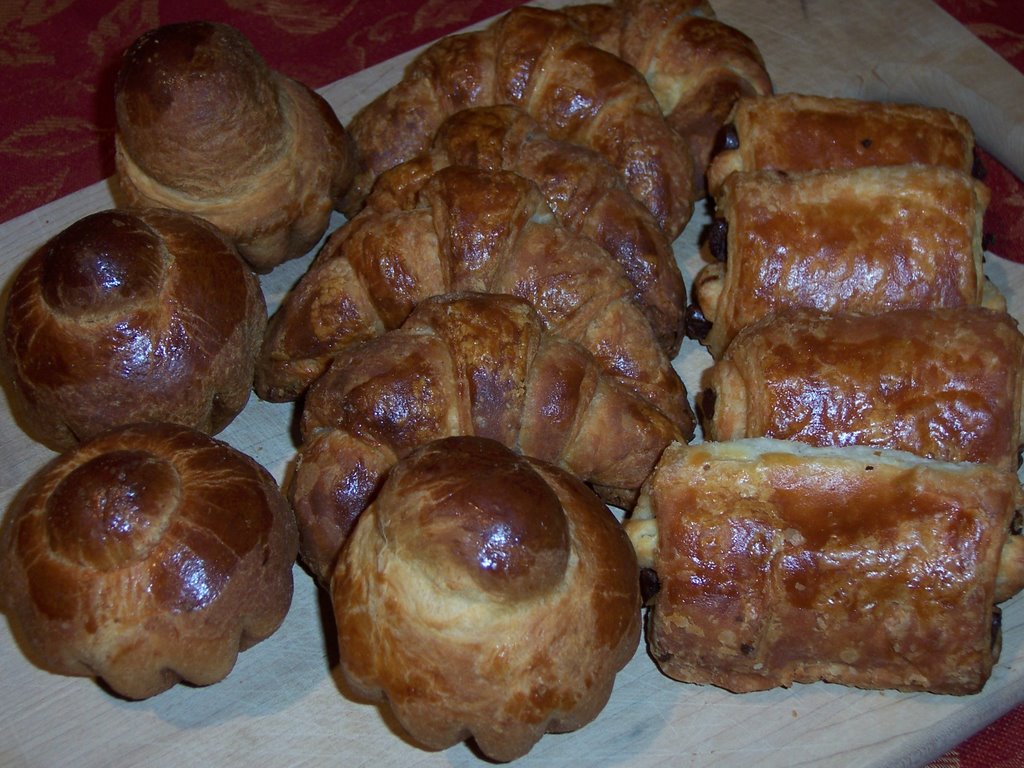
Field of Croissant Dreams: As week two of Classic European Breads concludes, we are on to the stuff of the romantic French “petite dejeuner” – Croissants, Pain au Chocolat and Brioche.

There is something miraculous about making croissant dough by hand. The butter and dough is “laminated” together, one fold after another, until you achieve a dough with many layers of butter and pastry that puff in the oven. There are precise measurements for each triangle, and a traditional method for rolling the croissant into the spiral shape. It is a time-intensive labor of love, and you get a kind of spiritual lift as you sniff the aroma of warm yeast and butter surrounding you and watch the golden crescents swell in the oven.

While technically simpler to shape, the flavor of pain au chocolat with its subtle mélange of butter and rich chocolate is sublime. The twigs of chocolate are specially-made with a higher melting point to assure a substantial mouthful of chocolate in the final product.

Brioche loaves are enriched with eggs and butter. The dough is slippery and elastic and fun to shape. We make large and small ball-shaped loaves and create that distinctive “tete” that resembles the cap of a clergyman. Some of our tetes topple a bit in the oven, but the downy golden dough is deliciously soft and sweet and smells like a French country morning.

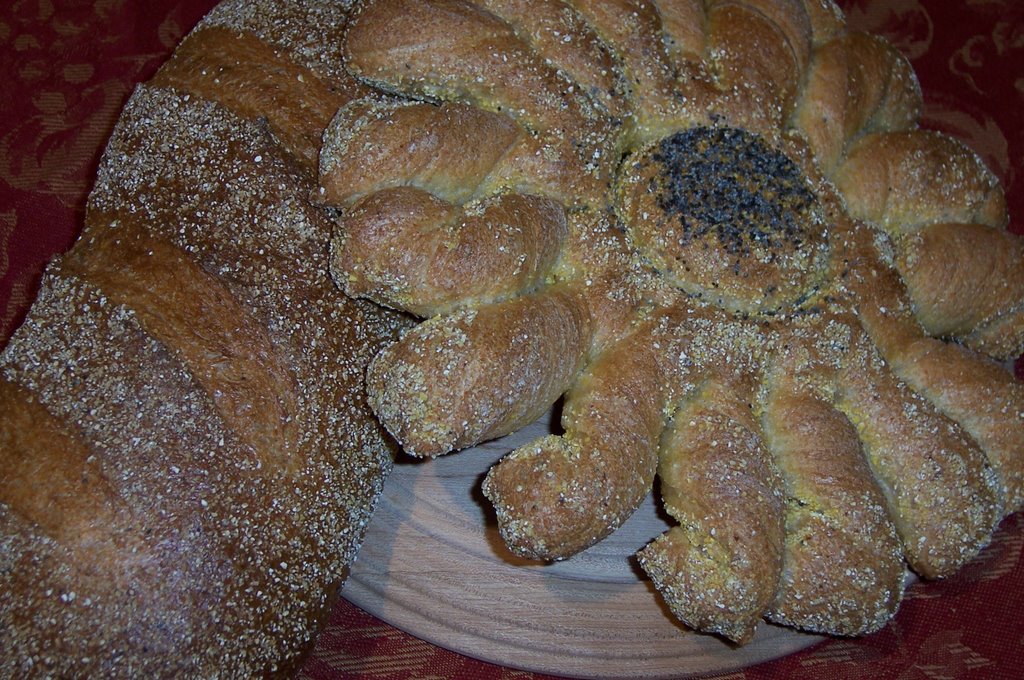
Just to keep us on top of our game, Chef has us prepare a batch of Pain de Mais, a hearty yellow bread of corn meal and olive oil. Chef isn’t sure exactly how this variety emerged, since corn is not a typical ingredient throughout France, but the crunchy loaves have a sweet and spicy flavor and we shape some into beautiful sunflowers that remind me of the radiant fields glimpsed from the bus during my recent travels through Burgundy.

© 2006 T.W. Barritt All Rights Reserved

Thursday, October 05, 2006


Man Does Not Live By Bread Alone: We near the half-way point in our bread baking immersion with certain daily rituals and do’s and don’t becoming clear.

Shortly after 8 a.m. each morning, a number of the chef instructors at the school gather in our kitchen for bread and coffee. They toast dense, dark, square German bread the color of molasses over the burners of the gas stove and gossip about school issues, often in French so we students can’t understand what they are saying. By 8:26 they are off to their various classrooms.

I’m becoming more comfortable with the Maitre Boulanger, and it’s evident he has a distinctive culinary ethos, not to mention a sense of humor that is perhaps as dry as day-old bread crumbs. Today, he suggested that we place a sign on the door to the bread kitchen that reads “House of Pain,” which is pretty funny if you speak French or if you’ve rolled a thousand baguettes over the last two weeks. The other day, he worked quietly in one corner all day building a three-foot tall clock tower out of bread dough – my first encounter with bread sculpture. I was terrified I would sneeze and knock the whole thing over.

I love the insight into regional country breads in France, many made with ingredients that are indigenous to the region. Pain Normand, uses cider and the apples that are prolific in Normandy. Pan Citron is bread infused with abundant lemon zest, and Pain de Provence is packed with olives and a mix of Herbes de Provence which includes lavender. Brioche is one of the oldest breads of France, and the large amounts of egg and butter in the silky dough make it a joy to work with.

Each morning I silently recite my “Dos and Don’ts” of Bread Baking:

  • DO remember to hit the steam button on the oven or the baguettes will look like shriveled old hot dogs.
  • DO roll back the canvas on the loading tray each time you remove it from the oven. If you don’t it’s very hard to rearrange the baguettes again after you’ve already laid them on a reversed loader.
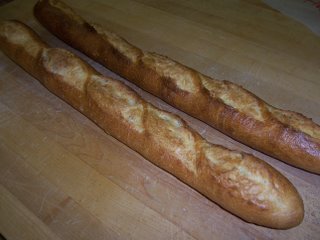
  • DO slash deeply when you score the baguette – it feels like a criminal act, but scoring is essential to allow the baguette to expand in the oven and develop that lovely braided pattern on top.
  • DON’T measure twice the amount of flour for a recipe. It can really screw up the consistency of the dough.
  • DON’T over-handle or fuss over the dough. Each time you touch it, you suck a little bit of life out of it. In other words, keep your big klutzy hands to yourself, and practice economy of movement.

Right now, we’ve got croissant dough resting in the refrigerator which we will shape on Friday. Saturday breakfast is going to be outstanding!

© 2006 T.W. Barritt All Rights Reserved

Monday, October 02, 2006


Sweet and Savory Breads: As week two of Classic European Breads opens at the French Culinary Institute we are coping with some of the typical New York obstacles – there’s a film crew tying up pedestrian traffic on Crosby Street and construction in the building forces us to enter for the week through a service entrance around the corner, and carry our lunch through a small obstacle course before we are able to eat.

We are introduced to the Maitre Boulanger for the first time, a solemn German gentleman who began baking as an apprentice in his teens. Even though we have a week of experience under our belt, the pressure of a new instructor has an effect on us. “A” can’t remember the technique for shaping loaves, and “E” and I must deal with several casualties. A number of baguettes are sent to that great bread basket in the sky as we repeatedly botch the necessary steps for precisely loading the loaves into the oven. I take on the job of removing the finished baguettes from the oven, but some are under baked. The Maitre Boulanger is patient, but I suspect his tolerance for our incompetence will not last for long.

Despite the baking mishaps, I am struck by the enormous versatility of bread. On Friday, we baked “Kugelhopf” from the Alsace region of France, a tall feathery yeast cake, laced with butter and rum-soaked cherries, which is crowned with a beautiful ring of almonds and baked in a bell shaped tube pan. It makes a fine dessert or a decadent breakfast. Today, we mastered “Fougasse” a dense bread of white and rye flour filled with briny black olives and succulent fresh thyme. We cut hash marks in the loaf with a sharp wheel cutter and spread the wet dough like a butterfly before putting it in the oven. The result is a rustic open leaf pattern with a crispy crust and savory bread that is almost like a pretzel in consistency. It’s good with a strong cheese and a smooth glass of red wine, particularly as I decompress after another day in the orifice of the bread oven.

© 2006 T.W. Barritt All Rights Reserved

Sunday, October 01, 2006


Diary of A Mad Bread Baker – Week One: To say we are busting our buns would be an understatement.

I’d had this vision of lovingly hand-kneading my own personal loaf of artisan bread each day, watching it rise in the oven, caressing the crisp golden crust and transporting home my labor of love to eat and share with friends.

The reality is this. We’re in bread boot camp. We’re a baguette assembly line. In a mere five days, we’ve shaped, rolled scored and baked hundreds of loaves, and there are still 15 class sessions to go. We have a morning lecture, and then we dive into a mixing and pre-shaping endurance marathon. The afternoon is spent lining up raw loaves on loaders, scoring them so they don't explode and lifting and sliding them into the dark, cavernous ovens which I’ve fondly knick-named “Jaws.” It is incredibly physically and mentally demanding. Lose your concentration and the ingredients are off, the dough is brutalized or you burn a patch of skin or throw out your back.

But, despite the intensity and the overwhelmingly addictive aroma of yeast, certain things are becoming clear through the haze of King Arthur flour dust:

  • If cooking is about technique and innovation, and pastry is about science and creativity, bread baking is certainly the most sensual of the culinary arts.
  • Bread baking requires all the senses – sight, smell, touch, hearing and even taste. Sight and touch are critical. I am fascinated by Chef’s ability to know that a blob of dough is ready just by sizing it up and giving it a poke.
  • At the risk of sounding so “Sideways,” bread is a living thing. It grows, it expands, it moves! You have to treat it with great care. Handling a piece of dough feels just like carrying a newborn infant.
  • Bread is deeply intertwined with human sustenance and history. Chef tells us that the French Revolution was actually fought over the peasants’ right to eat white bread. And, all this time, I thought cake was the issue.

As for my two fellow “Bread Musketeers?” "A" is like a sponge, no pun intended. She takes copious notes and asks really smart questions. She has an admirably adroit technique with the dough, and never seems to lose her focus or her optimism. "E" is still mangling the dough. He has yet to develop that light touch and gets involved in too many distracting side conversations. Some of his pre-shapes have looked like deflated beach balls, but then he will have a brilliant insight about a mathematical formula or measurement. On Friday, he caught me in the nick of time before I began to weigh out three times the amount of flour needed for a large batch, since I chronically confuse grams and kilograms. Clearly his core strengths lie on the numbers side of baking (and mine don’t). But he’s a sweet, considerate guy and a team player.

I am in awe of Chef. She serves up science, technique and philosophy in equal doses and observes our actions like a hawk, gently advising and correcting each misstep.

On Monday, we meet the “Maitre Boulanger” of the Institute for the first time.

© 2006 T.W. Barritt All Rights Reserved

Tuesday, September 26, 2006

The Zen of Bread Baking – Yesterday Morning: I check in for a month’s worth of training in Classic European Breads at the French Culinary Institute in New York City. I am issued my uniform, apron and textbook, and meet my fellow students for the next four weeks. “A” is a baker from a cooperative in Mississippi. She has journeyed north on a fact finding mission as the co-op looks to expand their variety of fresh baked breads. She has long braids and a sunny disposition. “E” is a former computer consultant from Brooklyn. He is looking to gain some new skills and perhaps open a restaurant in the future. I’m a culinary enthusiast and, at the moment, a roving adventurer on leave from my day job. Consider us the Three Musketeers of the bread baking world. Although, perhaps not as swashbuckling.

“Chef” is an accomplished baker and educator, tranquil, whip smart, and a database of information on the techniques, ingredients, history and technology attached to bread. She walks us through the 13 steps of bread baking which are far more complex than most peoples’ typical, “go to store, purchase bread, and open twist tie.” It’s a little overwhelming, but the aroma of warm yeast and flour in the baking studio is intoxicating.

Then, she breaks the news to us. In addition to learning to bake French, German and Middle European breads, our “job” is to prepare the bread served at the school restaurant each day for lunch and dinner. I look at Chef skeptically.

“Are you sure we’ll be able to produce something edible?’ I ask.

Almost immediately, we dive head first into the rhythms of a professional bakery. We learn about yeast, flours and fermenting methods. We fold, we divide and we pre-shape. We take the dough’s temperature. We practice the motions of shaping bread dough, which is something like yoga with a purpose. And, perhaps most daunting of all – for anyone who grew up in the American school system – we learn how to measure ingredients on a balance scale with counter weights using the metric system.

Chef has zeroed in on the Zen of bread baking. She radiates calm as she manipulates unruly dough into perfectly shaped baguette loaves. She’s like a dancer, a sculptor and a chiropractor all rolled into one. I, on the other hand, am stilted, stiff, stressed out by the whole thing, and a little worried about those patrons who are probably scrutinizing the bread basket in the restaurant.

Oh ye of little faith. It’s a little like the miracle of the feeding of the five thousand. In the course of several hours, we manage to shape, bake and score nearly one hundred loaves. We even roll out bagel dough for use in a subsequent class. Surprisingly, the end results all look pretty respectable.

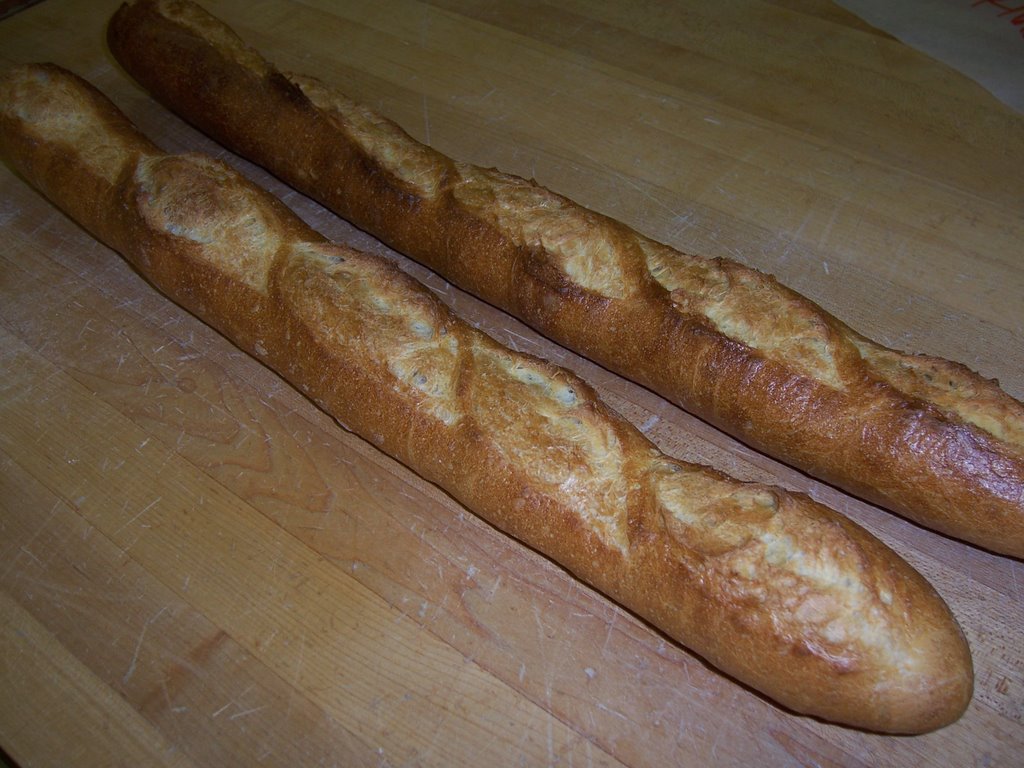
I stumble out of the studio at about 3 in the afternoon, covered with a thin dusting of King Arthur Flour.

Today: I wake up realizing that my hands are doing this little pantomime of shaping a baguette. I’m wondering if I will be able to look at another baguette, and in fact, we’ll be making three versions of them, using different methods of fermentation.

I’m starting to learn my way around the baking studio and get familiar with the tools and ingredients. The school stocks many varieties of flour, including white, whole wheat, rye and others. Chef walks us through the physical composition of the wheat berry and the protein content of various flours. Bread dough has a higher protein content, which develops better structure in the final loaf.

We weigh out ingredients for three different baguettes and dump the ingredients into massive mixers that look like computerized witches cauldrons. Large batches of dough are combined and left to rest.

Moving on to bagels, we first boil the doughnut shaped beauties and then coat them in poppy seeds, sesame seeds or salt. They are popped into the oven for a quick bake before we return to the baguette dough and start to shape. E seems to handle the dough a little too roughly, but he’s got four kids, so that’s understandable. A is finding that mental connection to the process. I notice that she’s even closing her eyes as she rhythmically massages each baguette into a long serpentine shape. I’m still finding the volume and time pressures a bit daunting, and feel a little like Lucy Ricardo in the chocolate factory.

We continue to practice our scoring, and quickly learn that a baker must have cut throat instincts. A baguette requires five deep slashes with a razor to allow the loaf to bake evenly and blossom into that distinctive diamond pattern on top.

Filling the oven is an intensely physical task, as we position the loaves on large metal racks with rolling canvas that slide the bread into the hot oven.

By late afternoon, we are sitting around the bench to analyze and taste our finished loaves. We finger the crust and smell the aroma of the inner crumb. Much like sampling wine, we taste the loaves and compare the different flavors from mild to tart to nutty to slightly sour. It’s all pretty gratifying and although I’m exhausted, I think I’m starting to find that elusive connection to the “bread zone.”

Back at home, I compose a dinner sandwich of ham, Danish blue cheese and apple, captured within a hearty slice of my crisp, honey gold baguette.

© 2006 T.W. Barritt All Rights Reserved

Friday, September 22, 2006

Palazzo Pitti and Pecorino


It is my final day in Florence, and I venture to the district known as Oltrarno, which means “across Arno.” This region on the south side of the riverbank was once considered the low rent neighborhood until the Medici Grand Dukes moved here in 1550.

Their base of operation became the Palazzo Pitti, a sprawling edifice just a short walk beyond the Ponte Vecchio. It is both a palatial royal residence and a gallery that houses the Medici collections, and I spend the morning admiring works of art created by Titian, Lippi, Botticelli, Rubens and Raphael.

Behind the Palazzo Pitti is the Boboli Gardens, which the Medici family first cultivated, and is now a rambling historic garden. There are elegant fountains, Roman statues, cypress trees, citrus trees, exotic grottos and song birds, which provide a welcomed respite from the automobiles and motor bikes of central Florence.

Shortly after 5:00 p.m. I find myself, quite by accident, in front of Cantinetta dei Verrazzano, via Taolini, where Massimo bought me the Tuscan bread on Thursday. I notice there is a wine bar attached to the bakery that wasn’t open yesterday morning. I recall Massimo telling me that the bakery is owned by Castello di Verrazzano, a winery in Chianti. It seems like providence to have arrived there, so I step inside.

An affable waiter with glasses, wearing a maroon bow tie and apron, welcomes and seats me. It is a long narrow room with a small outdoor café that opens onto the cobblestone street. The tables have white marble tops and glass cabinets cover one wall. Inside are all types of dusty, aged wine bottles from Castello di Verrazzano. There is the head of a wild boar hanging on the wall and what I suspect is wild boar prosciutto curing behind the meat counter.

The waiter brings me a glass of Sassello, a vibrant ruby red wine made from the Sangiovese grape. It is lush and aromatic with a deep essence of chocolate. For the accompaniment, he presents slices of Pecorino cheese on fresh bread. He brings a large rectangular honeycomb to the table and artfully scoops crystalline amber honey on top of the cheese. He shaves orange zest across the honey, and I am mesmerized as I watch the citrus oils mist over the creation. He finishes with a sprinkling of pepper.

The sweetness of the orange and fresh honey and the tartness of the cheese melt into the chocolate flavors of the wine. It is simplicity and perfection, and a most appropriate finale to my exploration of Italian cuisine in Florence.

Buona sera, Firenze!

© 2006 T.W. Barritt All Rights Reserved

Thursday, September 21, 2006

Gastronomic Walking Tour of Florence

The Cappella dei Principi is the mausoleum for the Medici family of Florence. Much of it is now supported with scaffolding, because the polished blue, green and gold marble had begun to fall from the walls. I accept the potential risk of a head injury and make a morning visit to the site, which is regal even with the scaffolding. Again, Florence’s finest Michelangelo is present with several sculptures that decorate the stone caskets of the family.

At 10:00 a.m., I am back at Apicius, the Culinary Institute of Florence, and meet Massimo Coppetti, my guide for a gastronomic walking tour of the city. Among other things, Massimo is the wine expert at the institute. He is about my height, with dark hair and an olive complexion. He was born in Florence some 40 years ago and for a time operated several restaurants before devoting himself full-time to culinary teaching. He learned to cook out of necessity, because his mother worked as an elementary school teacher.

We head out onto Guelfa, and Massimo starts with a brief overview of the Italian kitchen, reminding me that the cuisine is comprised of three distinct regions, North, Central and South and the Islands. He explains that each of these regions was also influenced by the ingredients of the area, the weather of the region and the countries closest to them, resulting in a number of distinct dishes and variations.

We make a brief stop at Mercato Centrale, the major food market of Florence, where I sample three regions of olive oil all noticeably different in flavor. I taste different cheeses, and we pause at the tripe vendor where Massimo outlines the different selections of Tuscan tripe and entrails that are sometimes served in panini. I take a pass on the tripe.

Next, we head towards the historic center of the city, and Massimo discusses how coffee and wine are extremely important elements of the Italian culture. We visit Caffe Giacosa where shiny attractive people are lined up at the bar to order coffee. Massimo and I order Completo Marocchino, or Moroccan coffee, made with chocolate syrup and served in a shapely glass tumbler (I learn that Italians are loathe to drink coffee out of a paper cup). Massimo explains that coffee and wine are similar in that you need to taste them for their distinctive flavors and essences.

In the different establishments and on the street Massimo sees different people he knows and greets them warmly. As we walk, he talks about how important it is to preserve the heritage of the Italian kitchen. At times, he wishes the country would provide more support. He sees himself as a culinary ambassador as he travels to different countries promoting the work of Apicius.

The next stop is Cantinetta dei Varrazzano where I bite into a large slice of salt-less Tuscan bread called Schiacciata, but known as Focaccia in other parts. It is dimpled, golden and tangy. In several shops he points to a seasonal variety of Tuscan bread studded with wine grapes and only available during the autumn harvest.

We continue along the streets of Florence and Massimo tells me how much he enjoys cooking with his wife. “It’s good for the marriage,” he says.

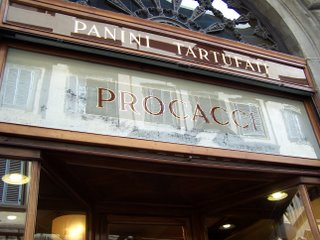
We visit a wine store where he outlines the four appellations established in Italy and explains the origin of super Tuscan wine. Then, he takes me to an establishment close to his heart, Procacci, established in 1885. It is all polished wood, marble floors and charming café tables. Procacci is a Florence-style delicatessen famous for its aperitivo – a glass of prosecco and a finger sandwich filled with truffle cream. Massimo orders me semi-dry bubbly prosecco which tastes of peach and the finger sandwich which he says is a secret recipe. He then tells me that he had his first aperitivo at age 15 with his father at Procacci. “I love this place,” he says.

The bell tower of the Duomo is heralding the noon hour as we approach our final destination, Gelateria Grom. There, he buys me three different kinds of gelato in a cup – fig, because it is in season, pistachio and something packed with bits of chocolate and biscuit, which is probably the Italian version of cookies and cream, but tastes far superior.

In two hours, he has done his work as an ambassador, and must hurry to an afternoon class. I am richer for it. We shake hands, and Massimo vanishes into the crowd of tourists.

In the afternoon, I cross the Arno River via the Ponte Vecchio and hike high up into the hills for expansive views of the old city wall and the domes and bell towers of Florence. I visit San Miniato al Monte, a Romanesque church build in 1018 that is reached by climbing hundreds of stone steps. It is dark, cool, and silent, and the crypt beneath the altar has a mysterious, age-old ambiance.

Returning to the city, I stop at the Museo di Storia della Scienza, where Galileo’s telescopes are kept, and have an early supper at Rititrare on Piazza della Signoria of ravioli stuffed with spinach and a dessert called a Fedora which is a bit like a chocolate beret filled with whipped cream.

© 2006 T.W. Barritt All Rights Reserved

Wednesday, September 20, 2006

Renaissance Pasta Chef

It is dark inside Santa Trinita as Florence begins another day. Only small votive candles illuminate the small chapels and frescos that grace the walls of the 11th century abbey. Outside, I can hear the buzz of motorbikes as the morning paces accelerates. But, inside Santa Trinita, I am blessed with a few moments of quiet reflection.

Later, I return to Apicius, the Culinary Institute of Florence for a class on the art of pasta making. Chef Roberto is back as my instructor and we get right down to the business of a bevy of pastas, Tagliatelle, Gnochhi di Patate, and Ravioli di Ricotta e Spinaci.

Once again, Roberto moves like a soccer player through the kitchen, as he sprinkles the lesson with food history anecdotes. I learn that pasta originated in the region of Emilia-Romagna and the traditional tomato meat sauce that now has many variations was created in Bologna and is the Sauce Bolognese.

The preparation of the sauce prompts a brief chopping competition. The base of any Italian sauce is carrot, onion, celery and olive oil. I prepare what looks to be a reasonably fine dice of the vegetables. Roberto then chops his vegetables twice as fine. I am appropriately humbled, but he explains that the vegetable base is now the same size and consistency as the ground pork and beef used in the sauce and it will cook more evenly.

We start the sauce to simmer and Roberto adds a sprig of rosemary. We measure out durum wheat flour – which has a sandy texture – into a bowl, add two eggs and begin to assemble the first pasta dough. Roberto tells me the rule of thumb for pasta is 1 egg for every 100 grams of flour. That’s all it takes – the rest is in the handling of the dough. We take turns kneading the dough gently, so as not to overwork it, and I am told to mix with only one hand. Soon, the dough is golden yellow and springy to the touch.

After the dough takes a brief rest in the refrigerator, we set up a pasta roller with a hand crank which clamps to the side of the marble counter. He teaches me how to roll the pasta sheet through the machine, draping the long end over the back of my left hand as I feed it through the rollers to get the desired thinness. It’s a bit like handling the old rolls of music for player pianos. Once the pasta is paper thin, I feed it into the blades and gather long, lovely stands of tagliatelle out the other end.

The stove burners are temperamental and Roberto is annoyed as nothing is heating properly. Still he manages to boil gold potatoes for the gnocchi, and then puts them in a low heat oven to extract as much moisture as possible. He explains that moisture will require more flour, and that would make the gnocchi tougher.

In between preparing bright green pesto sauce, he quickly demonstrates techniques for making little “ear shaped” pasta from a dough that consists only of flour and water. Using two fingers of his left hand to apply even pressure against a knife, he sweeps the knife over a tab of pasta dough and curls the circular shape over his thumb to get the distinctive ear shape. We roll out even thinner sheets of pasta for ravioli and space out dollops of ricotta and spinach along the sheet, blanketing the filling with a second pasta sheet to create the little pillows. Gnocchi dough is rolled into long ropes and cut into small, even rectangles.

Roberto is clearly passionate about pasta. The exercise seems to invigorate him. “I hope you’re going to make this at home, and not just forget about it after this class,” he says.

In the final assembly, he teaches me a trick to assure perfectly cooked pasta that takes on the flavor of the sauce. Rather than simply dumping hot sauce onto cooked pasta, he cooks the pasta partially, and then adds it to the simmering sauce with a bit of the pasta water. As the water boils off, the sauce thickens, and the pasta continues to cook. He assures me it will be perfectly done.

The table is set and the wine is poured. The ravioli is dressed in a delicate butter and sage sauce, the gnocchi infused with emerald green pesto, and the tagliatelle folded into sharp, meaty Bolognese sauce. The pasta, as promised, is perfectly cooked and the texture is firm but tender. The gnocchi is as light as a cloud. “You made this,” Roberto reminds me.

As I prepare to leave, Roberto again makes an appeal that I continue to practice my pasta. “Don’t let me down!” he orders.

Not to worry, Roberto. Pasta is at the top of my list.

In the afternoon, I seek out another classic – Michelangelo’s David at the Galleria dell’Accademia. No matter how many times you have seen a photo, it is no preparation for the real thing. The statue of the biblical hero stands 17 feet tall and is awe inspiring. A masterpiece, indeed.

© 2006 T.W. Barritt All Rights Reserved

Tuesday, September 19, 2006

The Cuisine of Florence and Tuscany


The heavy wooden door to the Dominican monastery San Marco opens at precisely 8:15 a.m. Founded in the 13th century, the Friars’ dormitories, or cell rooms, catapult me centuries into the past, far away from the clatter of modern day Florence. Each cell has a simple arched wooden door, a tiny window overlooking the cloister and a radiant fresco by Fra Angelico, depicting an event in the life of Christ. In all, there are 43 cells, each a rare gem of ecclesiastic art.

By 10 a.m., I arrive at Apicius (http://www.apicius.it/) for my class on the cuisine of Florence and Tuscany, and I meet my chef instructor Simone Riani. Simone is from Florence, and he began cooking as an apprentice at age 15. Today he is a chef at a restaurant near Palazzo Pitti and an instructor at the school. I will discover he is a modern Italian chef with a deep respect for tradition. Simone’s is less fluent in English, but we manage to communicate quite well, and he has a patient approach to teaching. He leads me back to the same galley kitchen where I worked on Monday and dons a tall paper toque.

We start preparation for dessert, Zuppa Inglese, translated as English Trifle, but it is different from the sherry and custard dessert I’ve prepared in the past. We mix a pastry cream on the stove, infused with vanilla bean, and soak crisp Italian biscuits in a clear cherry liqueur and Alchermes, a red liqueur with the aroma of nutmeg and cinnamon. The lady fingers are placed in the bottom of the serving dish and covered with the pastry cream, which is then sprinkled with shaved chocolate and chilled. Simone explains that Alchermes is a very old Italian liqueur that grandfathers would often drink at the end of a meal with espresso.

Pollo Fritto alla Fiorentina is actually fried chicken tenders, Florentine style, which means that sliced chicken breasts are marinated in fresh lemon juice, garlic and the best extra virgin olive oil. Simone tells me that salt, pepper and olive oil are the key ingredients in the Tuscan kitchen. In November, when the new olive oil is available, he says the food is soaked in it.
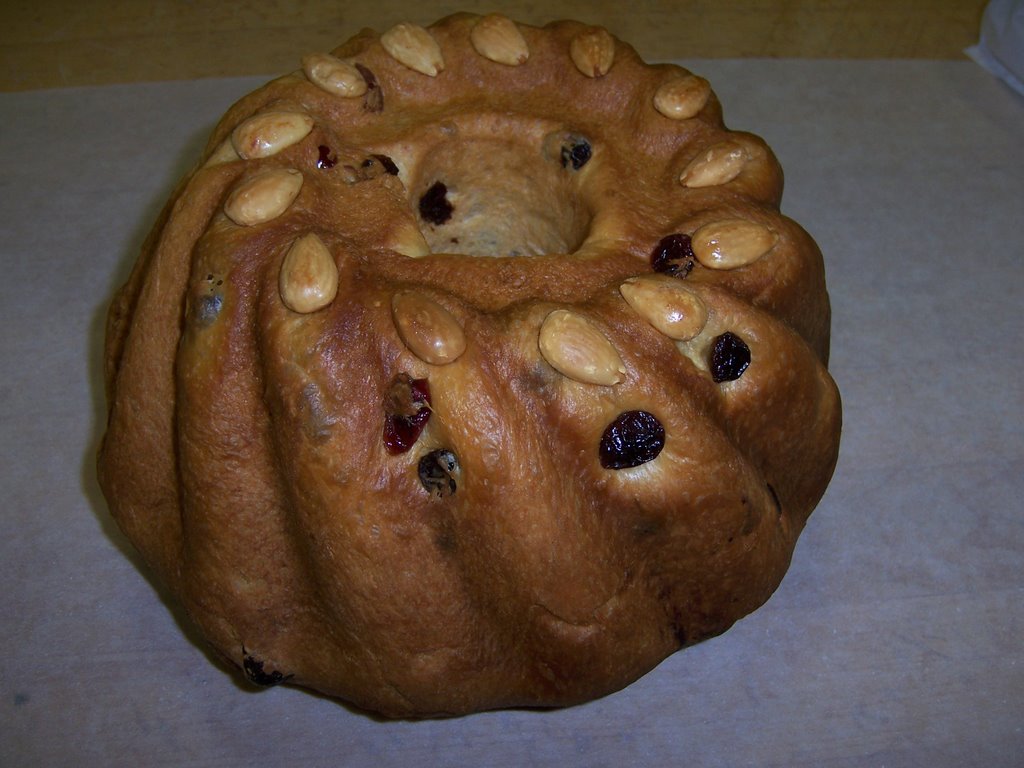
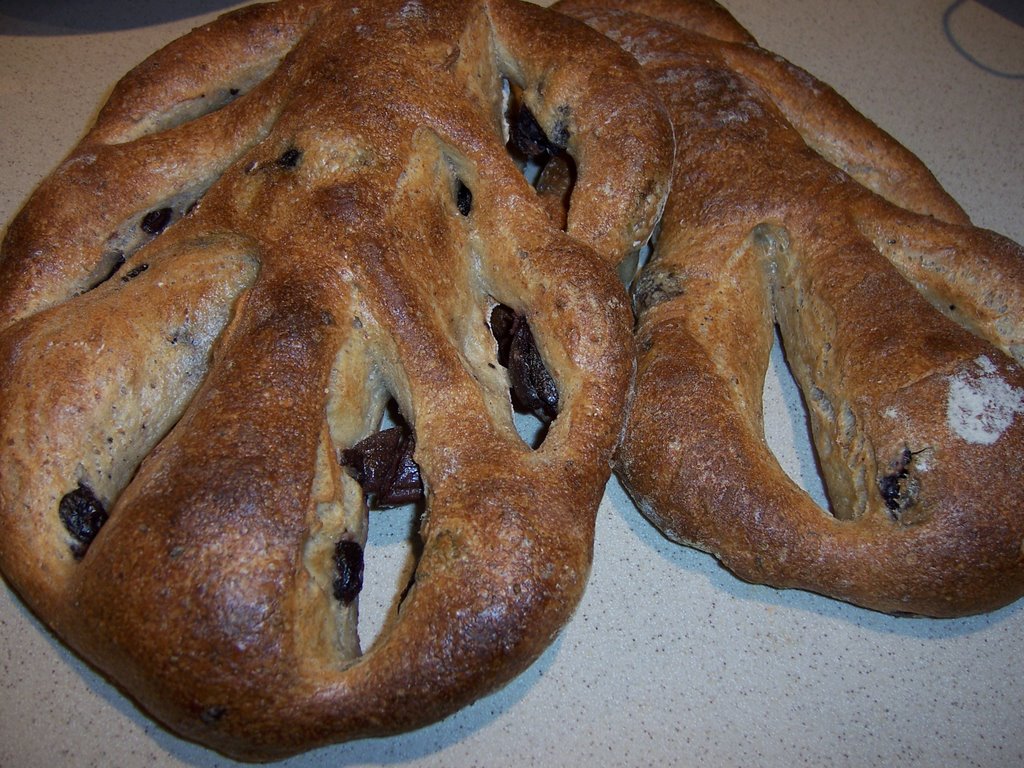
We assemble Minestra di Farro, which is a bean soup made with Farro wheat. This is a very old grain grown and used in Tuscan dishes. The grains plump fat as they are simmered with pinto beans, and the broth is scented with garlic, onion and sage.

Finally, we bread and deep fry the chicken, and assemble Fettunta o Bruschetta with bright summer tomatoes and basil, which Simone advises should be torn to avoid discoloring. Once again, the ingredients are seasoned with salt, pepper and an abundance of olive oil.

As we prepare to eat, Simone tells me there is a bit of a rivalry between French and Italian chefs. He says some Italians take offense that the French claim to have developed the recipes for béchamel sauce and onion soup when both actually originated in Italy. I decide to stay neutral on the issue. He explains his commitment to seasonal cooking, and how important he believes it is to cook the types of food that would logically be available in each season.

During the meal, Simone shows me a recently released cookbook that he and another chef at the school have collaborated on. The book is titled Innovations: New Appetites in the Tuscan Kitchen. It offers a series of trios – the traditional Tuscan recipe followed by his and his colleague’s modern variations on the classics. The photos are stunning, and the concept intrigues me, so I purchase a copy and ask Simone to inscribe it, which he does in Italian. I look forward to taking Simone’s new culinary interpretations back to my kitchen.

In the afternoon, Florence is jammed with tourists, professionals zipping through the streets on motor bikes, and shoppers crowding the high fashion shops. I squeeze into the Baptistry at Piazza di San Gionanni to admire the gold mosaic ceiling, and visit Orsanmichele, a small chapel that was once a grain market and now honors the 14 mercantile guilds of Florence. Winding through the narrow back streets of the eastern part of the city, I stop at Casa di Dante, a restored 13th century tower house which tradition says was the home of the poet Dante, author of The Divine Comedy.

© 2006 T.W. Barritt All Rights Reserved