Monday, February 28, 2011

Tea and Flowers

While I like to think I’ve reached the age where I know everything, there are times when I can still be surprised. During a visit to the “Camellia Weekend” at Planting Fields Arboretum in Oyster Bay, I discover that these lush and luxurious flowers actually have a connection with the most consumed beverage in the world.

The leaves of Camellia sinesis have been used to produce Chinese tea since 2700 B.C. According to the literature distributed at Planting Fields, the Chinese Emperor Shen Nung discovered the drink by accident as leaves from a camellia tree accidentally fell into a pot of boiling water.
Who knew these exquisite, hot house flowers had such a history?


In honor of this discovery, I thought I’d share some of my favorite tea paraphernalia, including my Shakespeare tea pot, purchased at Stratford-upon-Avon and carried with care across the Atlantic:

A mustard-yellow teapot from Davison Newman & Co. LTD, made to commemorate the Boston Tea Party, and including the coat of arms of the firm that shipped the cargo tossed overboard in the original Tea Party of 1773:

A Liberty Blue Minuteman Tea Pot:

A Liberty Blue covered vegetable dish depicting the Boston Tea Party:

So, take time to enjoy another cup of tea this morning. It’s part of a beautiful tradition.

©2011 T.W. Barritt All Rights Reserved

Monday, February 21, 2011

Power Bars

You might call this recipe for Double Dark Chocolate and Ginger Biscotti a sweet finish to a meal, or you might just call it a “super food.”

I’ve been learning more about some of the healthiest foods on the planet in the new book “Power Foods” from the editors of Whole Living Magazine. When I was growing up, Popeye got extraordinary strength and saved the day by consuming a can of spinach. Well, new research says dessert can make you a Superman. I couldn’t be happier.

Don’t mistake these biscotti for an unassuming batch of cookies. There are some extraordinary powers stirred into this simple recipe. The bittersweet chocolate is smooth and sublime, balanced with the taste of peppery candied ginger and velvety walnuts.

Dark chocolate is a rich source of flavonoids, a group of chemicals that have a positive impact on heart health. Studies have shown dark chocolate to be a good source of antioxidants and to have a positive effect on lowering blood pressure.

Walnuts are a good source of vitamin E and omega-3 fatty acids. Recent studies have shown walnuts improve cognitive function. Simply put, walnuts are brain food. I wish I’d known that in college.

Good to know a guilty pleasure is good for you. I feel smarter already.
©2011 T.W. Barritt all Rights Reserved

Monday, February 14, 2011

Rustic Whole Wheat Boule – There’s an App for That

No sooner have I commenced my meditation on the spirituality of bread baking, when technology invades my reverie and my kitchen.

It starts one night when I’m traveling for business, stuck in a generic hotel and entertaining myself on the iPad. The options for amusement are limited when you travel for work. It’s usually the iPad, or several hours of MSNBC – unless 30 Rock is on. Browsing the App Store, I discover Michael Ruhlman’s new Bread Baking Basics App. Unless you’ve been living in a cave, you probably know that Ruhlman is the “Ratio” prophet. He says that in order to be a good cook, you don’t need recipes if you understand fundamental ratios of ingredients and techniques.

I’m a little skeptical. Intuitively, Ruhlman’s “Ratio” concept makes sense, but I’ve heard him rail against “the recipe” at several conferences, and I’m usually left scratching my head. Whether it’s a formula or text, when you write it down it’s a recipe isn’t it? Also, I’ve already got a small library of books on bread. But, for a price of less than two bucks, the risk in purchasing the app seems small. Think of it this way – the cost of the app is cheaper than one commercially-produced loaf of bread. I touch the screen and I own the app.

Bread baking – because of its simplicity - is perhaps the best of the culinary arts to apply Ruhlman’s “Ratio” concept.

The app offers a set of menus for bread ingredients, measurements and baking options that can be customized, mixed and matched. It all seems a little too easy, a little too paint-by-numbers. I fully expect the recipe-ratio-formula to flop.
I select “whole wheat” and – seduced by a luscious photo – click on “boule" from the rotating columns of options. The ingredients are presented as ratios – 7 parts bread flour, 3 parts whole wheat flour, 6 parts water – but for the mathematically-challenged among us, the app also offers quantities in English units by weight. Desperately clinging to tradition, I select the “Knead By Hand” preference, which depicts a strong, capable hand caressing a globe of dough.
The mixture comes together beautifully and the rhythm of kneading takes its effect. Within minutes, the dough is shiny and elastic. The first rise goes off without a hitch, and for the second rise I place the dough in a banneton which I’ve had for several years but never used. Start to finish, it all adds up to exactly 5 ingredients and 15 very simple steps.

The app doesn’t have quite the romance of the Joy of Cooking, or the tactile experience of holding a book, even if you’ve got a touch screen at your fingertips. But, what Ruhlman has done is sifted out all the extraneous words, and boiled bread baking down to the ingredients and steps that matter most. By doing so he’s actually added clarity to the process.

As they say – the proof is in the pudding, or perhaps the legitimacy is in the finished loaf. By early afternoon, I’ve pulled from the oven a round, honey-colored, peasant loaf with a soft, tender crumb and a crackling-good crust. It’s probably the best bread I’ve made in recent months, including some far more complicated recipes found in cookbooks with serious pedigree.

A bread recipe (make that, ratio) – powered by the iPad – resulted in one of the most delicious, old-fashioned, rustic loaves I’ve managed to produce. Has the art of bread baking entered a post modern era that blends tradition with technology? Certainly, we’ve come to appreciate that there are better options than industrial-produced bread, but not even Apple has been able to conjure up the magic of a warm, crusty loaf. That still requires the skill, care and passion of the baker.

©2011 T.W. Barritt All Rights Reserved

Monday, February 07, 2011

Daily Bread

Lately, I’ve been cultivating a Sunday morning ritual. Wake up, only slightly later than on a weekday. Make coffee. Sit by fireplace and watch pinkish clouds on the horizon. Turn on an hour of choral music on WQXR radio. Listen to heavenly music. Bake bread.

There’s something right about a Sunday morning bread baking discipline. There are so many aspects of bread that are consistent with the Sabbath.

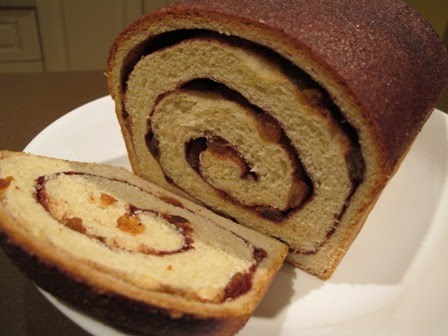
The fundamental ingredients of bread are austere – flour, yeast, salt and water. This particular morning, I’ve chosen a recipe for Cinnamon Raisin Bread. It’s not exactly Spartan fare, but the Lenten season is still weeks away.

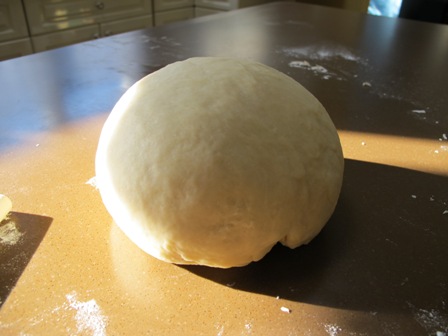
Baking bread is tactile. I’ve eschewed the electric mixer and only knead by hand. The work is rhythmic and relaxing. If you labor in an office and often fail to see the immediate impact of your work, kneading bread is a tonic. Within minutes, the shaggy dough becomes smooth, glossy and elastic. You can feel the transformation.
Baking bread is miraculous. That first peek at the risen loaf is truly inspirational. How does this happen? How does this mass of dough expand and rise so gloriously?


Bread is sensual. The aroma of cinnamon, butter, raisins and yeast baking fills the house and lifts the spirit.
Bread is satisfying and fulfilling. The warmth of the crisp, golden crust bolsters the soul.

Bread is forgiving. Even if the gap between the cinnamon swirls is uneven, the homemade taste transcends aesthetics.

Mostly, the gift of daily bread is a blessing of nourishment for the week ahead.

©2011 T.W. Barritt All Rights Reserved

Monday, January 31, 2011

Warm Thoughts on a Winter CSA

A winter CSA requires a bit of imagination on the part of the member. You can’t go to a place. You can’t see the vegetables sprouting, you can’t pick them, and you can’t feel the sun on your back. The experience of picking up the share is unremarkable. It is a cold winter night, and I park my car just outside a gourmet food store in a neighboring town. Inside, I put my signature on a list of roughly 30 names – people who have committed to support New York agriculture through the winter months. I am quickly handed a bundle of frozen vegetables that includes broccoli florets, pureed butternut squash, winter greens and raspberries.

There’s no actual farm experience and the food is frozen. It’s not sexy, or evocative, but it infuses my winter cooking with the best of New York produce. The simply labeled packaging gets you to think about greens and bright colors and the farmers who tilled the soil at a time when one might rather be hibernating. Each package includes the name - the personal brand - of a specific farm. The broccoli florets come from Hepworth Farm in Milton, New York. Hepworth Farms grows certified organic produce, is a seventh generation family farm, and is a business owned and operated by women.


Winter Sun Farms has organized nearly 30 winter CSA shares in the Hudson Valley and New York City regions now through April. There’s a little bonus with every share – tender, sweet, pea sprouts – an infusion of fresh greens that I gobble up on a dark, winter night. It’s a harbinger of spring in January.

All these ideas and images move through my mind as I work in the kitchen. I’m able to think about the origin of the food and the farmer. Chef Rozanne Gold, author of the new book “Radically Simple” has some thought-provoking ideas on her blog about cooking in silence, and considering the people who brought you the food and those who will eat it. She says it makes the whole cooking experience more fulfilling.
Indeed, if I am to be more thoughtful about my ingredients, a healthy, wholesome recipe for brown rice with chicken and broccoli makes a delicious showcase for the produce from Hepworth Farm. I tinker with the recipe and add a little seasoning, and some organic chick peas. The frozen florets steam in the rice liquid until they are bright green and crisp-tender. The vivid flavor of the broccoli is evident.

All the discussion of eating local makes me smile. Does it work? Is it worth it? Will it last? The membership in Winter Sun Farms makes me a more thoughtful, conscious chef and eater - and that works for me.

©2011 T.W. Barritt All Rights Reserved

Monday, January 24, 2011

Fresh and Local, Even in Winter

Long Island sisters Jaime Greci and Lona Graepel may have a touch of the farmer in their DNA. While most would be inclined to hibernate during these months of cold and darkness, they have sown the seeds and sprouted Long Island’s first winter farmers market.

It’s the coldest Saturday of the season yet, but the parking lot is full and people are streaming into Sweet Hollow Hall at the West Hills County Park in Huntington. The surrounding area is blanketed with fresh snow. Inside the hall, a musician plays guitar, pasture-raised meat is sizzling on a barbecue grill and visitors sample from vats of pungent homemade pickles. There are seniors tasting artisan cheese and kids having fun with crafts. It’s a community event.
Summer farmers markets are now so ubiquitous that one rarely considers how they come together. There are two-dozen summer markets on Long Island. Many communities offer winter markets, but it took Jaime and Lona to notice that none existed on Long Island. From the moment the idea took root last summer, they set to work planning and spreading the word. The “back-of-the market” logistics were all-consuming. They needed to confirm locations, and secure approvals, licenses and insurance. Once the details were in place, they also needed to recruit farmers and food artisans to participate.

Sisters Jaime Greci (l) and Lona Graepel (r) have created
Long Island’s first winter farmers market.
“We went to all the outdoor markets over the summer and approached different vendors,” says Jaime. “It was all word-of-mouth.”
“People were hugging me and kissing me” says Lona. She points out that after November, the opportunities for small farmers and food artisans on Long Island are quite limited. “They have no place to go in the winter and no outlet to sell here,” says Lona. “We wanted to create a nice environment, fun for the whole family, where you could bring the kids and the grandparents.”
“It’s important that we house the farmers during the winter, so they can continue to support themselves and their families, and to have a sort of community,” Jaime explains.
G&G Long Island Winter Farmers Market opened January 8th at Sweet Hollow Hall. Attendance far exceeded expectations with residents traveling from all parts of Long Island to visit. They’ve already seen repeat visitors, and some linger for hours.
“The phone’s been ringing off the hook,” says Lona who became a true market advocate during a summer stint in upstate New York working with her brother who organizes farmers markets in the region. “I would wake up each Saturday with a big smile on my face.”
A walk through the market is like a taste of Long Island, but there are also food artisans from the Hudson Valley and beyond. The team from Horman’s Best Pickles in Glen Cove sample delectably hair raising horseradish pickles and bright “Red Flannel” pickle chips garnished with sweet red peppers.


Lee’s Bees of Huntington offers a tasting of pure, raw unfiltered honey harvested by season, from the lively flavors of spring flowers, to the mellow, toasty caramel flavors of fall.


Migliorelli Farms of Dutchess County offers bins of blushingly-beautiful apple varieties as well as a selection of ruddy winter squash and root vegetables.

Old Chatham Sheepherding from the Hudson Valley serves up a smooth and peppery blue cheese that makes you wince with pleasure.


Jaime says the winter market is a win-win for the farmers and for food lovers on Long Island. “It’s fresh and it’s yummy stuff,” she says, beaming.

G&G Long Island Winter Farmers market runs every Saturday from 9:00 a.m. to 1:00 p.m. from January through April, and alternates weekends at two locations. Check website for specific dates or the market's Facebook page:
Sweet Hollow Hall, West Hills County Park, Gwynne Road, Huntington.
St. Paul’s United Methodist Church, 270 Main Street, Northport.


©2011 T.W. Barritt all Rights Reserved

Monday, January 17, 2011

Focaccia? Gotcha!

It’s a cold winter day, a little too chilly to spend much time outdoors. I’m in the mood for a simple kitchen project – maybe a new variety of bread to expand my repertoire.

I browse the cookbook collection and settle on focaccia. What could be simpler? It’s actually pizza dough – water, yeast, olive oil, flour and salt. All I need to do is prep the dough, and sprinkle it with parmesan cheese, rosemary and coarse salt. I can even use dried rosemary. I have everything in the pantry. I won’t even need to leave the house.

I search high and low for the dried rosemary. It’s gone. When did I use it all up? Come to think of it, the flour canister looks pretty low. I bundle up and head out to the supermarket. Standing in the seasoning aisle, I am bewildered. I can’t find dried rosemary. Head slap. As long as I’m already out, I might as well buy fresh rosemary.

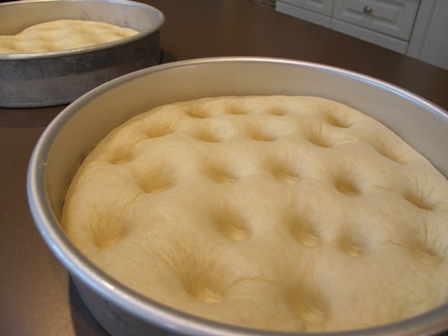
Back home at the hearth, the bread baking project comes together nicely. I get in some good, vigorous kneading and the dough rises nicely. I make those cute little dimples in the bread, and the house is fragrant with the aromas of yeast, olive oil and rosemary.

The recipe requires two risings – about three hours in total, not counting the prep and baking time (and the supermarket run). I’m also now looking at a stack of bowls and utensils in the sink.
The focaccia loaves are magnificent – a perfect accompaniment to dinner. But, on second thought, such a magnificent, rustic loaf would be ideal to make a rustic country sandwich. But, all I have in the pantry is peanut butter.

So, I’m out to the market again. This time, I buy fresh basil, marinated roasted red peppers, provolone and prosciutto. The price tag is 15 bucks.
Of course, a glorious rustic country sandwich needs to be consumed with a hearty glass of red wine.

Fortunately, I’ve got plenty of red wine in stock.
Sometimes the simplicity of bread baking can get a bit complicated.
©2011 T.W. Barritt All Rights Reserved