
When I was in elementary school, we exercised in gym class to
a 45 rpm vinyl record (I’m dating myself.
It was life before CDs and iPods) called "The Chicken Fat Song."
It was a snappy workout tune written by Meredith Wilson and
sung by “Music Man” actor Robert Preston. The record was sent to
hundreds of U.S. schools as part of a youth fitness initiative launched during
President Kennedy's administration. Preston shouted out moves like Touch down every morning – ten times!
followed by the refrain Go you chicken
fat, go away! Go you chicken fat go!
Now, some years later I still can’t that song out of my head.
I was reminded of that catchy tune when my first heritage
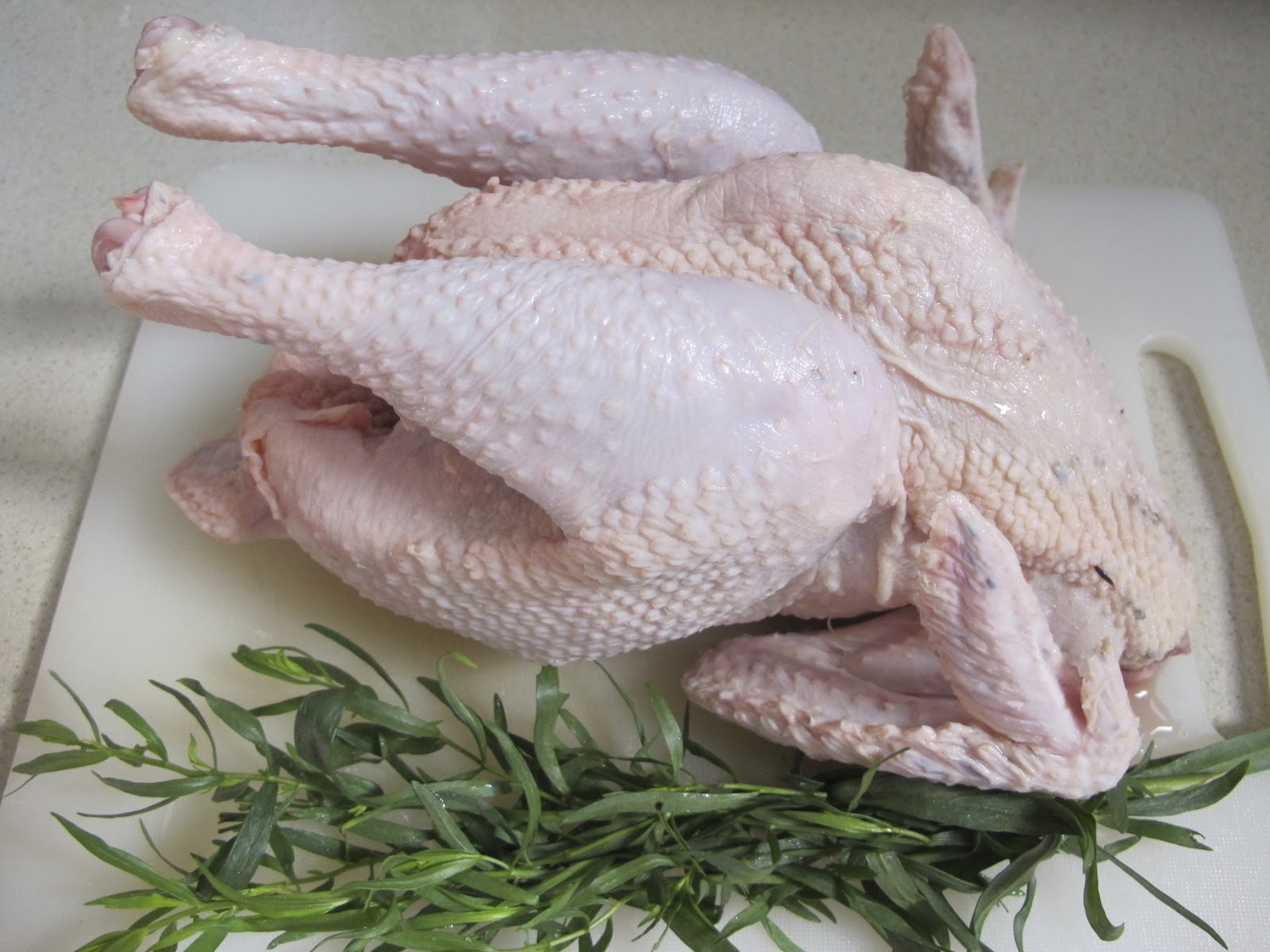
chicken was recently harvested at Restoration Farm. Long and lean,
the chicken is physically different than your average supermarket variety and there's
almost no chicken fat at all. I could almost hear Robert Preston’s
bellowing voice in the kitchen singing, Go
you chicken fat go! as I cleaned and trussed the bird.

In fact, the chicken fat was chased away in the fields of
Restoration Farm. The 2012 heritage meat birds are male free-range
chickens that exercise and forage in the field. They are breeds that once
were more commonly raised, and need to be preserved – breeds that include Delaware,
White Orpingtons, New Hampshires and Speckled Sussex. They develop sleek, athletic bodies,
quite unlike last season’s mostly grain-fed Cornish broilers bred to quickly
put on the pounds. They take longer to mature – up to twelve weeks versus
the quick six-week maturation of a Cornish broiler. The diet and
activity of these heritage breeds is said to result in a more healthful and
flavorful bird.
One must do a bit of reading before cooking a heritage
chicken. The slim bird must be cooked at a lower temperature to
assure a moist and tender breast. At typical cooking temperatures
for chicken, one could easily cook that farm fresh flavor right out of a
heritage meat bird.
I go straight to the master, Julia Child, and select a recipe
from "Mastering the Art of French Cooking" called Casserole Roasted Chicken with Tarragon. Julia’s technique of searing
the bird, and then roasting it in a covered Dutch oven at a lower temperature
of 325 degrees -- with lots of tarragon from the farm -- keeps the chicken
moist and juicy and perfumed with the flavor of the herbs.

Did I notice a difference with my first fresh heritage chicken?
There is less meat, but the flesh did have a richness to it. It
was pronounced delicious by those who consumed it, but I'm not sure I would be
able to taste a noticeable difference in a side-by-side comparison with a
supermarket chicken. I hate to admit that it felt a little
less-than-bountiful simply due to the size. It is funny that our society
will look down on one who is pleasantly plump, but celebrate thinness in humans,
yet when it comes to a chicken we feel a little deprived if the bird is not zaftig.

Maybe there was a different reason to eat this bird -- a reason
that had less to do with chicken fat and plump breasts and more to do with how
the chicken was raised. It is really about a better convergence of
farming practices and palette. Head growers Dan and Caroline believe that
chickens can be incorporated into the farm and lead a healthier life prior to
harvest. I was there on the day in February when the birds were first
delivered and placed in the brooder.

The heritage birds truly traversed Restoration Farm in a large
open pen. They consumed grass and flowers and exercised their limbs
and became part of the life cycle of the farm.


The careful tending continued in the kitchen with the choice
of recipe, and the stories told about this bird at the table. The entire process was all more thoughtful
and involved than a supermarket purchase.

Perhaps cooking a heritage chicken is not about filling the
belly, but about supporting the cycle of community agriculture and being
filled with the total experience, from farm to table.
©2012 T.W. Barritt All Rights Reserved


