Sunday, September 13, 2015
"Long Island Food: A History From Family Farms & Oysters to Craft Spirits" by T.W. Barritt Debuts September 14
Sunday, April 14, 2013
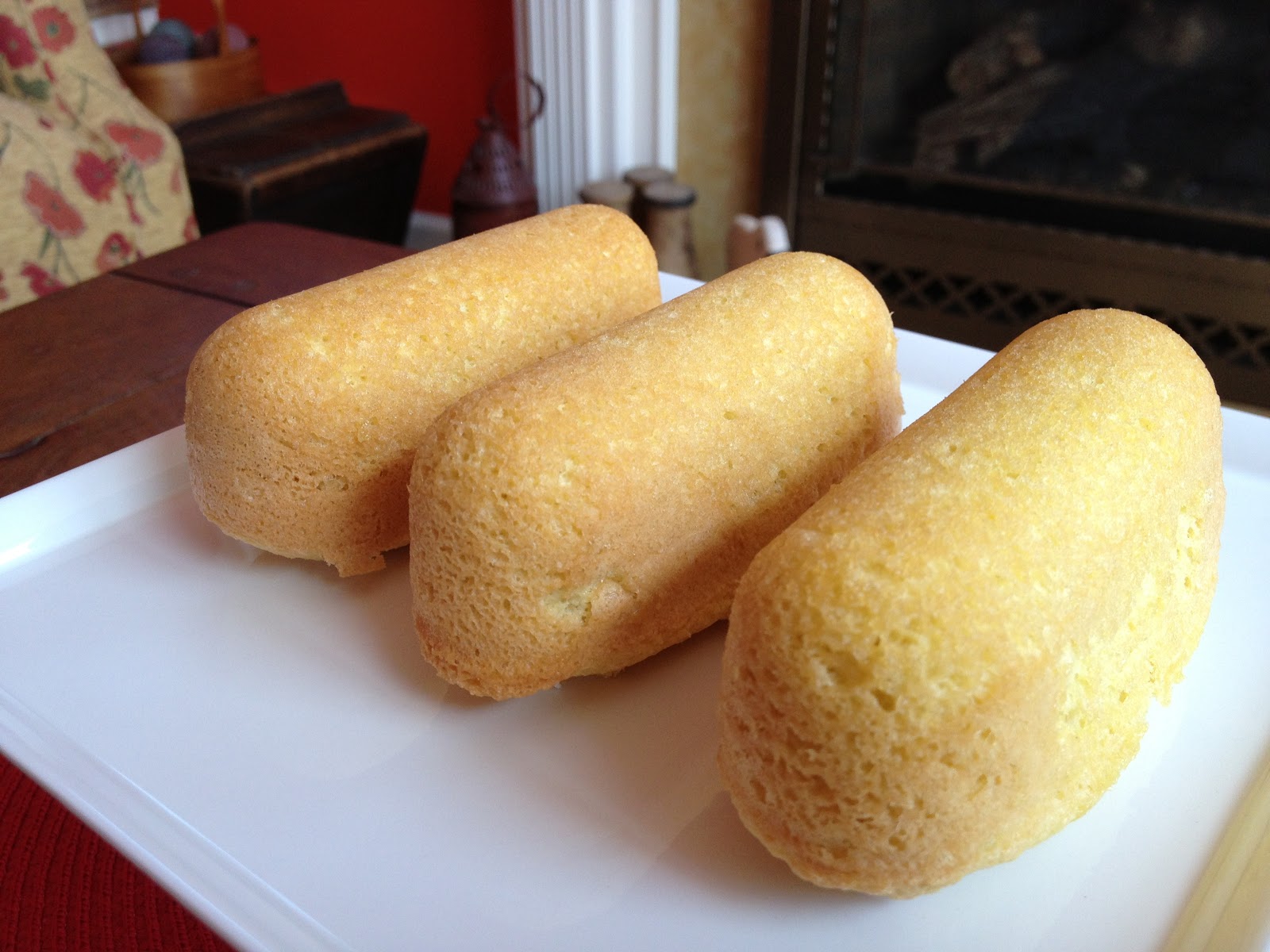
Artisan Twinkies Made From Scratch
I’ve seen these kinds of clouds flying at 30 thousand feet, and there’s enough extra filling to gleefully lick the spoon.
It’s messy, and a little tedious filling each cake by hand, but really no different than filling éclairs or pate a choux.
Sunday, April 17, 2011
A Giveaway: Susan Russo's "The Encyclopedia of Sandwiches"
Sandwiches are my guilty pleasure, but I’m hardly a gourmet when it comes to slapping some filling between two slices of bread. For me, it’s all about fast flavor. I like the simple preparation, the quick satisfaction of hunger and the easy clean up. Some sandwiches are pantry specials - the ingredients always within reach in a pinch. I can go for days existing on Fluffernutter Sandwiches or Tuna Salad made with Miracle Whip, and I still crave several favorites from my youth - Bologna with Yellow Mustard on White Bread or Cream Cheese and Jelly (cut in four small squares, of course). You might say I need to expand my sandwich horizons. Fortunately, my pal Susan Russo, "The Food Blogga" has come up with the perfect answer. She's just published "The Encyclopedia of Sandwiches" with Quirk Books. Matt Armendariz provides the sumptuous sandwich photography.
Take a look inside, and you will truly appreciate the artistry of the sandwich. Susan delves into the history and tasty trivia behind some retro stacked favorites (who knew the hot dog was once called a “Frankfurter Sandwich?), and creates some new classics that take the art of the sandwich to a whole new level. Not only are the recipes lip-smacking, but it's an engaging read.
Susan is known for healthy and delicious California cuisine and fresh farmers market fare - so I tracked her down to find out what it was like to turn her culinary prowess to the archetypal finger food, in her new role as the Queen of Sandwiches:
TW: How many sandwiches did you make while researching the book?
Susan: Well, I made the 110 sandwiches in the book (some more than once), some variations and several that didn't make it. So I'd say about 200. And if you're wondering if I gained weight - yes!
TW: Do you think the sandwich has been overlooked or underrated in the past as a culinary institution?
Susan: Until fairly recently, the sandwich was underrated. Nowadays sandwiches are hot! I think the introduction of international sandwiches such as the bahn mi and Italian porchetta have made the sandwich seem suddenly sexier. It also helps that over the last several years, exclusive restaurants such as Campanile in Los Angeles have created artisanal (and expensive) grilled cheese sandwiches, thereby elevating the humble sandwich's status. And with so many celebrity chefs including Tom Colicchio and Rick Bayless opening up sandwich shops, the sandwich's status just keeps soaring.
TW: Your dedication included your husband and notes that he has eaten every sandwich in the book. Did he have a favorite?
Susan: The Muffuletta. I think he actually sang when he ate it.
TW: Was there a piece of sandwich history that surprised you the most?
Susan: Yes. I was surprised to discover that the homey PB & J was once considered a delicacy due to its high price. It wasn't until the introduction of mass-produced peanut butter in the 1920s that it became the iconic American favorite we know today.
TW: Some readers might be surprised to see our favorite "Food Blogga" including the Spamwich in the book. What's your response?
Susan: Well, since the book's title is The Encyclopedia of Sandwiches, I just had to include the Spamwich. I'll admit I'm not a fan, but I didn't let my personal tastes affect my choices in writing the book. But there are plenty of people who really enjoy the Spamwich. If you can believe it, Hawaiians love the pink stuff so much they eat an average of six cans per year. You can even find it at some McDonald's and Burger King restaurants.
TW: What's your go-to bread?
Susan: Crusty Italian. I like a muscular, chewy bread.
TW: What's your "guilty pleasure" sandwich?
Susan: A potato chip sandwich with peanut butter and pickles. I can't believe I just admitted that.
TW: What do you see as the essential ingredients for an outstanding sandwich?
Susan: I think it's subjective, so my honest answer is your favorite bread, your favorite fillings and anything else you want to squirt or pile on top!
To celebrate the publication of Susan's new book, I'm giving away one copy of “The Encyclopedia of Sandwiches” to a reader of this post chosen at random. Simply leave a comment before 11:59 p.m. on Saturday, April 23rd that mentions your favorite sandwich and you'll be eligible. Sorry, but we are only able to ship within the United States. The winner will be selected and announced on Sunday, April 24th. Meanwhile, I'm off to buy some Spam and a jar of pickles. Or maybe I’ll really go crazy and indulge in a Banana Fluffernutter!
©2011 T.W. Barritt All Rights Reserved
Sunday, March 20, 2011
The Winner of “The Farmer’s Kitchen” Cookbook Giveaway
Happy Spring, and congratulations to Joumana of the wonderful blog “Taste of Beirut.” She’s the winner of the “Culinary Types” random drawing for the new book "The Farmer's Kitchen" written by food blogger Julia Shanks and Brett Grohsgal. Joumana, contact me at the email address link on my blog with your mailing information and I will get the book out to you immediately.And, don’t forget to come back tomorrow to learn the shocking – but always tasty – details of what’s happened of late with our cheerful crew of food truck fanatics.
©2011 T.W. Barritt All Rights Reserved
Sunday, March 13, 2011
“The Farmer’s Kitchen” – A Cookbook by Julia Shanks and Brett Grohsgal - And a Giveaway
If you’ve ever found yourself flummoxed by what to do with the mind-boggling variety of fresh produce available at the farmers’ market or through your CSA, Julia Shanks and Brett Grohsgal have created a manual just for you. The team has published the cookbook “The Farmer’s Kitchen: The Ultimate Guide to Enjoying Your CSA and Farmers’ Market Foods.” The book draws on their years of experience in professional kitchens and on the farm.Julia is a chef and consultant to restaurants, farms and food producers. She also authors the blog “Grow, Cook, Eat” where she chronicles the culinary creations that come from her urban vegetable garden in Cambridge, Massachusetts. Brett worked in restaurants for nearly two decades and now runs Even’ Star Organic Farm in Lexington Park, Maryland. Their collective wisdom on culinary techniques and fresh produce has helped to create a highly targeted guide with dozens of seasonal recipes that maximize freshness and flavor.
½ pound Brussels sprouts
2 tablespoons olive oil
3 cloves garlic, sliced thin or chopped
½ lemon
Salt and pepper to taste
Optional: ¼ cup toasted, slivered almonds
Rinse quinoa under cold water. Put in a small sauce pot and cover with water. Add 1 teaspoon salt. Cover the pot and cook over medium heat for 10 minutes, or until quinoa has popped and is cooked through.
When quinoa is cooked, drain excess water. Toss with Brussels. Add juice from ½ lemon and season to taste with salt and pepper. Stir in almonds, if using.
Sunday, October 24, 2010
Harold McGee’s "Keys to Good Cooking" – A Review
His new book is no exception. “Keys to Good Cooking: A Guide to Making the Best of Foods and Recipes” offers Harold McGee’s reassuring voice serving up an exhaustive compendium of years of culinary research and insights. “Keys to Good Cooking” is designed as a reference book, but hardly in the massive textbook mode of McGee’s classic, “On Food and Cooking.” Instead, this is more like Harold McGee, your favorite college professor, dropping by your kitchen for a cup of coffee and gently guiding you through your latest culinary project.
There are no recipes. The book is divided into 24 chapters on key food and cooking categories, such as “Milk and Dairy Products,” “Sauces, Stocks and Soups,” “Fish and Shellfish,” and “Coffee and Tea.” Think of each chapter as the “back story” behind a recipe. McGee serves up his well-studied insights on culinary techniques, how ingredients perform, shopping tips and some fairly alarming guidelines on food safety that I appear to routinely violate. Important facts are offered in bold and specific directions are delivered in blue italic.
Essentially, McGee has compiled the kind of insights that you can’t get from a single recipe, and it’s a valuable resource. Exploring the book reminded me of my experiences in culinary school classes encountering the type of wisdom that only the chef instructor – and hands on experience – could provide.
Think of the chapters in “Keys to Good Cooking” as required background reading before undertaking any culinary project. I’m fairly knowledgeable and well-trained in certain categories such as Breads and Meats, yet I learned things I didn’t know that could change the way I approach certain recipes in the future. For example, I didn’t realize that water makes up nearly half the weight of bread dough. Or, the fact that you can restore a partial or whole loaf of stale bread by moistening its crust and baking in a medium oven for 15 minutes or until hot and soft inside. For carnivores who like their meat juicy, it only takes a few degrees to go from firm and juicy to hard and dry, a transition that begins at about 150 degrees Fahrenheit, so keep that thermometer handy. Anyone unnerved by all the recent media coverage of eggs would have a much deeper understanding of the real issues – and important precautions - after reading Chapter 10 on Eggs. And, it seems like buying any food item pre-cut is a bad idea. It affects flavor, freshness and potentially safety.
“Keys to Good Cooking” is chock-full of functional insights and I suspect I will be a smarter and more skillful cook if I train myself to review the appropriate chapters before undertaking a recipe. If I have one complaint - and it’s a small one – it has to do with the book’s austere design. McGee has never been known for flashy presentation and he does suggest that the simple typeface and white spaces are there for home cooks to make their own notes. Yet with all the celebrity chefs lining up for our attention at the bookstore this holiday season, I do hope the Plain Jane “Keys to Good Cooking” doesn’t get lost. It deserves attention and could easily become an essential kitchen reference.
The Penguin Press provided me with a complimentary copy of “Keys to Good Cooking” for my review, but the opinions expressed in this post are my own.
©2010 T.W. Barritt All Rights Reserved
Sunday, September 05, 2010
Harold McGee and the Keys to Good Cooking
Frankly, science always confounded me. It just didn’t connect, until I made a critical link. Cooking is science. Switch light bulb on.Now, granted cooking is a lot of things beyond just science. In the introduction to his new book, Keys to Good Cooking, food scientist Harold McGee writes “Cooking can be one of the most satisfying things we do in life. It’s a chance to make things with our own hands, nourish and give pleasure to people we care about, and choose exactly what we eat and make a part of ourselves.” But underlying it all, McGee has shown time and again that an understanding of kitchen science can make you a better cook.
In Keys to Good Cooking, McGee has taken years of kitchen research and observations and compiled a substantial manual on the basic facts of food preparation, covering pantry ingredients, tools, heat and basic cooking methods and kitchen safety tips. Consider these tips on vegetables which intrigued me:- Fresh vegetables and herbs are alive and breathing and should look like it. The best-quality fresh vegetables are the most recently harvested and most carefully handled.
- At farmers’ markets, avoid vegetables and herbs that have been sitting in full sun and are hot to the touch.
- Choose packages of frozen vegetables from the coldest corners of the market freezer and just before you check out.
- Avoid potatoes with any green color. Green surfaces and sprouts contain bitter and toxic alkaloids.
©2010 T.W. Barritt all Rights Reserved
Sunday, January 31, 2010
For the Man Who Has Everything – Esquire’s Handbook for Hosts (1949)
I recently celebrated a birthday and received several brilliant gifts that are older than I am. From my most organized friend and decluttering guru Rosemary, came an old and venerable edition of Esquire’s Handbook for Hosts, published in 1949. The handbook’s mantra - “Eat! Drink! Be Merry!” That’s sound advice, no matter what the era.The dust jacket features a star-studded collection of guest whom I’d love to welcome to Suburban Long Island. Imagine sipping cocktails with Bette Davis, Bob Hope, Cary Grant or Lauren Bacall?
Esquire’s Handbook for Hosts is a classic domestic manual with a shot of testosterone – a manifesto for real guys who aren’t afraid to entertain and do it with style. The opening pages pull no punches:
“The world’s greatest cooks are men. Since the beginning of time, he-men have always prepared the savory dishes that caress the palates of epicures of every nation … You won’t find doily tearoom fare here: no radish roses, no menus designed for their calorie content. Esky has concentrated on food of, for and by MEN.”
Take that, Julie & Julia!
The handbook is chock-full of manly entertaining advice:
- Your kitchen-conquest will go for naught if you fluff the follow-through.
- No furred animal or feathered fowl should ever be fried.
- Ah, steak – plain, unadulterated beef – is paradise enow.
- An orderly conversation has a beginning, a middle and an end.
- The mark of a perfect hose is that he has a good time at his own party – but not too good. For though he seems to be just another guest, he is really very busy staying sober enough to continue his subtle hosting.
- And who is a good conversationalist? His talk is casual, easy, varied. He rarely talks for more than three minutes at a time unless others ask questions to keep him going. He suits his topics to his audiences. He does not drag out his personal affairs or innermost convictions for casual acquaintances. With them, he can keep up a perfect, enjoyable chatter about the weather, the caprices of Rhode Island Reds or yesterday’s front-page murder.
- Canasta is a rummy game of Argentinian (some say Uruguaya) origin. It has been touted as the hottest thing in card games since gin and the best partnership game ever. Its publicists and enthusiasts claim it will decimate the ranks of bridge players, convert pinochlers and bewitch poker hounds. Time will tell.
- You’ve had a few if … There is a fly in your drink, but instead of taking the trouble to remove it, you quaff down your drink, merely taking the precaution to avoid consuming the fly in the process.
- The only thing more horrible than a really first-rate hangover – one with long, matted hair and a guttural voice – is the hangover remedy which well-meaning friends force down your gullet the morning after.
Since undoubtedly, the cocktail still stands as a key component of the male entertaining repertoire, here’s a drink from Esquire’s Handbook for Hosts that you might consider serving at your next gathering:Brandy Daisy (from Esquire’s Handbook for Hosts ©1949)
½ oz. Grenadine
Juice of 1 lemon
Shake with finely cracked ice; pour unstrained into ample highball glass; decorate with fruits ad lib. Harpoon with straw.
If the Brandy Daisy isn’t enough of a reason to get a party started, here’s one more incentive. Esquire’s Handbook for Host also includes 365 Excuses for a Party (as if we needed more than one?). Today’s excuse? On this day in '42 Ann Shirley sued for her divorce.
©2010 T.W. Barritt All Rights Reserved
Sunday, April 05, 2009
A “Foster Harris House Cookbook” Giveaway – Recipes, a Memoir and a Visual Feast
The debut of the Foster Harris House Cookbook is a significant chapter in the culinary journey of John and Diane MacPherson, owners of the Foster Harris House bed & breakfast in Washington, Virginia.
“It’s somewhat of an unexpected chapter,” says John. “I don’t think we had it in our plans to write a cookbook.” But, over time, the compilation of the volume, which includes more than 80 recipes and 130 full-color photographs, came to reflect, not only the extraordinary food served at the Foster Harris House, but the personal story of John and Diane.
“When we were putting it together, we didn’t plan on it being a memoir, but it just kind of evolved into that,” John explains. “We felt that for someone to pick this up and look at it, we really wanted them to have a sense of the place and a sense of the people. So the recipes came first, and then we added the story about the inn, and the story about us, and the story about our guests.”The MacPhersons left their jobs in September 2004 and purchased the Foster Harris House, located in the heart of Virginia food and wine country. They quickly established a reputation for imaginative breakfasts and warm hospitality.
“In the end, the cookbook really kind of encapsulated our whole life and our journey to get here, and also what it feels like to be here at the Foster Harris House,” says John.
Guests would frequently request recipes and initially the MacPhersons thought the cookbook would be a simple spiral-bound paperback. But then, John Spaulding – a professional photographer and visitor to the Foster Harris House – offered to photograph the recipes. The photos truly capture the artistry of the food served at the Foster Harris House. When Spaulding got involved, John MacPherson says the vision for the cookbook changed.
“The first night we sat down and looked at the day’s pictures, we realized it had to be more than a spiral-bound paperback book.”
From recipes scribbled on yellow-lined paper and stuffed in a three-ring binder, emerged a handsome coffee table edition featuring John’s signature breakfast entrees as well as recipes for soups, salads, dinner entrees and desserts.
With each page, the reader is treated to personal anecdotes (John’s mother Jan influenced his love of cooking), favorite family dining experiences and glimpses of the morning rituals at the Foster Harris House. Diane served as editor and taught herself computer design to assemble the book. She also asked visitors to contribute their favorite food memories. The book represents the collective experiences of the MacPhersons and the many guests who visit the Foster Harris House. “We live this place, and this is what we do,” says John, “So, I guess we were really fortunate that it was able to be transposed onto the page.”
“When it comes to the food, it’s just really important to convey a level of anticipation,” John explains. “When that plate comes and it’s set in front of someone, it needs to look a certain way. It needs to look incredibly appetizing, and it needs to have dimension to it. A few ingredients on a beautiful plate, placed-well, can convey so much about the person that’s cooking it, the place that they’re eating it, and what they should expect when they first put a fork into it.”
John says the cookbook allows guests to recall memories of visiting the Foster Harris House in a very tangible way. “I want them to remember their stay here and remember it fondly. They get to experience the meal here and the place and then take this book home, and are able to replicate these dishes at home and share them with people. They just get to relive the experience a little bit more.”
2 cups all-purpose flour
1/3 cup sugar
1 tablespoon baking powder
½ teaspoon salt
8 tablespoons very cold unsalted butter
¾ cup chopped candied ginger
1 egg, lightly beaten
½ cup heavy cream, plus more for brushing
Raw sugar for dusting
Preheat oven to 425 degrees. Place ungreased baking sheet in freezer. Place flour, sugar, baking powder and salt in a cold, large mixing bowl and whisk to combine. Cut in the butter with a pastry blender until pea-sized pieces are left. Stir in ginger. Set aside in the fridge.
Whisk together egg and cream. Pour egg mixture into dry ingredients and mix just until incorporated. Knead a few times in the bowl to bring the dough together. Turn the dough out onto a cold, floured surface and form into a flat disc about 3/4-inch thick. Cut out 2-inch rounds with a biscuit cutter and place on a cold, ungreased baking sheet 1 ½ inches apart. Brush tops with cream and dust with raw sugar. Bake for 10-12 minutes until just golden brown. Makes 12-18 scones.
Cookbook Giveaway Details: If you leave a comment on this post between now and 11:00 p.m. Eastern Daylight Time on April 15 and mention your favorite breakfast dish, you are eligible for a random drawing. The winner will receive a copy of the beautiful Foster Harris House Cookbook sent directly to their home.
(Photography of John MacPherson and Ginger Scones by John Spaulding)
©2009 T.W. Barritt All Rights Reserved
Tuesday, October 21, 2008
The Woman Who Revived a Forgotten Food Writer
Clementine Paddleford. Her name sounds like something out of a Rogers and Hammerstein musical, but she was perhaps the most famous food writer of her day. And, when she died in 1967, Clementine Paddleford’s distinctive name and voice all but vanished from the annals of food history. Until now.I first spot Paddleford’s intriguing moniker in a recent Gourmet article about a new biography. The “roving food editor” for the New York Herald Tribune and This Week magazine, Paddleford crisscrossed the country for decades interviewing homemakers, short order cooks, farmers, celebrities and socialites about the food on their tables. Inevitably, she would persuade them to share a prized recipe with her readers.
Paddleford was a writer who believed that people were integral to the story of food. I feel as if I have found a kindred spirit and within minutes, I order the biography and locate a long-out-of-print copy of Paddleford’s 1960 opus, What America Eats on ebay. It is a compendium of her reporting from This Week, featuring essays and recipes on everything from Election Cake to Sauerbraten and Oysters Rockefeller, all organized according to the regions of the country that made the dishes famous.
Author and food writer Kelly Alexander made it a personal mission to resurrect the intrepid food writer, once referred to as “the Nellie Blye of food journalism.” A former editor at Saveur magazine, Alexander had written an award-winning profile on Paddleford. She then teamed with archivist Cynthia Harris to write “Hometown Appetites: The Story of Clementine Paddleford, the Forgotten Food Writer Who Chronicled How America Ate.”
The two women poured through Paddleford’s personal papers, now archived at Kansas State University, and spoke to dozens of friends and relatives to craft a profile of the woman behind the byline. The book is an intimate visit with a shrewd and flamboyant character. Alexander and Harris meticulously and reverently reconstruct Paddleford’s life, from her childhood in America’s heartland to her days as food editor at the Herald Tribune. Paddleford was said to have traveled 800,000 miles during her career, interviewing American cooks from every walk of life and sharing their recipes. The authors paint a vivid portrait of Paddleford, swathed in a fashionable cape with a large pad in hand, on the hunt for yet another distinctly-American recipe. If you care about food, and the central role it plays in our lives, you will likely make an immediate connection with the woman who devoted her career to chronicling how America eats.
Paddleford was sometimes criticized by her rivals for her universally positive approach to the often-basic style of American cooking, but she was not a food critic. She was a writer who celebrated food and its connection to daily life. Her critical opinion mattered less than her reporter’s ability to record the scene.
Channeling Paddleford, I do a little leg work of my own and manage to track down Kelly Alexander. She graciously agrees to an email interview and shares her insights into what motivated Paddleford, her influence on the profession of food writing and our understanding of regional American recipes, and what the pioneering reporter would think of today’s food bloggers:
Culinary Types: Why do you think Clementine was so drawn to the story of regional American food?
Kelly Alexander: I think that Clementine understood inherently that America is a "melting pot" culture; without using that cliched term, she managed to plug into the fact that we're really all immigrants whose parents or grandparents came here from foreign shores toting their own unique food traditions. When they got here, they had to make their treasured recipes with whatever ingredients they could find -- that's the basis of regional American cooking as we know it today. Clementine was attracted to telling the stories behind the home cooks of America as they endeavored to get dinner on the table every night; it was an issue she was intimately familiar with, having grown up on a farm in rural Kansas. She knew that the food that was sacred to her in her girlhood was worth celebrating, and she made it her life's work to explore the hidden pockets of great regional American food as a way to pay homage to hard working women everywhere.
Culinary Types: What did you learn about your profession as a food writer in researching Paddleford?
Kelly Alexander: Well, it's really true that nothing in the world of food is ever "new." We think of "regional American food" as a hot topic these days, but it was around as a way of eating since long before even Clementine wrote about it. Writing about Clementine was an education in food writing in other ways, though: Her writing style is not memoiristic or especially personal, as so much food writing is these days -- it's explicitly based on solid reporting and fact gathering. It's much more structured, and frankly much more informative, than a lot of the food writing I see out there today...and it was a great inspiration to me for my own work.
Culinary Types: What would Paddleford think of today's food bloggers?
Kelly Alexander: I think she'd love the Internet. One of her hallmarks as a journalist was soliciting feedback from her readers. She would often end her columns by asking her readers to write to her, and when they invariably did she made sure to respond to every single one of them -- it's a wonder she slept given how much correspondence she produced. She was an inveterate letter writer, and I think the best food blogs today are written by people who approach their blogs in just that spirit. In short, I think she would have relied on bloggers as sources for great regional American food and would have taken pleasure in the whole online world of food.
Culinary Types: What do you think was the one thing that drove her for so many years?
Kelly Alexander: She was one of those people who was just born to be a reporter; as a child she wrote letters, kept journals, pestered the local newspaper to let her write stories...her passion as a storyteller was a huge part of her personality, and her desire to succeed, to become a famous writer, nearly dominated everything else in her life. She really wanted to tell stories, and she used food as a way to do it -- and her ambition was just positively limitless.
Culinary Types: Do you have a favorite Paddleford recipe and why?
Kelly Alexander: There are several personal favorites. The haman taschen, a traditional cookie baked on the Jewish holiday of Purim, is historically significant because it marks the first time a dish of such ethnic distinction was featured in a major national newspaper -- and the cookies are delicious, which helps. But the one I'd say is probably closest to my heart is called "Aunt Sabella's Chocolate Cake." It came from a lady in the Pennsylvania Dutch countryside. It's a small, rich, moist chocolate cake -- really more like a very large, very intense brownie -- and Clementine, who had a real sweet tooth, wrote about it with such enthusiasm ("Chocolate cake -- now that's my meat!" she said) that it drew me to it. It's a simple, classic, American dessert -- I would question the sanity of anyone who could find fault with it!
Culinary Types: Do you think American regional food is viewed differently because of Paddleford's work?
Kelly Alexander: I really don't think it's overstatement to say that we wouldn't have Rachael Ray without Clementine -- she paved the way for reporters and writers and cooks to talk about food as more than just a recipe formula. She was interested in the stories behind the recipes, and she was the first person to really make those stories come alive for the American public. She is such an integral part of American food history, and I'm just happy that she's finally getting her due.
©2008 T.W. Barritt All Rights Reserved