Showing posts with label Pastry. Show all posts

Sunday, April 14, 2013

Artisan Twinkies Made From Scratch


The classic poets tell us there is always one love in your life that just never dies – that individual you consider “the one.”  For Sherlock Holmes it was the actress Irene Adler.  For Marc Antony it was Cleopatra.  For Richard Burton it was Elizabeth Taylor.   For Steve Austin it was Jamie Somers.  For Batman it was Catwoman.  

For me, it’s the Twinkie.     
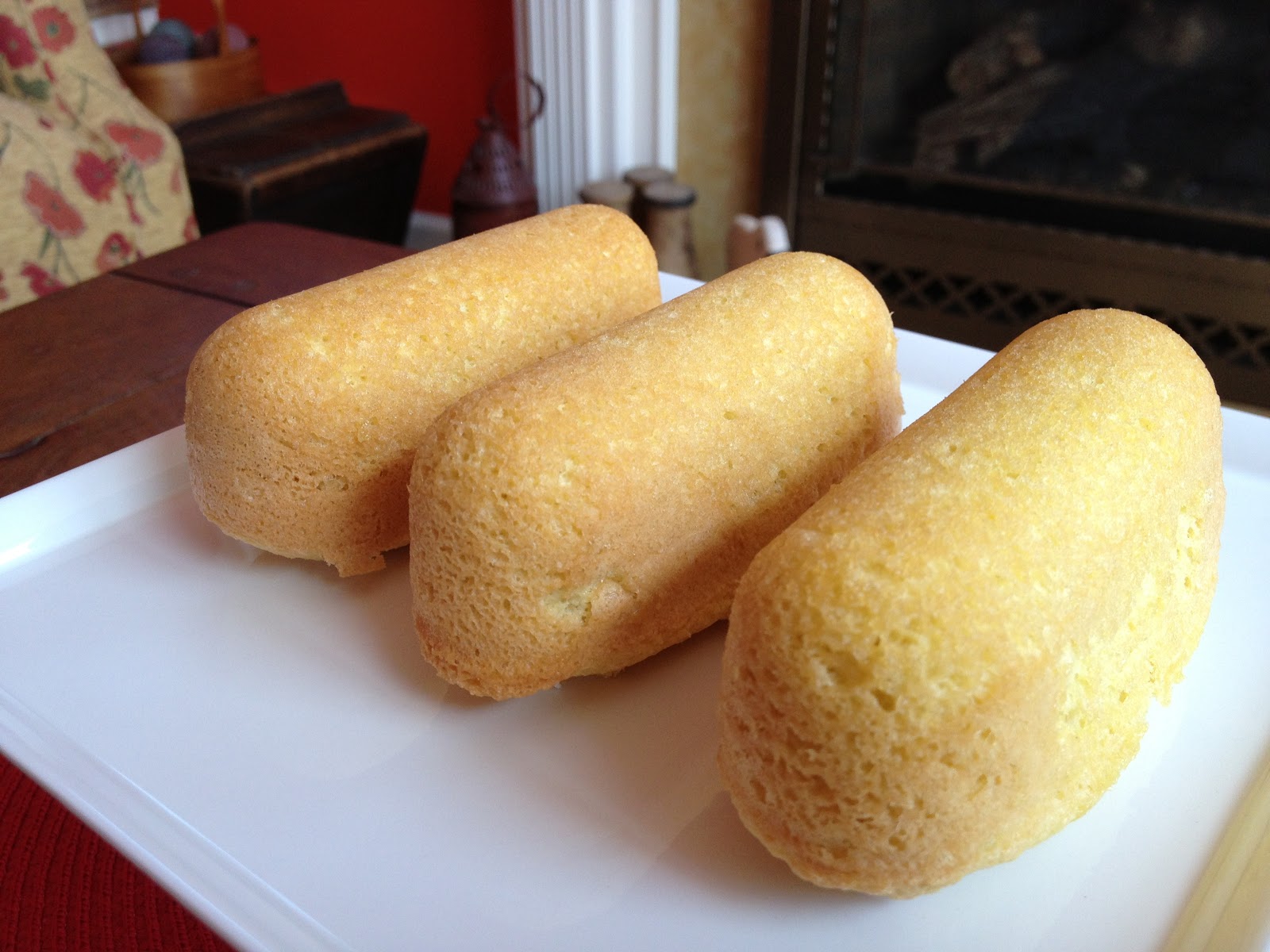
Yes, the Twinkie is “the one.”  I’ve already chronicled how the obsession began in my junior high school years during the Golden Age of lunchbox treats.   I would anxiously await the noon hour to get a bite of that airy yellow sponge cake and glossy marshmallow filling.   But alas, a lifetime of happiness was not to be.  More recently, we mourned the demise of the Twinkie, as parent company Hostess became a victim of the Great Recession and all those hateful health food fanatics.

It all seemed over, yet I never quite gave up hope.   I’d hear rumors that the Twinkie had been “purchased” and would soon be staging a triumphant return.   Yet the end-of-the-aisle shelf at the grocery store that once proudly displayed boxes of Twinkies was instead stocked with a variety of snack food posers.  

Finally, I decided to take matters into my own hands.    My muse was this book – “Classic Snacks Made From Scratch” by Casey Barber.   
Barber understands the way to a suburbanite’s heart is with cream-filled snack cakes.   She offers dozens of kitchen-tested recipes for recreating authentic iconic snacks, including Sno-Balls, Devil Dogs, Tastykakes, Hostess Chocolate Cupcakes, and yes … my beloved Twinkie.

The day arrives for our fateful reunion and my heart is pounding with anticipation.   I understand there are some foodies who might look unkindly on the Twinkie, and consider it “the blonde” of the pastry world.   Yet, as I peruse Ms. Barber’s recipe, I can see that the torpedo-shaped sponge cake is grounded in classic pastry techniques. 

For authentic shape, Barber recommends a canoe pan.   I’d never heard of such a thing, but apparently some smart marketers have created the perfect Twinkie-shaped pan, just for purists like me.  Praise be amazon.com.   (And, if anyone tells me I need another specialty baking pan like I need a hole in the head, I’m gonna smack you!) 
The batter contains a mere six ingredients.   Some Twinkie recipes online suggest the use of a boxed pound cake mix.   But in this recipe, Barber gives a nod to the classic French sponge cake.   Egg yolks are separated from whites.  Both are whipped and then folded together like a soufflé, resulting in an oh-so-lite-and-airy-Audrey-Hepburn-in-Breakfast-at-Tiffanys-poofy batter.  The egg yolks create that distinctive Twinkie blondeness. 
Ten minutes in a 350-degree oven, and there’s no mistaking that renowned, shapely sponge cake. 
The pillowy, glossy-white filling is a classic marshmallow cream, or in pastry terminology, “an Italian meringue,” which is boiled sugar whipped into egg whites.      I’m a little nervous attempting to heat a sugar syrup to the soft-ball stage as I’ve had a few kitchen disasters with hot syrup in the past.   Yet the technique is successful, and I beat the boiling sugar into a batch of egg whites whipped to a soft peak.    
I’ve seen these kinds of clouds flying at 30 thousand feet, and there’s enough extra filling to gleefully lick the spoon.  
Once the cakes are cooled, it’s time to fill them.  Here’s where I start to feel like a mad scientist as I fill this slightly threatening pastry syringe with marshmallow cream.   
Three tiny holes are made in each cake and the pastry syringe is inserted.  You can feel the sponge cake swelling with cream.   This is where a little industrialization might actually come in handy.   
It’s messy, and a little tedious filling each cake by hand, but really no different than filling éclairs or pate a choux.  
The look is the ultimate in eye candy, and the taste is sheer bliss – light, frothy and delectable insouciance (but minus the cloying chemical aftertaste we all know and love).
Yes, there are some who might denigrate this classic cream-filled sponge cake or laugh at its slightly frivolous name.  But, I remain firmly and hopelessly in love, even more so, having crafted my own Twinkies lovingly by hand.  Who needs a tarte Tatin, anyway?  As Shakespeare might have written, “A Twinkie, by any other name would smell as sweet.” 
©2013 T.W. Barritt All Rights Reserved

Sunday, September 13, 2009

A Crostata with Raspberries from Restoration Farm

The note from Caroline at Restoration Farm says it all – “the berries are going strong right now, but their days are numbered. We don’t want you to miss out. Happy picking, and enjoy them while they’re here.”

With the array of fruits that are commercially available, one can tend to forget that the natural berry season is, in fact, fleeting – a brief, shining and luscious moment in time.

I resolve to make the most of it and join in the celebration. It is a transitional week for blackberries at the Pond Field at Restoration Farm, but red raspberries have gone wild! I spend about an hour in the morning sun, foraging for ruby-red gems. The work is solitary and meticulous – each individual berry must be gently plucked from the vine.

How, then, to showcase the hand-picked goodness of Restoration Farm raspberries? A rustic Raspberry Crostata is sweet simplicity – a free-form tart, using pate brisee dough, with perfect, fresh raspberries and a sprinkling of sugar.

There are a range of recipes available, but creating a crostata is really just a matter of rolling out your favorite pie crust, arranging the berries on top, pleating the crust, and sprinkling sugar on top. An egg wash and sanding sugar on the border of the crust gives a nice sparkling effect. Bake at 450 degrees for about 20-25 minutes. It’s just long enough for the berries to release some delicious, tart juice, but not lose their shape.

There is something to be said for a tart with very little embellishment that transports the tastes of the field to the table.

And, don’t forget to savor those brief, sweet moments!

©2009 T.W. Barritt All Rights Reserved

Thursday, September 03, 2009

Berry Picking at Restoration Farm and Blackberry Raspberry Buttermilk Tart

It is perhaps the most anticipated edible event of the summer season, and no, it is not the premiere of Julie & Julia. The blackberries and raspberries are ready for picking at Restoration Farm.

For months, I’ve been anticipating the first picking. Everyone with a berry share has been allocated a quart of any combinations of blackberries, raspberries or ground cherries. I ramble into the berry patch and note that it looks a bit like a jungle - vines and branches everywhere.

It has been raining, and crystalline water droplets cling to the fruit. There are some sugar-craving bees hovering about. Other than that, I am alone. I am surrounded by bramble. I feel a little like the title character in Robert McCloskey’s children’s book, Blueberries for Sal.

I start to pick, plunking one jewel-like fruit at a time into my quart container. The blackberries are plump and inky black.

The raspberries grow on gangly branches and shimmer deep rose and ruby red.


For some time, I have intended to celebrate the first picking of berries with a quintessential summer fruit tart – not something baked that would alter the composition of the fruit, but a recipe that would accentuate their just-picked, finger-stained freshness. I choose this recipe, and replace the suggested blueberries with a combination of the blackberries and raspberries.


The iridescent black and red fruit is scattered atop creamy-white buttermilk custard and bursts with the sweetness and tang of late summer.

It was well worth the wait.

©2009 T.W. Barritt All Rights Reserved


Sunday, August 02, 2009

Plum Scrumptious

Plum Clafoutis. The name has to make you smile, assuming you can even pronounce it. My ability to spell the word correctly is often challenged. But, talk about a perfect summer dessert.

The clafoutis hails from the Limousin region of France and is traditionally made using whole black cherries. The cherries are placed in a buttered dish and baked in a golden batter of eggs, milk, four and sugar.

It’s one of those rustic and simple French country desserts that makes you wonder why we get all tied up in our Good Humor and Ben & Jerry’s. It takes only minutes to assemble, and puffs up like a peacock. Clafoutis is part crepe, part popover and a dash of Dutch Baby wrapped around luscious summer fruit.

Plums are an easy and sumptuous substitution for the black cherries as in this recipe. The fruit – combined with the batter – gets all rich, soft, jammy and complex, kind of like an extraordinary Bordeaux.

Plum Clafoutis. The word actually means to fill. I may not be able to pronounce it, so I’ll just call it scrumptious.

©2009 T.W. Barritt All Rights Reserved

Saturday, February 14, 2009

Cousin Meg’s Big Heart (Cake)

This is probably the closest I’ll ever come to writing a Valentine’s Day post. I’m hardly a fool for love, and Valentine’s Day doesn’t rank in my top 10 holidays. Actually, it’s right there at the bottom of the list along with Arbor Day. But this story has chocolate, a slightly-warped spring form heart, and a healthy serving of generosity. And, it’s a good example of how love can come in all shapes and sizes.

Meet Cousin Meg. We’re related by marriage. She married my first Cousin Frank. Cousin Frank is twin brother to Cousin Steve who is kind of a cross between graphic artist Todd McFarlane and Chef Anthony Bourdain. The twin thing (I call it “The Patty Duke Syndrome”) can be a little disconcerting, albeit entertaining at family gatherings.

But, back to Cousin Meg. The Barritt’s are rather a small, and somewhat reserved, close-knit family. Cousin Meg has several dozen brothers and sisters (I’ve never quite gotten the accurate count) and is what I fondly describe as a “big personality.” This is not a bad thing, but sometimes I have found it slightly intimidating. I’m a listener. She’s a talker. It’s what makes the world go-round. But it’s not idle chatter. In fact, Cousin Meg is generous to a fault.

Take the soap opera-worthy saga of this amazing Chocolate Peanut Butter Cake. I invite Meg and Frank for dinner. Meg decides we should do a Valentine’s Day theme. I’m a little reticent. I explain that my best Valentine’s Day ever was a long-ago dinner with two of my college roommates. We were all single at the time, and it happened to be Valentine’s Day. One of them stopped at the bakery on the way home from work and bought a gooey, heart-shaped cake at half price. It was perfect. No complicated relationships – just three guys and a ridiculous dessert. Nothing since has quite measured up.

Of course, this story is enough to elicit extreme pity from any true romantic, and Cousin Meg announces that she is going to bake me a heart-shaped cake. Not many people bring homemade desserts any more. But, Cousin Meg starts with an Internet search using the words “amazing chocolate cake” which quickly brings her to this recipe. (For those of us who spend hours studying search terms in the blogosphere, her approach is refreshing.) She then buys an expensive heart-shaped spring-form pan, and attempts a practice run.

A day or two before the dinner I get an apologetic e-mail:

“HATE to disappoint you, but I tried the heart shaped cake pan last week and it was a bust. The springform was crooked and it leaked out. Ridiculous considering the price I paid for the pan, but there you go. I hope you don't mind if the pan is in 8" rounds. It will still be yummy, trust me.”

This is probably why Entenmann’s does such a good business.

Now, let’s take stock for a moment. Already, Cousin Meg – mother of two and full-time teacher – has purchased an expensive pan, done a trial run that flopped, and will have to clean her oven, all in an effort to improve my Valentine’s Day experience. You’ve gotta love her.

Dinner night commences and Meg and Frank arrive, carrying an impossibly tall and scrumptious cake creation. It looks like she has spent hours – no days – preparing it. Now, remember. This is “Take Two.” They are also bearing gifts, and present me with a copy of “Martha Stewart’s Cookies” along with everything else. I won't even go into Meg's opinions about Martha.

I’ve made a kick-ass entrée of Beer Braised Beef and Onions in the Dutch oven, although I get a little nervous when Cousin Meg announces that she, by nature, gives everything a rating. Ratings make me uncomfortable. They’re hard to take back. But according to Cousin Meg, it helps her decide where things fit in the spectrum of “good” to “best.” Then, comes the moment that every chef dreads. She rates my dinner. The Macaroni and Cheese is a 7 or 8, and fortunately, the beef is a 10. Sigh of relief. It’s all part of the package with dear Cousin Meg.

As for the Chocolate Peanut Butter Cake? It is rich, decadent, and layered with sweet dollops of TLC. I typically don’t believe in giving food or wine a rating, but on a scale of 1 to 10, Cousin Meg’s Cake is indeed a 15! Just like Cousin Meg.

©2009 T.W. Barritt All Rights Reserved

Saturday, December 22, 2007

Tante Kremer’s Hungarian Nut Torte


Over the years, my mother would often mention Tante Kremer’s Hungarian Nut Torte. It was a favorite from her childhood and she’d tried to bake it as an adult, but had not had much success. It is just days before Christmas, and I have decided to see if I can create a special gift for Mom. I will attempt to recreate Tante’s Hungarian Nut Torte. Marcel Proust said flavors could inspire a range of memories, so what better gift to give a loved one at the holidays?

The recipe is written in my Grandmother Hilda’s handwriting. Apparently she wrote it down for my mother shortly after she and my dad got married and made their home in Far Rockaway, Long Island. It seems deceptively simple, but I immediately notice some possible gaps in the recipe.


I remember stories of Tante and Uncle. I have vague memories of meeting them, and sitting as a child on what seemed like a vast staircase in their entry hall in College Point, Long Island.

Mom adds the additional history that I’m missing. She writes:

We called her simply “Tante” and her husband “Uncle.” But they were Elizabeth and Joseph Kremer, my father’s aunt and uncle who had emigrated from Hungary. My father’s mother died when my father was a teenager and Tante mothered him from then on. Tante and Uncle’s home in College Point, Long Island became Dad’s home more than his own. In fact, I never remember talk of any other home. Dad absolutely adored Tante and Uncle and his three cousins Rose, Katie and Margaret. He became one of their family.


Tante was an excellent baker and had several specialties that were baked year in and year out for the holidays and for celebrating special occasions like birthdays and anniversaries. I remember four types of cookies: 1) Kupfel (horn) filled cookies made with cream cheese and butter, which were like mini-croissants filled with apricot or prune butter, 2) Walnut Egg White Kisses like swirls of meringue with a walnut half in the middle that just melted in your mouth, 3) Hard, flat, round anisette cookies about the size of a 50 cent piece, 4) Rolled butter cookies cut in shapes – stars, crescents, diamonds, hearts – brushed with egg whites and sprinkled with finely chopped nuts mixed with fine granulated sugar – so fragile and delicate they just melted in your mouth. My Mom became very proficient at making the rolled butter cookies. For Christmas Eve, Tante made round donuts with coins baked in the centers – pennies, nickels, and dimes for good luck.

Most delightful of all was Tante’s Hungarian Torte which was made for every special occasion – thin layers of cake made with chopped hazelnuts and put together with whipped heavy cream. Heavenly!

Only three of Tante’s recipes survive – Kupfel, Walnut Kisses and Nut Torte, although I believe my cousin has a yeast coffee cake recipe of Tante’s. These recipes are somewhat sketchy and lacking in detail because Tante just made these delights “by heart.”


The scene at my oven is like a slightly fractured version of Veronica’s Test Kitchen. The counter is strewn with blown-up versions of handwritten recipes, open cook books containing guidance on baking tortes, and stray bread crumbs and hazelnuts. My first version flops badly, because I follow the apparent direction in the original handwritten recipe, and use two spring form pans. The two layers are far too thin and fragile and stick to the bottom of the pan. I toss the results, and I’m almost tempted to head for the bakery and purchase some holiday cookies. But Veronica is my inspiration for constant focus and experimentation. I am determined to get this right. I try to muster all of my pastry training, and focus on the proper techniques for sponge cakes, tortes and flourless cakes. I scrupulously adhere to the methods for whipping egg whites. The following formula is successful:

Tante Kremer’s Hungarian Nut Torte

5 eggs separated
1 cup hazelnuts, toasted with skins removed, and chopped fine in a nut grinder
1 teaspoon vanilla extract
½ cup fine white bread crumbs
1 cup sugar


1) Preheat oven to 350 degrees.


2) Grease only the bottom (not the sides) of a 9.5 inch spring form pan. Cut a circle of parchment, and place it in the pan, and grease the parchment as well.


3) In a stand mixer, beat the eggs yolks on medium-high speed for 10 minutes until eggs are lemon-colored and thick, the consistency of butter. Continue beating and add sugar gradually over the next 10 minutes, until mixture is thick. Beat up to 25 minutes.


4) Mix in the bread crumbs, the finely chopped nuts and the teaspoon of vanilla.


5) Using a clean bowl and beaters beat the egg whites with a pinch of cream of tartar, slowly at first, and then increase speed until stiff peaks form.


6) Fold ¼ of the egg whites into the yolk and nut mixture (it will be quite thick at first). Then gently fold in the remaining egg whites. Pour the batter into the prepared pan, and place it on a baking sheet in the pre-heated oven.


7) Bake approximately 20 to 25 minutes. The torte will creep up the sides of the pan like a sponge cake. Remove when the torte is golden and springs back when touched in the center. After removing the torte from the oven, the center will deflate slightly. Let the torte cool completely in the pan. Use a flat knife or spatula to gently separate the sides of the torte from the pan before releasing the spring form. Remove the parchment.


8) Spread whipped cream sweetened with superfine sugar over the top of the torte and pipe additional cream in a circular rosette pattern.


The results are indeed festive. I cut a slice and place it in front of Mom. She takes a bite and smiles. “That’s it. That’s what it tasted like!” We each have two pieces.

Later, when she and Dad prepare to leave, Mom thanks me. “This allowed me to think back on some happy memories.”

And, I hope Tante Kremer is smiling too!

©2007 T.W. Barritt All Rights Reserved

Sunday, August 19, 2007

Sunshine Orange Cake


Here’s an idea for those of us looking to get a little more fruit into their diets. Sunshine Orange Cake looks freshly picked from a Florida orange grove. It even slices into sections, sort of like the real thing.

According to the website of the Sunkist Growers association, oranges contain numerous health benefits. A single navel orange provides 130 percent of your daily value of Vitamin C, and contains powerful antioxidants. Oranges are fat free and are a good source of potassium and phytochemicals. Oranges even contain pectin, which may lower blood cholesterol levels.


In the spirit of full disclosure, Sunshine Orange Cake offers none of these benefits. It does, however, contain a healthy dose of butter cream frosting, which includes a touch of Vitamin A and absolutely no carbohydrates! The white cake takes care of that. I won’t get into the cholesterol discussion. No need to cast a rain cloud over all this sunshine.


If truth be told, since the famous Watermelon Cake, I’ve been a little obsessed with the idea of making confections look like real food. I’ve brainstormed a “Hard Boiled Egg Cake,” a “Pink Grapefruit Cake” a “Granny Smith Apple Cake” and even an “Okra Cake.” It is likely an expert therapist could link this all back to an early childhood penchant for playing with my food. I prefer to believe that I have an inner-artist who must express himself through the medium of cake.

I’m currently giving some serious thought to a “Broccoli Cake” – for those of us health-minded individuals who want to have our cake and eat it.

©2007 T.W. Barritt All Rights Reserved

Wednesday, November 15, 2006

Broken Pie Crust


Devouring the New York Times – Wednesday, November 15, 2006: I was already hungry for this week’s “Dining In” section when I arrived at the newsstand at daybreak. The annual “Thanksgiving Edition” comes but once a year. I’d heard the radio promotions on WQXR announcing Melissa Clark’s feature on “the perfect pie crust.” It was going to be a tasty commute.

I was so wrong!

Certainly, Clark’s quest to prepare the flakiest Thanksgiving pie crust in Heaven or on Earth is admirable, and as a long time student of the pastry arts, I do believe the debate over lard versus butter as the critical ingredient has merit. Clark’s language and imagery are striking. There is also some sinfully good, mouth-watering photography and enticing recipes for pie filling like Pear-Pomegranate Pie, Honey Apple Pie with Thyme, and Nutmeg-Maple Cream Pie.

But, before you ever get to Clark’s solution of a combination of 70 percent butter and 30 percent animal fat for the flakiest pie crust in history, you are likely to go on a sudden diet.

Clark violates one of the most important tenants of food writing. The prose should taste good. Don’t make the reader lose his appetite!

It’s Thanksgiving, Melissa! It’s supposed to be about abundance, family, flavor and good taste! Do we really need the horrific descriptions of rendering lard, the endless barnyard analogies and the graphic references to a pig’s anatomy? After Clark’s lead in, I’m ready to take a pass on dessert.

Pastry is the ultimate sweet treat – the decadent escape. Some things are better left unstated. I’ll stick to Harold McGee for the science of food. But, if I want to dream of the perfect pie crust, I’m heading straight for Martha Stewart. At least she understands what visions of sugarplums are all about.

© 2006 T.W. Barritt All Rights Reserved

Saturday, September 09, 2006

Baking in Siena


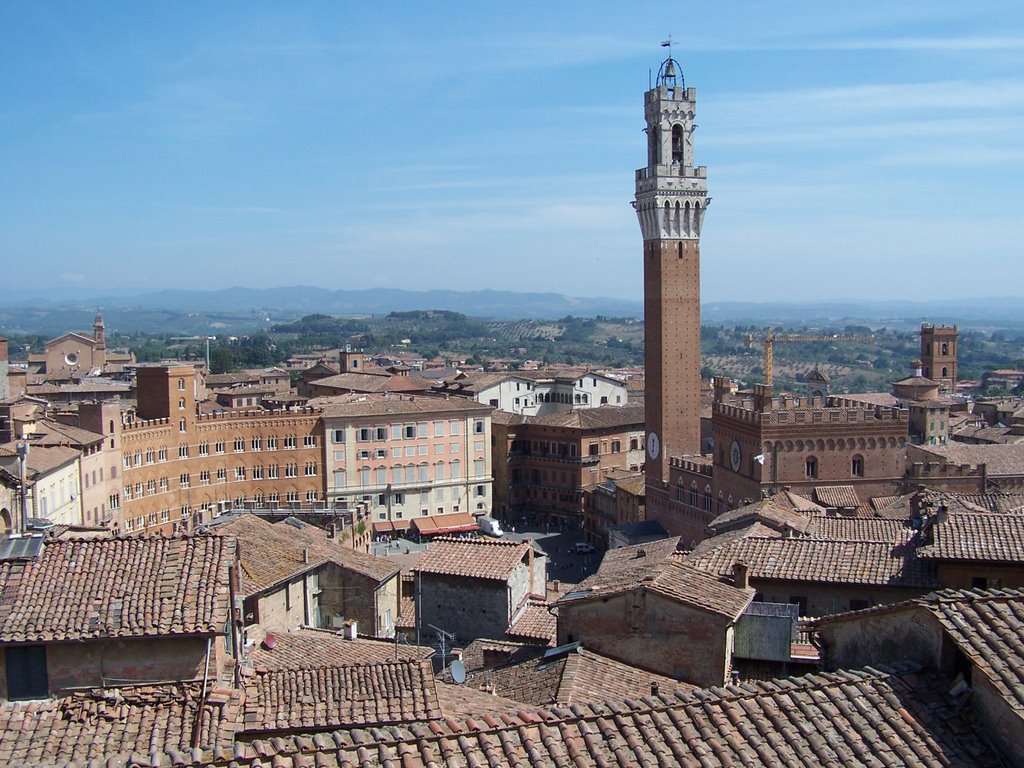
Friday, September 8, 2006: The medieval town of Siena sizzles under the bright sun. The streets resemble narrow alleyways that wind to the top of the hill. Siena experienced years of growth between 1260 and 1348. Near the center of town is Il Campo, the clam-shell shaped town square where the famous horse races are held each year.

I spend several hours exploring the Duomo, a gothic masterpiece cathedral begun in 1136. The marble floor of the Duomo is only uncovered once a year during September and October, and for once I am in the right place at the right time. The marble inlay floor is like a gold and black tapestry which depicts 56 scenes that illustrate the history of mankind. I visit the Crypt, only discovered in 1999, where there are beautifully colored frescos that might have remained a secret for eternity.

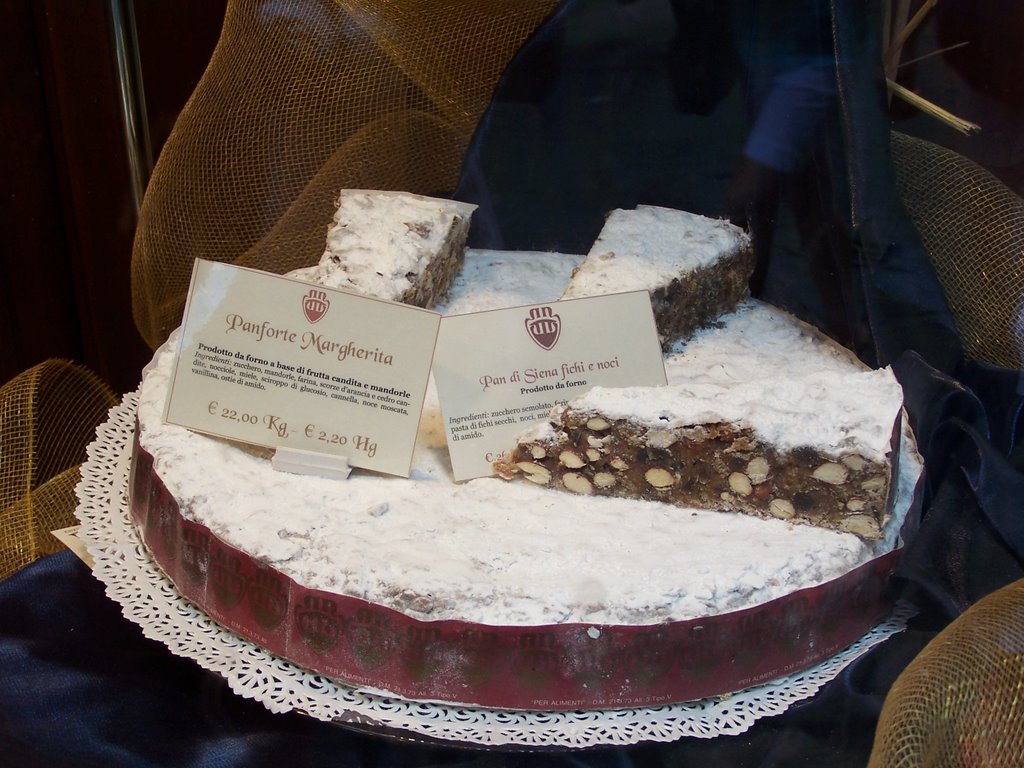
I move on to investigate two foods that are special to Siena. In a small shop near the Duomo, I find Panforte Margherita a thin, flat torte of golden paste enriched with molasses, nuts, citron and spices. The confection dates to the middle ages. It is chewy and spicy, similar to dense fruit cake or date bread. I walk back beyond the Duomo and stop at Nannini, a famous bakery in Siena. Tourists have lined up to sip afternoon espresso. A gentleman ahead of me on line purchases more than 60 Euro worth of pastries, that are wrapped carefully in cream-colored paper and tied with a red ribbon. There, I sample Ricciarrelli, a clam-shaped golden cookie, slightly larger than the French Madeleine, soft and cake-like and dusted with powered sugar. It is tender, crumbly and sweet – a perfect treat to top my visit to Siena.

© 2006 T.W. Barritt All Rights Reserved

Thursday, August 31, 2006

Remembrance of Cakes Past


Mom opens the small manila envelope and slips a slightly faded photograph into my hand. “Do you remember this?” she asks. “I thought you might want to write about it.”

I pull out my reading glasses to take a closer look, and examine the photo of a 9-by-13 sheet cake. At the top, scripted in pale blue icing are the dates, 1932 – May 14th – 1983.

Mom studies my reaction, looking for a sign of recognition, and decides to jog my memory. “You made the cake for Grandma and Grandpa’s 51st wedding anniversary.” Indeed, on the back of the photo is Mom’s inscription: May 14th, 1983 – Anniversary Cake for Hilda & Steve Ernst – made by T. – 51 years married.

I see a bouquet of tiny blue and pink wildflowers, gathered together with a wavy pink ribbon. Not a bad effort for an amateur. I recall that it was actually one of the later cakes in my repertoire, and I had actually first cut my teeth on cake decorating in elementary school.

The memories come back to me, years before The Cake Doctor, The Cake Bible, Baking with Julia, the Magnolia Bakery or Martha Stewart’s Baking Handbook. I remember exploring Mom’s bookshelf and discovering a simple black and white volume on cake decorating. I was captivated by the photos of butter cream roses and scallop shell boarders. Mom had actually taken a cake decorating course years before and had all the tips and pastry bags stored away. We pulled them out, cleaned them all in hot soapy water, and looked them over. There were tips for rose petals, tiny blossoms and even branches with perfectly-shaped conical leaves.

In no time, Mom had connected me with Mrs. Becker, a pastry pro at our local church who gave me a lesson. Soon, I was whipping up celebration cakes for wedding anniversaries, birthdays and holidays. All this, before sixth grade graduation. Sometimes, the cakes were overly sweet, and sometimes, the colors a bit garish, but it was the start of creativity in the kitchen and a lifelong love of “le gateaux.”

If Mom hadn’t signed up for that first cake decorating course, I might never have paged through that text book and developed a taste for luscious layers.

Thanks, Mom, for the sweet inspiration!

© 2006 T.W. Barritt All Rights Reserved

Saturday, July 08, 2006

Cakes and Creativity


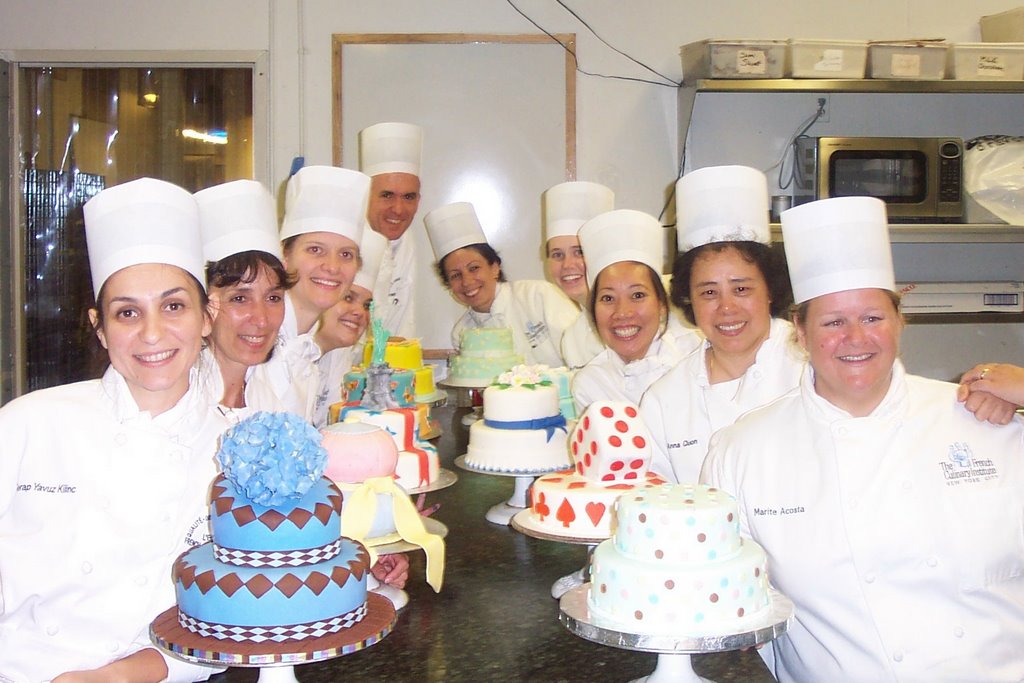
Today was the grand finale for 10 students at the Saturday "Essentials of Pastry" session which began on January 28th at the French Culinary Institute in New York City. Each of us completed a final "Celebration Cake" and received our certificate of completion representing 100 hours of intensive training in the Essentials of Pastry.

In addition to designing an original pastry creation, the day was not without drama. We were evacuated not once, but twice when construction workers in the building tripped a fire alarm. Picture several dozen pastry and cooking students in white coats and chef hats cooling their heels on Grand Street in New York City while our two-tier cakes sat unfinished in the pastry kitchen. A serene Saturday afternoon of baking it was not.

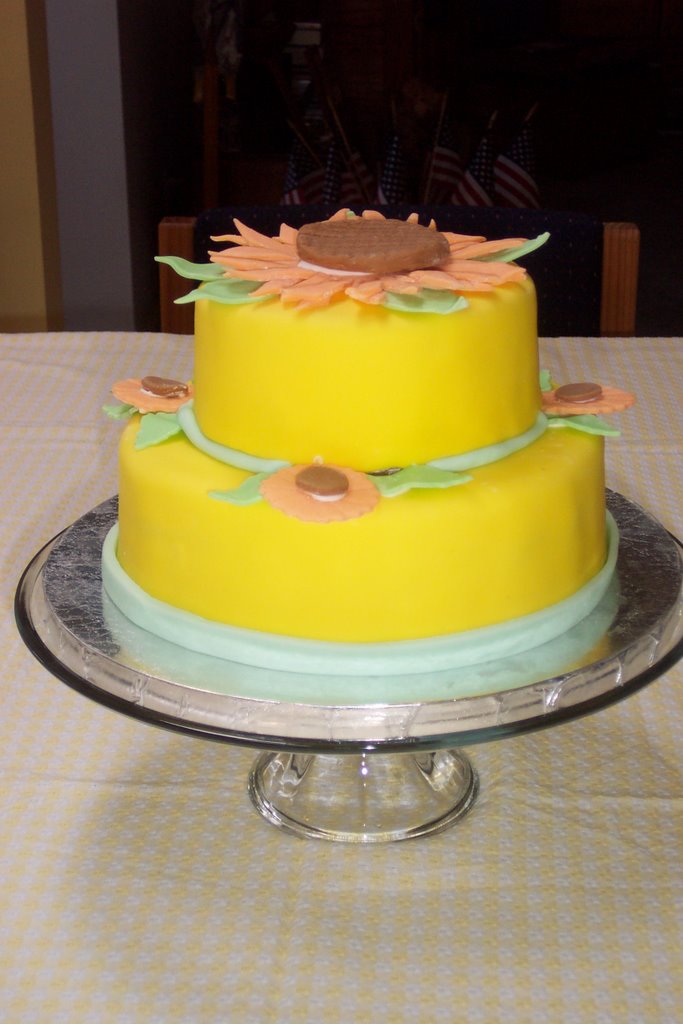
The results of the day were as original as the members of the class. What motivates an individual to spend five hours a day over twenty Saturdays with a rolling pin in hand? Perhaps the urge to create. The celebration cakes literally leapt out of the imaginations of the students which include a teacher, a civil engineer, a healthcare worker and a member of the fashion industry. There was a Patriotic Cake, a Tiffany's box, a Harlequin Cake, a high-roller Las Vegas Cake, a Pin Cushion and a delicate Field of Daisies. Mine was a sunny yellow confection dotted with sunflowers inspired by summertime in Provence.

Congratulations to my Saturday pastry pals on completing twenty sweet weeks together. Happy baking!

© 2006 T.W. Barritt All Rights Reserved

Monday, July 03, 2006

Gateaux Fraisier

The Classic Gateaux Fraisier looks like a fancy summertime chapeau one might have purchased in a milliners shop during the Victorian era. A dreamy, romantic confection, the Fraisier is studded with a crown of fresh strawberries at the base and topped with a thin layer of pale green marzipan. Tucked between are feather-like layers of sponge cake and silky crème mousseline. My Fraisier, pictured here, was prepared last Friday and Saturday for a family gathering to celebrate the return of my brother and sister-in-law to the United States from a teaching assignment in Prague.

As I spent my day off finessing the Fraisier, I was reminded again that French pastry is indeed the confluence of art and science and requires incredible focus. Sponge cake batter must be whipped slowly, and folded ever-so-gently to avoid deflating the final product. And don’t get distracted. My first batch of crème patisserie -- a “light” lemony-yellow custard which is the base for the crème mousseline – failed spectacularly, when I lost my place and forgot to add the cornstarch which is necessary for binding. The result was something that resembled a soupy tapioca pudding.

About a dozen eggs later I was on my way, even though a bit of the custard had burned slightly at the bottom of the pan. It was nothing a quick run through the sieve wouldn’t fix. Once combined with about a half a pound of butter at exactly the right temperature, the crème mousseline was the perfect consistency and ready to be layered.

Chemistry. It’s all chemistry. Not my best subject in high school. I excelled in arts and crafts. I have yet to discover the creator or exact history of the gateaux Fraisier, but I now suspect that if my chemistry instructor had told me that the periodic table was a potential baking guide, I might have paid more attention.

© 2006 T.W. Barritt All Rights Reserved