Showing posts with label Apples. Show all posts

Sunday, December 15, 2013

A Neighborly Jam Session with NY State Apples and Vermont Maple Syrup

This is my absolute last jam session of 2013.  I mean it. I don’t have enough room on my pantry shelves for all the jam I’ve produced, and I haven’t even shared every recipe with you. You have no idea the extent of this obsession. Scary. 

I keep telling myself, “They’ll make great gifts for the holidays.” 

I must admit I’ve been enticed by the signs in the grocery stores for “New York State Apples.” Even the big supermarket chains have taken on the language of local food. So I pick up a “tote” of New York State Gala apples.  
The New York State “Apple Country” website describes the Gala as a juicy variety developed in New Zealand, that is mild and sweet in flavor with crisp, creamy yellow flesh. New Zealand, huh?  So the “local” connection may be a little spurious after all, but it’s probably a good bet they were grown in New York soil.
Many of my jam projects are predicated on what’s in the pantry – and I’ve been holding a bottle of Vermont Maple Syrup from Top Acres Farm in South Woodstock that I purchased last autumn during a visit to the Billings Farm Museum.  
The Ball Blue Book Guide to Preserving completes the jam session with a recipe for Apple-Maple Jam.   It sounds like a nice way to preserve the flavors of autumn well into the cruel, cold winter.   And it’s a perfect mash up, or should we say, “jam up” of two neighboring states – the Empire State and the Green Mountain State. 
The biggest part of the job is chopping the apples, as the recipe requires 3 quarts of chopped fruit.

This is the second time I’ve tried a recipe that doesn’t call for adding pectin. You cook down the fruit until it releases its own pectin naturally.  
The mixture looks like a big apple stew.  It is rich with cinnamon, cloves, nutmeg and allspice. 

I’m not sure I actually cook it long enough get to the jelling point.  Despite the use of a candy thermometer, I can’t quite seem to get the jam to the “soft ball” temperature.  I stand over the pot for what seems like an eternity, and start to feel a bit like a kitchen drudge. 
After boiling the jam within an inch of its life, I give up and decide to go ahead and process the jam. 
The kitchen smells like a Vermont Maple Syrup House on Thanksgiving Day, and the chunks of apples hang suspended like little jewels in the maple jam. 
So what if it’s a little syrupy in the end?  I can always use it on top of pancakes or waffles. Better yet – how about atop a scoop of vanilla ice cream? That would be awesome. The key thing about jamming, is you just have to be flexible. 
Here’s the recipe from the “Ball Blue Book Guide to Preserving,” in case you want to try your luck at reaching the “gelling point.”  Something about that phrase sounds vaguely scandalous.  As always, be sure to follow proper canning and food safety procedures.

Apple-Maple Jam  (Yield: about 8 half pints) 

3 quarts chopped, peeled, cored apples
6 cups sugar
1 teaspoon cinnamon
½ teaspoon allspice
½ teaspoon nutmeg
¼ teaspoon cloves
1 cup maple syrup

Combine ingredients in a large pot and slowly bring to boil.  Cook rapidly to gelling point. As jam thickens, stir frequently to prevent sticking. Remove from heat and skim foam if necessary.  Ladle hot jam into hot jars, leaving ¼ inch headspace. Adjust two-piece caps. Process 10 minutes in a boiling water canner. 


©2013 T.W. Barritt All Rights Reserved

Sunday, November 17, 2013

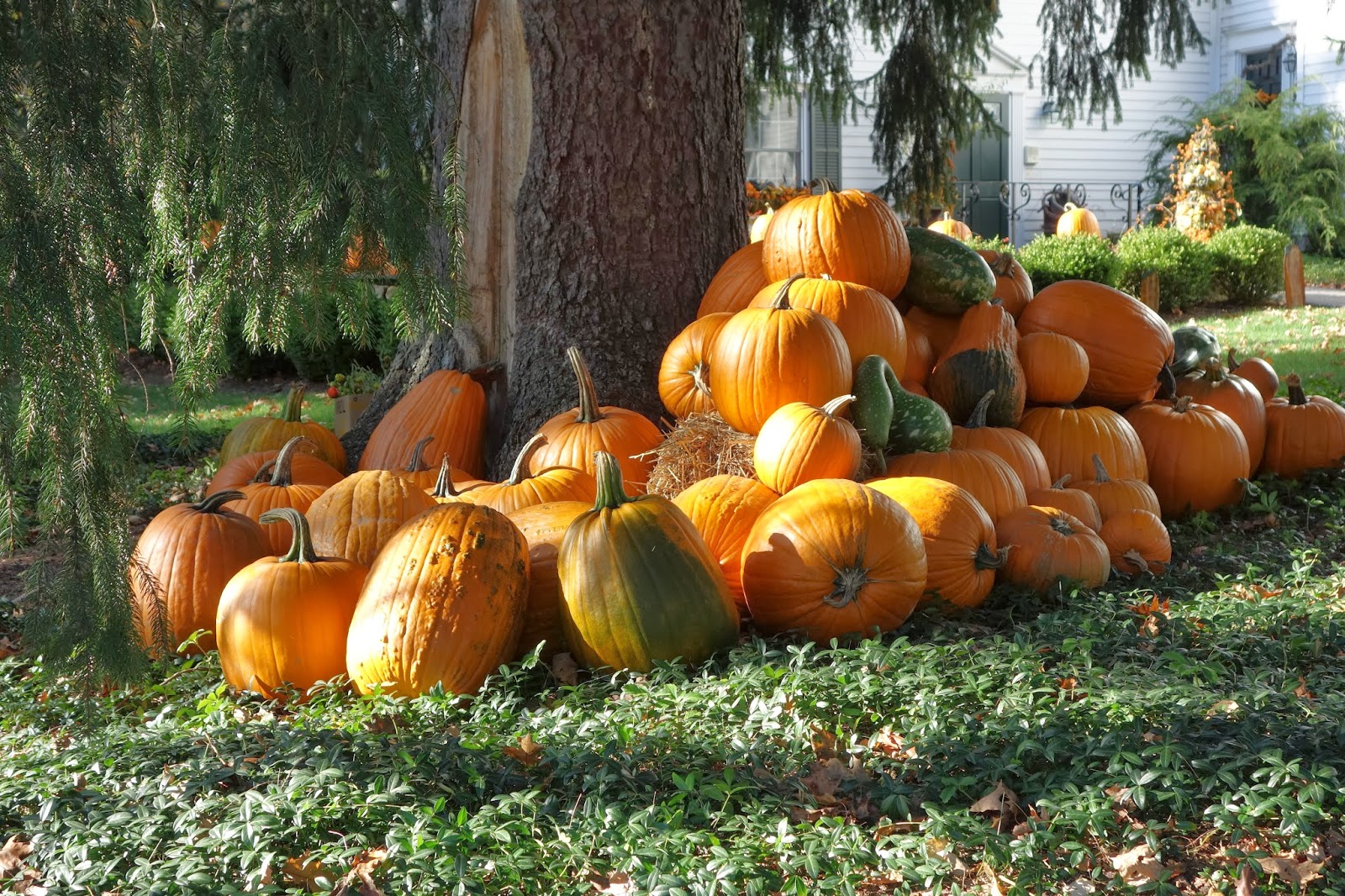
Great Pommes and Pumpkins

If you’re starting to dream about your Thanksgiving pies, here’s a little inspiration: 

For more apple goodness, meet the owner of the Jericho Cider Mill, and learn about the preservation of a heritage apple orchard at Edible Long Island.


©2013 T.W. Barritt All Rights Reserved
Sunday, March 31, 2013

Pruning and Renewal At Apple Trace


When I was a youngster, my Dad had a set of electric hair clippers.   At a designated hour every month, my brothers and I would line up by a tall stool in the basement, and one by one, Dad would zip off our hair, clippers buzzing furiously. 

As a barber, Dad had a sure-handed and confident technique, and we’d emerge from the basement with perfectly trimmed buzz cuts.   Our closely cropped dos would be the envy of any young military recruit.  

I am far less confident of the outcome as I approach Apple Trace at Restoration Farm on one of the last days of winter, preparing to prune the line of young apple trees for the very first time.   The eight heritage apple trees were planted in memory of my father James M. Barritt, Jr. in the spring of 2012.  
Restoration Farm’s resident fruit tree expert, Glenn Aldridge tells me the window for late winter pruning is once a year, and it is just about closed.   The tree is dormant, and energy is stored in the root, so the pruning promotes new growth in the spring.  Even at an early age, pruning is important to influence the future growth and shape of a tree.   The goal of pruning is to expose the strongest branches of the tree to as much sun and air as possible.  
I am skeptical.  The trees look so fragile.  They are barely twigs, so how will they withstand a pruning?   
I’m not quite ready to make the first cut, so I stroll down a secluded path adjacent to the historic village to visit the old Hewlett Apple Orchard and see how the trees there have progressed.  Exactly a year ago, we began pruning those long neglected trees, and Glenn has been working the orchard throughout the winter.  Along the way, I am trailed by a small flock of Billy goats who follow me into the orchard.  
At the Hewlett Apple Orchard, the trees appear to be thriving.   None are the worse for the rigorous pruning we gave them last year.    They look strong, healthy, well-shaped and ready for spring.  
So, perhaps the fledgling trees of Apple Trace would hold up to a little pruning.  After all, I survived the once-monthly trauma of a buzz cut.   I return to Apple Trace with renewed determination.  

In discussing “intuitive pruning,” orchardist Michael Phillips says, “Approach each tree with an introductory intake of the breath.  This meditative pause is when you take in the tree’s framework and overall shape.  How does it fit within the row?  Are some branches too low?  Is the leader beyond reach?”  
I take a deep breath.  I walk around each little tree and examine it carefully.  Where are the odd, outlier branches?  Where do the branches grow together in a pleasing conical shape?   At last, I am ready to take the clippers in hand.  I’ve convinced myself that pruning will be beneficial, and a path to renewal for these beloved trees.   
As I examine each tree, and clip one branch at a time, I start to see the results.   The trees look cleaner, streamlined and shapelier.  Each is a different variety, and each has its own shape and character.  
As I clip each branch, I collect the twigs.   I’ll put them in a vase on the Easter dinner table as a reminder of Dad and his apple trees taking root at Restoration Farm.   Someday, should the pruning pay off, perhaps I’ll make an apple tart with the fruit from Apple Trace.  
As I bundle up the cuttings and prepare to leave, I notice a family of robins who have alighted on Chapel Field – a sure sign of the promise of the season ahead. 
Happy Easter!  Happy Spring!   

©2013 T.W. Barritt All Rights Reserved

Sunday, October 21, 2012

Ferocious Weeds, Wandering Bovine and Healing at Apple Trace


Michael Phillips is an orchardist and author of the book “The Apple Grower:  A Guide for the Organic Orchardist,” first published in 1998.  In the introduction to the book, he writes about a low point in his life when a cider mill operation he’d been running had closed and the most of the apple trees cut down:

“Needless to say, I felt like I had lost part of my family.  And yet, it was an apple tree that eventually “spoke” to me at an herbal workshop I attended in Vermont.  Herbalists say every plant being has a spirit, of sorts, and so it is with trees.  My meditations that day focused in part on what to do next with my life.  I sat beneath a garden apple tree I had pruned for a friend earlier that spring.  Deep within a voice stirred.  You, too are pruned, apple grower, in order to become stronger.  Now this cut is open, dripping the sap of your visions and hopes.  It will heal, as all things do in time.  Afterward, you will be stronger to carry the harvest to come.”

The planting of Apple Trace at Restoration Farm – in memory of my father James M. Barritt Jr. – has been a source of healing for me.  The memorial took shape throughout the spring and summer, with a special plaque of living memory installed just before the Autumn Pot Luck.  Perhaps after loss, we do become stronger with a focus and a purpose.
Nurturing the eight heritage apple trees has helped move me from sadness to a place of happier memories and optimism for the growth of these trees at the farm.   “You, too are pruned, apple grower, in order to become stronger…It will heal, as all things do in time.  Afterward, you will be stronger to carry the harvest to come.” 
Throughout the summer, the weeds were often ferocious.   At one point, I returned from holiday to find the weeds so overgrown that I could barely find the saplings among the tangled growth.  
Bent on my knees weeding, I would think of my Dad, and how so often he had to weed, cultivate and nurture the little patch that was me.  He, too, probably had frustrations as he tugged at those weeds over the years, but I’m hopeful he was pleased with the end result.   
There have been bumps along the way as this fledging orchard has taken root.  Early in July, two of the cows from the historic village escaped from their pasture, and wandered all the way up to Apple Trace damaging two of the trees.   I didn’t know whether to laugh or cry.   Of the problems I’d anticipated, cow thrashing was not one of them.  The upper third of the Winesap was cut off and the more slender Prairie Spy was nearly toppled.    But, one of the volunteers, Jen Wang trimmed back the Winesap and my friend George Garbarani staked up the Praire Spy.   Then we waited.   The trees have shown amazing resiliency – much like my Dad always did during more than eight decades of his life.   The Winesap has now filled out nicely, and although once almost bare, the Prairie Spy has now sprouted many fresh new leaves at its base.  This little tree is clearly a survivor.  
As autumn arrived, it was time to mulch around the base of the trees.  Mulching protects the roots and deters the growth of weeds.   The gentleman who provides the farm with wood chips left mountains of mulch in between the trees.   It seemed like an insurmountable task. 
Still, I kept pushing ahead, one scoop of mulch at a time.   And, one afternoon when I had almost given up for the day, Glenn, George, Jen and Jay arrived in the truck with shovels and support.   Within no time, the trees were well-blanketed with mulch.   A job is always easier, and more fun, when the community pitches in. 
I’m a bit concerned about the Honeycrisp, which looks quite bare, but Caroline wonders if perhaps it just concluded its growth season a little earlier than the other trees.   The remaining trees are thriving, and the Newtown Pippin and Ashmead’s Kernel are at least as tall as I am. 
My Mom and I had a chance to walk along Apple Trace as the sun was setting during the Autumn Pot Luck.   The trees were bathed in a golden light and I was encouraged that the harvest to come will be fruitful.  It made me smile, and I think Dad is smiling, too.  
©2012 T.W. Barritt All Rights Reserved